

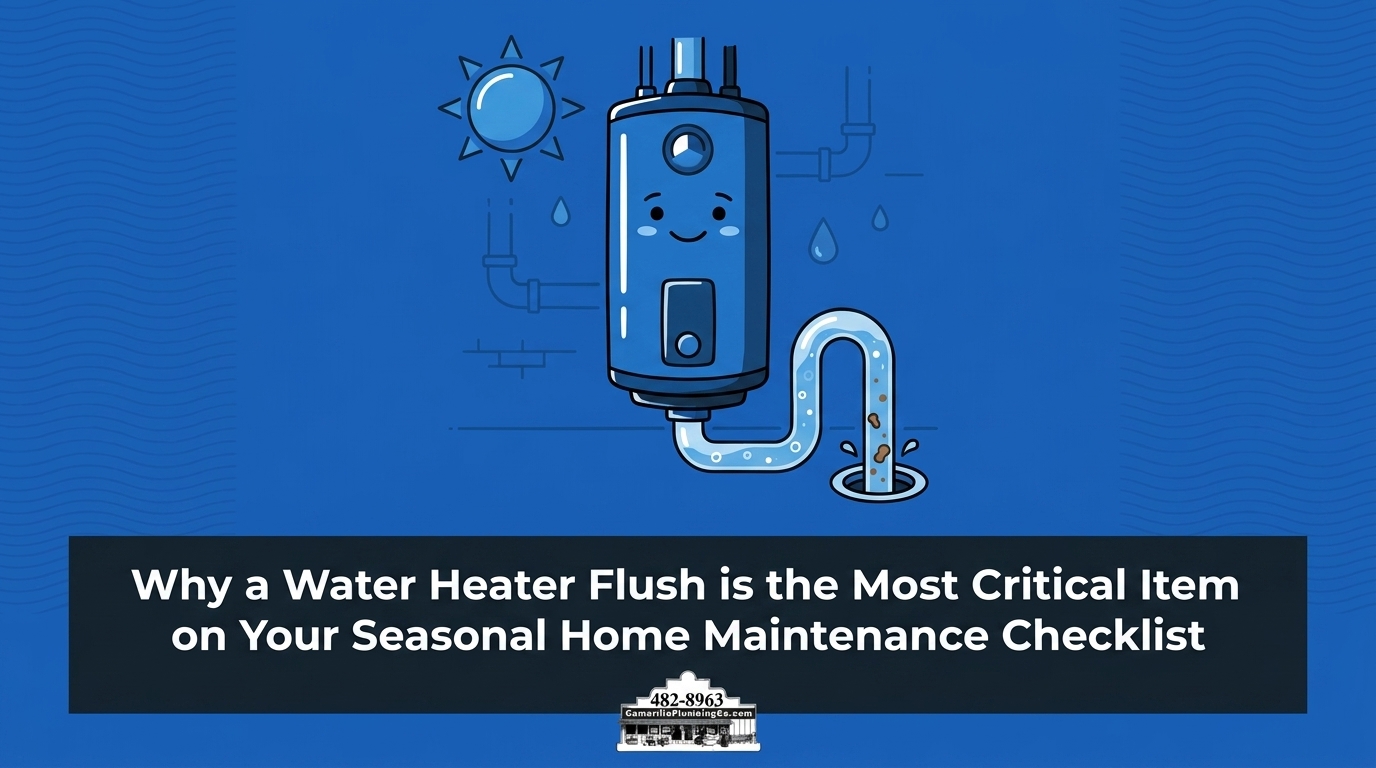
Why a Water Heater Flush is the Most Critical Item on Your Seasonal Home Maintenance Checklist
.avif)

Is Your Plumbing Ready for the Fall Temperature Drop?
Have you considered how cooler incoming groundwater will affect your water heater's performance this season? When our team at Camarillo Plumbing Co. helps local homeowners put together their seasonal home maintenance checklist, the focus often drifts to cleaning gutters, checking weatherstripping, or testing smoke detectors. However, we consistently find that the most vulnerable component of a home is hiding right in the garage or utility closet. As the weather shifts, sediment buildup inside a residential water heater reduces efficiency and significantly increases the risk of a sudden system failure.
Deciding to schedule a professional inspection and flush now ensures your system operates smoothly before the seasonal temperature drop puts additional strain on the unit. Addressing this in early fall (September) provides the easiest path to avoiding the reactive, middle-of-the-night plumbing disasters our technicians see all too often.
Need immediate help? Explore our emergency plumbing services for rapid response, or continue reading to learn how to prevent unexpected failures.
The Hidden Cost of Neglected Maintenance
We often have to remind homeowners that a water heater works harder as the calendar moves toward the end of the year. Throughout the spring and summer, the system easily maintains its target temperature. But as groundwater temperatures begin to cool, the unit must consume more energy and run for longer cycles to deliver the same volume of hot water. If a thick layer of sediment sits at the bottom of the tank, it acts as a barrier between the heating element and the water, forcing the system to work overtime. This constant overexertion degrades internal components and accelerates the timeline for a complete tank replacement.
Understanding the Impact of Early Fall (September) on Your Hot Water System
According to the U.S. Department of Energy, water heating accounts for roughly 17 to 20 percent of a home's total energy usage. Because it represents such a massive portion of your utility costs, even a slight drop in efficiency translates to noticeably higher energy bills. Early fall (September) is the exact window when this efficiency drop begins to take hold.
The Thermodynamics of Sediment Buildup
To understand why this time of year matters, you have to look at the delta—the difference between the incoming groundwater temperature and the target temperature inside your tank. In the middle of summer, incoming water is relatively warm, meaning the heater only needs to raise the temperature by a few dozen degrees. As the season changes, the incoming water grows colder. The heating element or gas burner must fire longer to bridge that widening gap.
When loose minerals settle at the bottom of a traditional tank, they bake into a hardened layer of scale. This scale is an excellent insulator. Instead of transferring heat directly into the water, the burner must first heat the thick layer of sediment. This trapped heat causes the bottom of the steel tank to overheat, weaken, and eventually fracture. The system is forced to run longer cycles just to reach the thermostat's setpoint, increasing strain on every mechanical component and elevating the risk of tank failure.
How Camarillo's Hard Water Accelerates Sediment Buildup
In our years of servicing Ventura County plumbing, we've seen firsthand how local water quality dictates how quickly a water heater degrades. Camarillo and the surrounding water supplies have high mineral content, commonly referred to as hard water. This specific regional factor makes proactive maintenance non-negotiable for the local homeowners we serve.
When hard water enters your plumbing system, it carries high concentrations of dissolved calcium and magnesium. As the water is heated inside the tank, a chemical reaction occurs. The heat causes these dissolved minerals to precipitate out of the water, turning them into solid particles that drift to the bottom of the tank. Over months and years, this continuous precipitation creates a deep, hardened bed of scale.
Comparing the Impact on Different Water Heater Types
Hard water scale does not just affect one type of system. Our crews see it compound wear and tear across all residential water heating technologies.
• Traditional Gas Tank — How Hard Water Scale Causes Damage: Sediment covers the bottom of the tank, blocking heat transfer from the burner and causing the steel floor to overheat. — Result of Neglected Maintenance: Glass lining micro-cracks, leading to premature tank corrosion and catastrophic bottom-out leaks.
• Traditional Electric Tank — How Hard Water Scale Causes Damage: Scale encrusts the lower heating elements, insulating them from the water and trapping extreme heat inside the element itself. — Result of Neglected Maintenance: Heating elements burn out and short circuit, resulting in a complete loss of hot water.
• Tankless (On-Demand) — How Hard Water Scale Causes Damage: Minerals bake onto the narrow internal heat exchangers, restricting water flow and forcing the burners to fire at maximum capacity. — Result of Neglected Maintenance: System throws error codes, shuts down prematurely, and requires intensive chemical descaling.
Camarillo's mild Southern California climate means the plumbing emergencies we respond to are rarely freeze-related. You will likely never deal with a burst pipe due to a deep winter freeze. Instead, the real seasonal threat is aging pipe bursts and hard water sediment wear. Managing this mineral buildup is a specialized local issue requiring professional assessment, not a generic DIY task.
Why Proactive Maintenance Prevents Unexpected Emergency Plumbing Disasters
As emergency plumbers, we witness a stark contrast every fall between the stress of a middle-of-the-night water heater burst and the peace of mind that comes with scheduled maintenance. Sediment buildup is the leading cause of premature tank corrosion and catastrophic leaks. When the glass lining inside the tank cracks from overheating, water reaches the raw steel shell. From there, rust takes over, and it is only a matter of time before the tank ruptures, sending dozens of gallons of water across your garage or interior floors.
Shifting from Reactive to Proactive
A professional flush clears the insulating sediment layer, restoring the unit's efficiency and safety. During this service, our professionals also check the anode rod—a sacrificial metal component designed to attract corrosive elements in the water. If the anode rod is fully depleted, the water will begin attacking the tank itself. Replacing a worn anode rod can extend the life of a water heater by several years.
Addressing this maintenance in early fall (September) prevents failures during the first real temperature drop of the year. While our team provides fast, reliable, round-the-clock local response in Camarillo and Ventura County, our primary goal is helping homeowners avoid needing those 24/7 emergency calls through proactive care. Staying ahead of the wear and tear keeps your home safe and your daily routines uninterrupted.
The Essential Plumbing Seasonal Home Maintenance Checklist
Based on the service calls we field every season, properly preparing your home for the cooler months requires a targeted approach. While generic checklists focus on raking leaves, a true home protection plan prioritizes the systems you rely on every single day. Preparing for heavy rain sewer backups is a key part of Southern California fall prep.
1. Schedule a professional water heater flush and anode rod inspection. A licensed professional will safely drain the tank, remove hardened scale, check the pressure relief valve, and verify the integrity of the anode rod to protect against rust.
2. Have a professional inspect exposed pipes for signs of aging. Look for minor weeping, green oxidation on copper fittings, or brittle connections. Catching a tiny drip now prevents a major blowout later.
3. Clear main sewer lines and heavy-use drains. Before heavy winter rains arrive and overwhelm local systems, ensure your property's drainage is flowing freely. Implementing professional drain cleaning tips and services clears out intrusive tree roots and grease blockages.
4. Test and exercise main water shut-off valves. Ensure the main valve that controls water to your entire house operates smoothly. Older gate valves often seize up from mineral deposits and will not close when you need them most during an emergency.
Early Fall Plumbing Maintenance Checklist
1. The Energy Factor
Water heating uses 17-20% of home energy. Keep it efficient.
2. Core Protection
Schedule a professional water heater flush to clear hard water sediment.
3. Pipe Assessment
Inspect exposed pipes for hard water corrosion and early signs of weeping.
4. Valve Verification
Test main water shut-off valves to ensure they do not seize during an emergency.
5. Drainage Defense
Clear main sewer lines before heavy seasonal rains arrive.
Warning Signs Your Water Heater Needs Immediate Professional Attention
Even if you plan to schedule maintenance in early fall (September), our team frequently finds that systems are already signaling they are on the verge of failure. Knowing the performance indicators of an impending breakdown satisfies your need to know exactly when to act. If you observe any of the following symptoms, it is time to call a licensed plumber in Camarillo for a comprehensive evaluation.
• Popping, rumbling, or knocking sounds: This is not normal operational noise. It indicates that steam bubbles are trapped under a thick layer of sediment. As the water boils, the bubbles violently burst through the scale, creating a rumbling sound that mimics a percolating coffee pot.
• A noticeable decrease in hot water volume: If your morning shower turns cold much faster than it used to, sediment has likely displaced the physical space inside the tank. A 50-gallon tank filled with 10 gallons of scale only provides 40 gallons of usable hot water.
• Discolored, rusty, or cloudy water: Rusty water coming exclusively from your hot water taps indicates that the internal glass lining has failed and the steel tank is actively corroding. Cloudy water often points to severe mineral suspension.
• Visible moisture or small pooling: Any water pooling around the base of the heater is an immediate red flag. It usually means the internal tank has developed a micro-fracture that expands when the metal heats up.
Why You Should Never Attempt a DIY Water Heater Flush
Flushing a water heater might sound like a simple weekend project, but it carries significant risks for the untrained homeowner. The most immediate danger is scalding. Residential water heaters store water at temperatures high enough to cause severe burns in seconds. Handling pressurized, high-temperature water requires proper safety equipment and training.
Furthermore, we frequently receive frantic calls after a homeowner forces an aged plastic drain valve open to drain the tank, only to have the brittle plastic snap or the internal washer disintegrate. Once broken, the valve cannot be closed, and the entire tank will drain uncontrollably into the surrounding area. Licensed professionals have the tools to safely neutralize and remove hardened scale, and they carry the replacement parts necessary to swap out faulty valves safely.
Frequently Asked Questions About Fall Plumbing Maintenance
Why should I flush my water heater in the fall?
Flushing in early fall removes sediment before cooler incoming groundwater forces the heater to work harder. As the ambient and incoming water temperatures drop, a clean tank ensures the heating element can transfer heat efficiently. This proactive step prevents the system from overworking and failing during the colder months.
How does hard water affect my water heater?
Hard water leaves behind calcium and magnesium deposits that insulate the heating element and accelerate tank corrosion. When these minerals precipitate out of the heated water, they form a hardened scale at the bottom of the tank. This scale blocks heat transfer, causes the tank floor to overheat, and drastically shortens the lifespan of the equipment.
What are the signs a water heater needs professional maintenance?
Rumbling noises, reduced hot water capacity, rusty water, and external leaks are primary indicators. If you hear popping sounds from the tank, it means water is boiling under a layer of sediment. Any visible moisture around the base of the unit requires immediate professional assessment to prevent a catastrophic burst.
What plumbing maintenance is needed before winter?
Prioritize water heater flushing, testing shut-off valves, and inspecting aging pipes for corrosion. Additionally, clearing main sewer lines ensures your property is prepared for heavy seasonal rains. Addressing these items before the weather shifts guarantees your home remains protected and efficient.
How often should a residential water heater be flushed?
Industry standards recommend an annual professional flush, particularly in areas with high mineral content in the water supply. In regions like Camarillo where hard water is prevalent, skipping this annual service allows scale to compound rapidly. Regular professional flushing maintains energy efficiency and protects the internal components from premature wear.
Secure Your Home's Plumbing Before the Cooler Weather Arrives
Early fall maintenance is the definitive key to avoiding cold showers, unexpected leaks, and stressful emergency repairs. By prioritizing your hot water system now, you protect your property from the compounding damage caused by hard water scale and sediment buildup. Do not wait for a complete system failure in the middle of the night to give your plumbing the attention it requires.
Take control of your seasonal home maintenance checklist by scheduling a professional water heater flush and comprehensive inspection today. A proactive approach guarantees your equipment runs efficiently and safely all year long. Reach out to local professionals to handle your general plumbing repairs and secure your home before the cooler weather officially arrives.
hear what our satisfied clients have to say