

Isolating Silent Leaks and Troubleshooting Water Heater Repair Needs
.avif)

The Shock of an Unexpected Surge in Your Monthly Water Bill
At Camarillo Plumbing Co., our team routinely fields frantic calls from homeowners right after they open their utility statement to find an unexpected surge in their monthly water bill. It is a frustrating moment, especially when you are already staying on top of basic home maintenance tips and troubleshooting. You know your family has not changed its daily habits, yet the numbers on the page suggest a massive increase in water consumption. When usage spikes without an obvious cause, silent residential plumbing leaks are often the hidden culprits draining water behind the scenes.
Ready to skip the troubleshooting and get expert help? Reach out for professional plumbing services to locate and resolve the issue quickly.
Finding the source of a hidden leak requires a systematic diagnostic process. Water can escape from underground pipes, failing internal valves, or degraded outdoor fixtures without ever leaving a puddle on your floor. By isolating different parts of your plumbing system, you can narrow down the location of the breach. This step-by-step approach saves time and helps you understand exactly what is happening inside your pipes.
While many visual inspections and basic tests are perfectly safe for homeowners to perform, we always stress the importance of setting clear expectations. You can absolutely rule out a running toilet or a dripping outdoor spigot on your own. However, if your diagnostic process points to a complex breach—like a cracked underground mainline or a failing water heater tank—professional intervention is required. Licensed plumbers have the specialized acoustic tools and training to pinpoint hidden leaks without causing unnecessary damage to your property.
• Running Toilet Flapper — Typical Warning Signs: Faint hissing sound, spontaneous refilling — Average Water Wasted: Up to 200 gallons per day
• Dripping Faucet — Typical Warning Signs: Visible continuous drip, moisture under sink — Average Water Wasted: Up to 10 gallons per day
• Failing T&P Valve — Typical Warning Signs: Moisture around water heater base, discharge pipe dripping — Average Water Wasted: Varies based on pressure
• Hidden Slab Leak — Typical Warning Signs: Warm spots on floor, sound of rushing water, massive bill spikes — Average Water Wasted: Thousands of gallons per month
Performing a Baseline Water Meter Isolation Test
Before you start tearing apart your house looking for puddles, our plumbers recommend performing a baseline water meter isolation test as your most effective first step. This neutral-expert diagnostic method confirms whether an unexpected surge in your monthly water bill is actually due to a continuous plumbing leak, rather than just a behavioral change in your household's water usage.
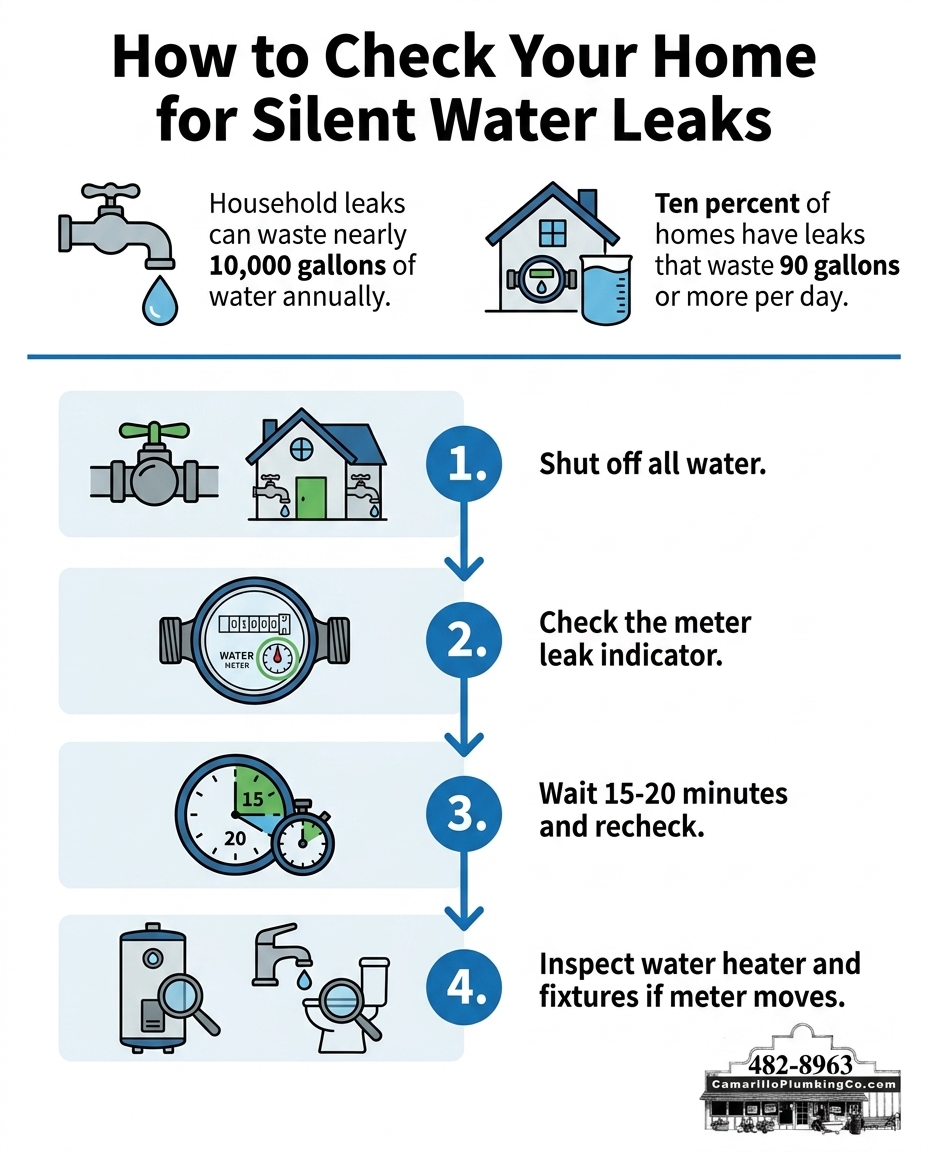
To get an accurate reading, you must completely eliminate all intentional water use on the property. This means taking a quick walk through your home and yard to ensure everything is turned off.
1. Shut off all indoor fixtures: Make sure sinks, showers, washing machines, and dishwashers are completely turned off. Do not flush any toilets during the test.
2. Disable outdoor water sources: Turn off all garden hoses, manual sprinklers, and automated irrigation systems.
3. Locate your primary water meter: Water meters are typically found near the street or curb, housed inside a concrete or plastic box set flush with the ground. Carefully remove the lid using a sturdy tool, watching out for insects or debris inside the box.
4. Observe the dial: Lift the protective cover on the meter face to reveal the dials and indicators.
5. Wait and recheck: If the indicators do not move immediately, wait 15 to 20 minutes without using any water in the house. Check the meter again. If the numbers have changed or the indicator is moving, you have a continuous leak somewhere in your system.
Reading the Leak Indicator
Modern water meters are equipped with a specific tool designed to detect even the smallest hidden volume loss: the low-flow leak indicator. This is usually a small, colored triangle, a silver star, or a sweeping hand located on the face of the meter.
When water flows through the meter, this indicator spins. Because it is highly sensitive, even a slow drip from a toilet will cause the triangle to rotate. If you look at the meter and the triangle is spinning while all water is shut off, you have a confirmed leak. It is a smart habit to write down the exact numbers on the digital or analog display before your 15-minute waiting period, and then compare them afterward. This tells you exactly how much water is escaping over a specific timeframe.
Troubleshooting Water Heater Repair Needs and T&P Valve Leaks
If your meter test confirms a leak, the next logical place we advise checking is your utility closet or garage. Water heater malfunctions are frequently directly connected to utility bill surges, and they often go unnoticed if the unit is tucked away out of sight.
The problem: Start by inspecting the area around the base of the tank. Look for pooling water, subtle moisture, rust trails, or damp drywall. A leaking water heater tank is a serious issue that wastes water continuously and threatens to flood the surrounding area.
The cause: One of the most common culprits for water loss at the heater is the Temperature and Pressure (T&P) relief valve. This critical safety component is designed to open and release water if the internal pressure or temperature of the tank reaches dangerous levels. Mechanical causes for T&P valve leaks include excessive thermal expansion in a closed plumbing system, a faulty internal spring, or sediment buildup that prevents the valve from seating properly after it opens. When a T&P valve fails, it can release water continuously down the discharge tube and straight into a floor drain, meaning you might never see a puddle even though you are losing hundreds of gallons a week.
The solution: While visually inspecting the tank and the discharge pipe is a safe DIY step, the repair process is strictly professional territory. We establish a clear boundary with our customers here: internal tank leaks, rusted bottoms, or valve replacements require licensed professionals to ensure safety and code compliance. An improperly installed T&P valve can turn a water heater into a literal hazard. If you spot moisture, rust, or a dripping discharge pipe, it is time to schedule professional water heater repair services to resolve the issue safely and stop the unexpected surge in your monthly water bill.
Recognizing the Signs of Hidden Slab Leaks
Sometimes, the meter indicates a massive leak, but every fixture, toilet, and water heater in the home is bone dry. When this happens, you are likely dealing with a hidden underground breach. In our years of servicing Camarillo CA residential properties, we've observed that soil shifting, seismic activity, and the natural degradation of aging copper pipes frequently lead to silent mainline or slab leaks.
A slab leak occurs when the water lines running beneath your home's concrete foundation corrode, crack, or burst. Because the pipe is buried under several inches of concrete, the water rarely bubbles up immediately. Instead, it washes away the soil supporting your foundation and slowly seeps into the porous concrete.
Secondary physical symptoms to look for include:
• Unexplained warm spots: If a hot water line bursts under the foundation, you may feel unusually warm areas on your tile, hardwood, or carpeted flooring.
• Audible clues: You might hear the faint, continuous sound of running water in the walls or floors, even when all fixtures are turned off.
• Moisture and mold: Unexplained mold growth on baseboards, damp carpets, or a persistent musty odor in specific rooms can indicate water wicking up from the slab.
• Foundation shifting: Cracks in the drywall, doors that suddenly stick, or uneven floors are severe structural risks caused by water eroding the soil beneath the home.
These leaks waste thousands of gallons of water very quickly. Because they are completely hidden, locating them requires more than a visual check. Advanced acoustic detection and specialized thermal imaging tools are mandatory for pinpointing the exact location of the breach without jackhammering your entire floor. When dealing with a suspected slab leak, prompt response times and trusted local expertise are critical to mitigating severe structural water damage. Relying on experienced plumbers in Camarillo ensures the leak is found accurately and repaired with minimal disruption to your home.
Isolating Surface-Level Fixture Leaks
Before assuming you have a catastrophic slab leak, it is important to rule out the most common, easily accessible surface-level leaks. These minor fixture issues are responsible for a large percentage of residential water waste and are often the true cause behind an unexpected surge in your monthly water bill.
Follow this checklist to isolate common surface leaks:
• Conduct a toilet dye test: Silent flapper valve leaks are notorious water wasters. The rubber flapper at the bottom of the toilet tank degrades over time due to chlorine and age. To test this, remove the tank lid and drop a few drops of food coloring (or a dye tablet) into the water. Do not flush. Wait 20 to 30 minutes. If the colored water seeps into the toilet bowl, the flapper is failing and allowing water to continuously run down the drain.
• Inspect under-sink supply lines: Open the cabinets under every bathroom and kitchen sink. Run your hand along the flexible supply lines and the shut-off valves at the wall. Look for slow, continuous drips, water stains on the cabinet floor, or active corrosion on the metal fittings.
• Check showerheads and tub spouts: A showerhead that drips once per second can waste over 3,000 gallons of water a year. Ensure that all handles are turned off tightly and check for residual dripping.
• Examine outdoor spigots and hose bibbs: Walk the perimeter of your home and inspect every outdoor faucet. Sun exposure and freezing temperatures can degrade the internal washers, allowing water to escape constantly. Disconnect garden hoses to ensure the spigot itself is not leaking into the soil.
Once you complete this checklist, you can determine if the identified issue can be resolved with basic maintenance—like swapping out a standard toilet flapper—or if the symptoms indicate broader system degradation. If you find multiple failing shut-off valves or severely corroded supply lines, bringing in an expert for general plumbing repairs is the best way to secure your system.
How Peak Summer Water Usage Masks Silent Indoor Leaks
One of the most challenging aspects of diagnosing a high utility bill is separating legitimate seasonal usage from actual system failures. Peak summer outdoor water usage for lawns, gardens, and topping off swimming pools naturally raises baseline utility costs.
The problem: During the peak heat of July, our team frequently sees homeowners dismiss the initial spike of a silent indoor leak as just seasonal irrigation. Because you expect your bill to be higher during the hottest months, a sudden volume increase from a running toilet or a failing water heater blends right in. Peak summer water usage for irrigation can easily mask an indoor leak that is wasting hundreds of gallons a day.
The cause: Automated sprinkler systems use a massive amount of water. If a sprinkler head breaks or an underground irrigation line cracks, the water simply absorbs into the hot summer soil, leaving little to no surface pooling. Furthermore, the high evaporation rates of mid-summer mean that even severe outdoor leaks evaporate before you notice a muddy patch in the yard.
The solution: To determine where the excess volume is going, you must isolate the irrigation system from the main house supply. Locate the dedicated shut-off valve for your sprinkler system and turn it off completely. Next, run the baseline water meter isolation test described earlier. If the meter indicator stops spinning when the irrigation is shut off, the leak is in your yard. If the meter continues to spin, the leak is inside the home. We highly recommend proactive meter testing specifically during peak summer months to catch these masked leaks early, before they result in a shocking unexpected surge in your monthly water bill.
Comprehensive Plumbing Maintenance Limits Unexpected Surges
Connecting leak detection to broader system health is the key to long-term home protection. A plumbing system is an interconnected network; when one area is under stress, the entire system suffers. Demonstrating whole-home awareness prevents future surprises and keeps your infrastructure operating safely.
Excessive municipal water pressure is a leading cause of premature fixture failure. Our technicians routinely discover that for many Camarillo CA residential properties, water enters the home at pressures well above the recommended 50 to 60 PSI. When pressure exceeds 80 PSI, it places undue stress on flexible supply lines, water heater tanks, internal valves, and lateral lines. Over time, this constant strain forces connections to weaken, leading to the exact types of silent leaks that drive up utility bills. Having a professional test your water pressure and install a Pressure Reducing Valve (PRV) if necessary is a crucial maintenance step.
Routine visual inspections of exposed plumbing catch early warning signs before they escalate. Make it a habit to check under sinks, around the water heater, and behind the washing machine every few months. Catching a small drip early prevents drywall damage, mold growth, and wasted water.
Finally, it is vital to connect supply-side health to drainage performance. A well-maintained system operates efficiently as a whole. Just as high pressure damages supply lines, neglected drains can cause backups that damage seals and pipe joints. Staying informed about important drain cleaning facts and maintaining clear lines ensures that when water flows into your home safely, it also exits without causing structural stress.
Transitioning from DIY Diagnostics to Professional Solutions
Systematic troubleshooting empowers you to understand exactly how your home operates. By taking the time to perform a baseline meter test, conducting toilet dye tests, and visually inspecting your water heater and exposed fixtures, you gather invaluable data about your plumbing system.
However, there is a clear threshold where DIY diagnostics must end. If your water meter shows a continuous leak, but your visual inspections reveal absolutely nothing, the breach is hidden. Whether it is an underground slab leak, a deteriorated mainline in the yard, or a slow leak inside a wall cavity, these issues require specialized equipment to locate and repair.
Do not let an unexpected surge in your monthly water bill continue to drain your finances. When you have exhausted the basic visual checks, our team is standing by. The right next step is to reach out to local experts for advanced detection and safe, code-compliant repairs that protect your property for the long haul.
Frequently Asked Questions
Why is my water bill so high all of a sudden?
A sudden, unexplained high water bill is usually the result of a silent plumbing leak. Common culprits include a continuously running toilet, a failing water heater relief valve, or a hidden underground slab leak. If your household habits have not changed and you have not increased your outdoor irrigation, a leak is the most likely cause. Performing a simple water meter isolation test is the best way to confirm this.
How do I find a hidden water leak in my home?
Finding a hidden leak starts with turning off all water sources and checking your primary water meter's leak indicator dial. If the dial moves while everything is off, a leak is present. From there, you should perform visual checks under sinks, around the water heater, and use dye tablets in your toilet tanks. If you still cannot locate the source, a professional plumber will use acoustic listening devices to find the leak inside walls or under the foundation.
Can a leaking water heater cause a high water bill?
Yes, a leaking water heater can cause a significant spike in your monthly water bill. Often, the Temperature and Pressure (T&P) relief valve fails and releases water continuously down a discharge tube directly into a floor drain. Because the water drains away immediately, you may never see a puddle, even though the tank is wasting hundreds of gallons of water over the course of a month.
How do you test for a silent water leak using the meter?
To test for a silent leak, first ensure that all indoor and outdoor water fixtures, including dishwashers and irrigation systems, are completely turned off. Locate your water meter and find the low-flow leak indicator, which is usually a small triangle or star on the dial face. Wait 15 to 20 minutes without using any water; if the indicator has moved or is actively spinning, you have a continuous leak in your plumbing system.
What are the early warning signs of a slab leak?
Early warning signs of a slab leak include unexplained warm spots on your flooring, the faint sound of running water when all fixtures are off, and sudden spikes in your water bill. You might also notice a persistent musty odor, damp carpets, or mold growth near baseboards. Because these leaks occur under the concrete foundation, they require immediate professional acoustic detection to locate and repair before severe structural damage occurs.
How often should a water heater T&P valve be inspected?
A water heater Temperature and Pressure (T&P) relief valve should be visually inspected at least once a year. You should look for any signs of continuous dripping, moisture, or rust around the valve and the discharge pipe. Because this valve is a critical safety feature that prevents the tank from over-pressurizing, any signs of failure or leakage mean it should be evaluated and replaced by a licensed professional immediately.
hear what our satisfied clients have to say