
The Essential Seasonal Home Maintenance Checklist: Preventing Summer Plumbing Disasters
.avif)

Protecting Your Home's Hidden Infrastructure This Summer
You are meticulously crossing items off your seasonal home maintenance checklist, from swapping out HVAC filters to clearing dead leaves from the gutters, but a slow drain in the guest bathroom is quietly turning into a major backup. When the July heat sets in, surface-level tasks are rarely enough to prevent catastrophic property damage. The most severe summer threats happen completely out of sight. Specifically, tree roots aggressively invade aging sewer main lines underground.
During the peak dry summer months, root systems expand rapidly in search of moisture, often finding it inside compromised plumbing. Homeowners are frequently forced to decide between paying repeatedly for temporary root clearing or investing in a professional camera inspection for a permanent solution. Understanding how these subterranean systems operate under seasonal stress is the first step in protecting your property.
For expert help safeguarding your home, explore our professional plumbing services.
The Hidden Danger of Underground Plumbing
Most property maintenance focuses on what you can see. You paint peeling siding, repair loose roof shingles, and trim overgrown bushes. However, the lateral sewer line—the critical pipe connecting your home's internal drainage system to the municipal sewer—remains entirely out of mind until a disaster strikes. Because this infrastructure is buried beneath yards, driveways, and sidewalks, it is highly susceptible to environmental changes that go unnoticed above ground.
As the ground heats up and dries out, the soil composition shifts. This shifting can put immense physical pressure on buried pipes, exposing minor vulnerabilities that quickly escalate into major blockages. A proactive approach to seasonal care requires shifting your attention downward and addressing the root causes of these hidden failures before they disrupt your summer plans.
Why Summer Droughts Accelerate Plumbing Emergencies
The Problem: Prolonged dry periods force large trees and shrubs into survival mode. When surface water evaporates and rainfall ceases, vegetation must send its roots deeper and wider in a desperate search for hydration and nutrients.
The Cause: Southern California's dry Mediterranean summer climate actively accelerates this root growth into aging sewer laterals. During these arid months, the moisture inside your plumbing becomes a magnet for thirsty root systems. Even microscopic cracks or slightly loose joints in underground pipes release a continuous plume of water vapor into the surrounding dry soil. Roots are naturally drawn to this vapor trail through a process called hydrotropism. Once they reach the source, hair-like roots infiltrate the tiny fissures, growing thicker and stronger as they consume the steady supply of water and oxygen flowing through the line.
The Solution: Addressing these underlying vulnerabilities is a critical component of general plumbing repairs before full blockages occur. This is especially true in older Camarillo residential neighborhoods, which frequently feature beautiful, mature trees planted decades ago directly above aging clay or cast-iron utility lines. Recognizing how different pipe materials react to environmental stress helps in assessing your home's specific risk level.
Pipe Material Vulnerability Comparison
• Vitrified Clay — Common Era Installed: Pre-1980s — Vulnerability to Root Intrusion: High — Why It Fails During Droughts: Joints degrade over time; porous surface allows vapor escape, attracting aggressive roots.
• Cast Iron — Common Era Installed: Pre-1970s — Vulnerability to Root Intrusion: Moderate to High — Why It Fails During Droughts: Corrodes and channels from the bottom up; rust creates entry points for moisture-seeking roots.
• Orangeburg — Common Era Installed: 1940s-1970s — Vulnerability to Root Intrusion: Extreme — Why It Fails During Droughts: Made of tar-paper; deforms and collapses under soil weight when ground moisture shifts.
• PVC / ABS — Common Era Installed: 1980s-Present — Vulnerability to Root Intrusion: Low — Why It Fails During Droughts: Fewer seams and glued joints prevent vapor leaks, though ground shifting can still cause breaks.
Expanding Your Seasonal Home Maintenance Checklist
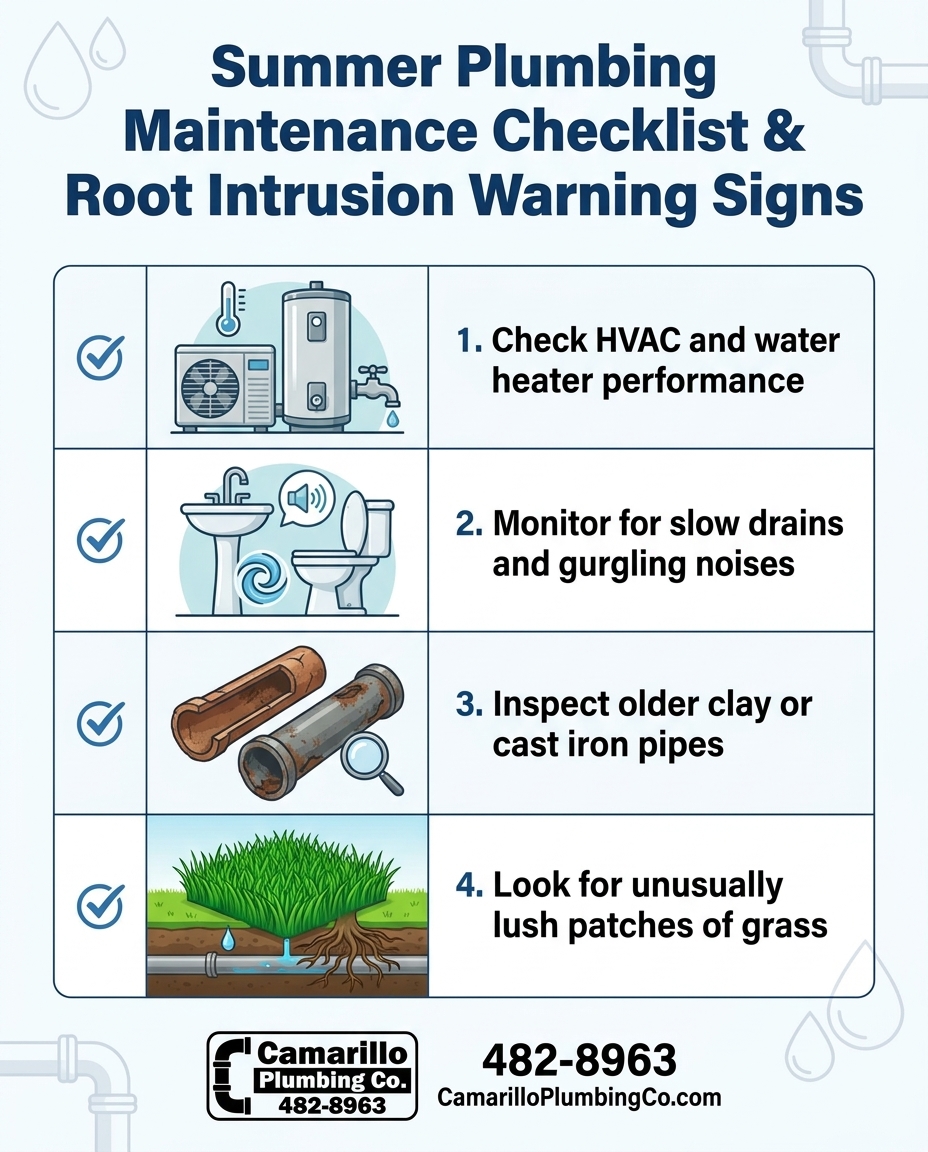
A comprehensive checklist must go beyond landscaping and air conditioning to include heavy-use plumbing systems. Summer brings unique stresses to your home's water infrastructure, from increased laundry loads to frequent houseguests using the bathrooms. Preparing your home requires a systematic evaluation of both visible and hidden components.
• Inspect visible pipes for condensation: High summer humidity mixed with cold water running through indoor pipes can cause heavy condensation. Check basements, crawlspaces, and under-sink cabinets. What looks like harmless "sweat" can drip and cause unseen water damage or mold growth over time.
• Evaluate water pressure levels: Sudden or gradual drops in water pressure across multiple fixtures can indicate hidden underground leaks. When soil dries and shifts, it can pull on the main water service line, causing stress fractures that bleed pressure before the water ever enters the home.
• Test outdoor hose bibs and irrigation lines: Winter weather can occasionally cause microscopic damage to outdoor spigots that only becomes apparent when you turn them on for summer gardening. Look for weeping around the handle or water pooling near the foundation.
• Assess indoor appliance efficiency: The demand on your hot water system does not disappear in the summer. Increased showers from pool days and extra laundry cycles put a heavy load on aging tanks. Recommend evaluating the performance of these appliances, including scheduling water heater repair and replacement evaluations, to ensure maximum efficiency during peak demand.
• Schedule a preventative drain assessment: Before hosting large summer gatherings, ensure your main line is clear of early-stage root intrusion. A slow drain in May often becomes a complete backup by the Fourth of July.
Warning Signs of a Compromised Sewer Line
Recognizing the early symptoms of root intrusion helps homeowners avoid devastating full backups and implement proper drain clearing strategies before raw sewage enters the living space. Because the main sewer line connects every fixture in the house, the warning signs often appear in multiple locations simultaneously.
• Recurring slow drains across multiple fixtures: If a single sink is draining slowly, the issue is likely localized to that specific p-trap. However, if the kitchen sink, guest bathroom shower, and laundry drain are all sluggish at the same time, the blockage is deep within the main lateral line.
• Gurgling noises from toilets or sinks: A compromised sewer line struggles to vent air properly. When roots block the pipe, the water flowing down pushes trapped air backward. This air forces its way up through the nearest water seal, creating a distinct bubbling or gurgling sound in toilets when a shower is running elsewhere.
• Foul, sewage-like odors: Healthy plumbing systems use water barriers (traps) to keep sewer gases out of the home. If roots cause a backup that siphons these traps dry, or if a cracked underground pipe is leaking wastewater into the soil, you will notice lingering, unpleasant odors emanating from drains or hovering in the yard.
• Unusually lush, green patches of grass: Wastewater acts as a highly effective, nitrogen-rich fertilizer. If you notice a specific section of your lawn thriving and growing significantly faster than the rest of the yard during a dry summer, it is a strong indicator that the sewer line directly below is cracked and leaking nutrients into the soil.
• Frequent need for plunging: Toilets that require constant plunging despite normal usage are often fighting against a partial blockage further down the line. Reviewing drain cleaning tips you must know can help clarify when a plunger is no longer the right tool for the job.
The Snaking Cycle: Why Temporary Fixes Fall Short
When faced with a backed-up sewer line, the immediate instinct is to relieve the pressure as quickly as possible. Traditionally, this means deploying a mechanical rooter machine—a heavy-duty steel cable with a cutting blade attached to the end. While this method restores flow, it is strictly a temporary measure.
Mechanical snaking only punches a temporary hole through the dense root mass blocking the pipe. The spinning blades chop away the roots inside the pipe's interior, allowing water to pass through again. However, the machine does absolutely nothing to address the structural crack or the separated joint that allowed the roots to enter in the first place.
Because the roots are left intact just outside the pipe wall, they experience a "hydra effect." Roots grow back thicker and faster after being cut, acting much like a pruned hedge. They quickly re-enter the pipe to seek out the moisture, turning what should be a one-time issue into a recurring seasonal nightmare that requires service every few months.
Furthermore, repeated snaking can actually damage fragile, aging clay or cast iron pipes. The aggressive thrashing of heavy steel cables against brittle pipe walls can cause existing cracks to widen, eventually leading to a complete structural collapse. Relying solely on temporary clearing often leads to an unexpected emergency plumbing response when the pipe finally gives way entirely, resulting in major excavation and property disruption.
The Definitive Solution: Professional Camera Inspections
The Problem: Blindly snaking a drain leaves homeowners guessing about the true condition of their underground infrastructure. Without seeing inside the pipe, it is impossible to know if you are dealing with a minor root intrusion, a severe belly (sag) in the line, or a completely collapsed pipe.
The Cause: Underground pipes are inaccessible by nature. Traditional diagnostic methods required digging exploratory trenches, which destroys summer landscaping, ruins driveways, and adds massive labor costs just to find the source of the issue.
The Solution: The definitive answer lies in modern diagnostic technology. A professional video camera inspection involves feeding a high-resolution, waterproof camera attached to a flexible fiber-optic cable deep into the sewer lateral. This provides real-time, visual proof of the pipe's interior condition. Fast, transparent diagnoses via professional video inspections provide a clear, trust-building alternative to blind snaking. You can see exactly where the roots are entering, the extent of the damage, and the overall health of the pipe material.
Moving to Permanent Trenchless Repairs
Once the exact location and severity of the root intrusion are pinpointed using the camera and surface locating sondes, homeowners can explore permanent solutions that end the snaking cycle. Trenchless pipe repair methods have revolutionized how underground plumbing is restored.
• Cured-In-Place Pipe (CIPP) Lining: This process involves inserting a flexible, epoxy-saturated felt liner into the existing damaged pipe. Once inflated and cured, it creates a brand-new, seamless, structural pipe within the old one. Because there are no joints or seams, roots cannot penetrate it.
• Pipe Bursting: For pipes that are too damaged to line, pipe bursting uses a conical steel head to break apart the old pipe while simultaneously pulling a brand-new, seamless high-density polyethylene (HDPE) pipe into place behind it.
Both trenchless methods permanently seal out roots without destroying summer landscaping, preserving your manicured lawns and hardscapes. Diagnosing the problem accurately with a camera is the most cost-effective long-term strategy, allowing you to transition from reactive band-aids to proactive infrastructure protection.
Frequently Asked Questions About Summer Plumbing Maintenance
Why do drains back up more in the summer?
Dry soil conditions cause tree roots to aggressively seek moisture inside sewer lines, leading to blockages. During the summer drought, surface water evaporates, forcing vegetation to expand its root network deeper underground. When these roots sense the water vapor escaping from minor cracks in aging plumbing, they infiltrate the pipe, grow rapidly in the nutrient-rich environment, and eventually catch enough debris to cause a complete backup.
What are the signs of a broken sewer pipe?
Look for sinkholes in the yard, foul odors, slow drains, and unusually green patches of grass. A broken pipe allows wastewater to leak directly into the surrounding soil, which acts as a fertilizer for the lawn above. Inside the home, you will typically experience gurgling sounds from the toilet when running the sink, or notice that multiple fixtures are draining sluggishly at the same time.
How do you prevent tree roots in sewer lines?
Routine professional inspections, smart landscaping choices, and trenchless pipe lining to seal vulnerabilities are the best prevention methods. Planting large, fast-growing trees far away from underground utility lines reduces the initial risk. For older homes, having a camera inspection performed can identify early-stage intrusions, allowing you to install a seamless epoxy liner before the roots cause the pipe to collapse completely.
What should be on a plumbing maintenance checklist?
Checking water pressure, inspecting exposed pipes for leaks, testing the water heater, and scheduling a sewer camera inspection are essential tasks. Summer places heavy demand on household plumbing due to increased washing machine usage, outdoor watering, and frequent showers. A thorough checklist ensures that both the visible appliances and the hidden underground infrastructure are prepared to handle the peak seasonal load.
Why is snaking a drain sometimes not enough?
Snaking only temporarily clears a path; it does not repair the pipe crack or stop roots from growing back thicker. The mechanical blades simply trim the roots inside the pipe, leaving the exterior root mass and the structural vulnerability completely intact. Within a few months, the roots will return, often denser than before, turning a temporary fix into a recurring, frustrating cycle.
Take Control of Your Summer Plumbing Health
True seasonal maintenance requires looking beyond the surface to protect the hidden infrastructure of the home. While changing air filters and cleaning gutters are vital tasks, safeguarding your underground sewer lines from aggressive summer root intrusion is what ultimately prevents catastrophic property damage.
Homeowners must move past temporary fixes like repeated mechanical snaking and seek permanent diagnostic solutions for recurring drainage issues. By utilizing advanced camera inspections, you gain total transparency into the health of your pipes, allowing you to make informed decisions about long-term trenchless repairs. We encourage you to explore professional evaluations for all your home's critical systems to ensure a safe, efficient, and stress-free summer season.
hear what our satisfied clients have to say