


Water Softener in Camarillo, CA
.avif)

Hard water is a common and costly problem in Camarillo homes. Mineral-rich groundwater in Ventura County leads to scale buildup that shortens appliance lifespans, reduces heater efficiency, makes soaps and detergents less effective, and leaves spotty glassware and dull-looking fixtures. A professionally selected and installed water softener prevents scale, protects plumbing and appliances, improves cleaning performance, and noticeably enhances the feel of your water throughout the house.
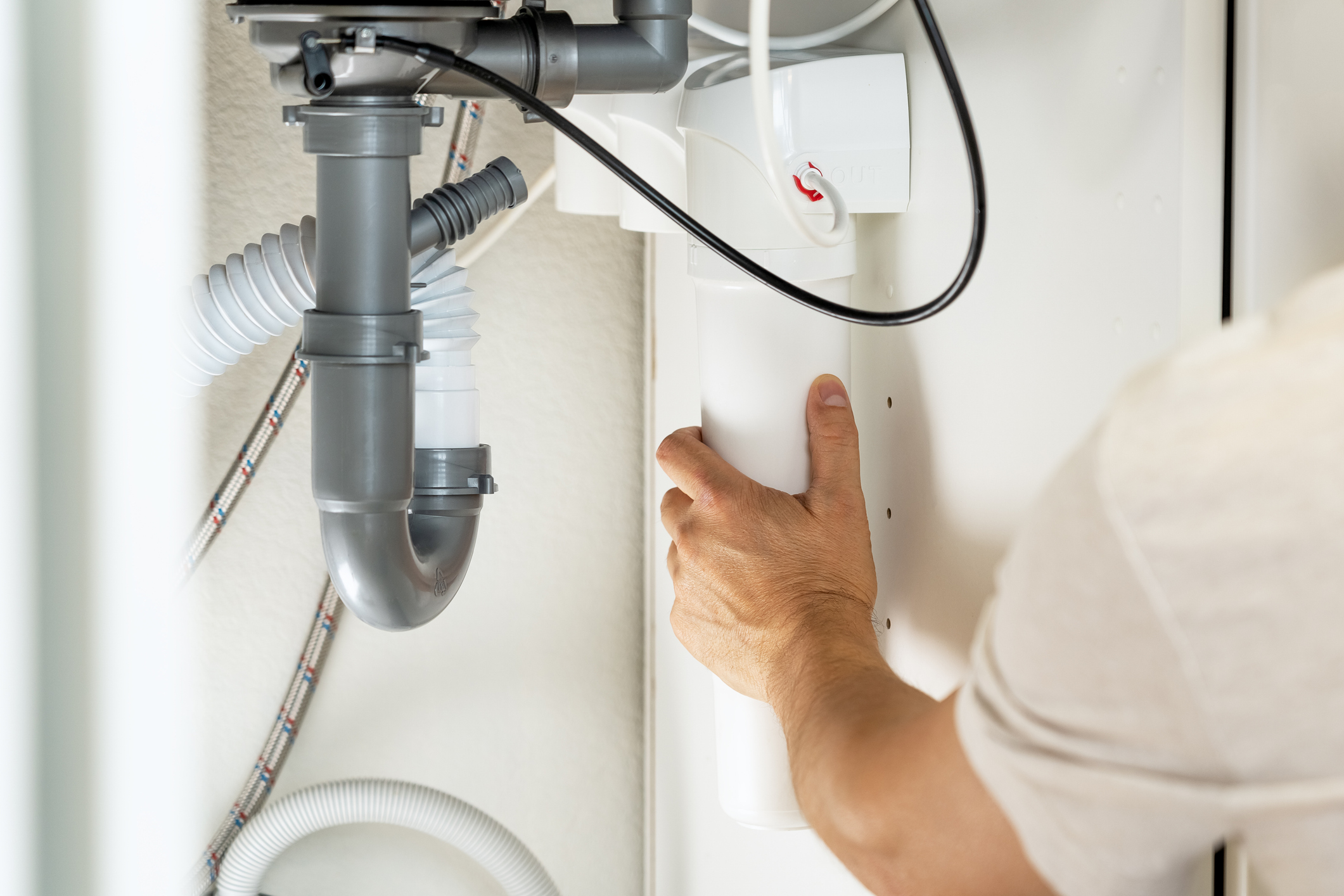
Common hard water issues in Camarillo homes
- Mineral scale on faucets, showerheads, and inside hot water heaters
- Reduced efficiency and lifespan of dishwashers, washing machines, and tankless water heaters
- Soap scum, stiff laundry, and higher detergent usage
- Clogged irrigation lines and scale in pool equipment
- Spotting on glassware and staining on fixtures
Camarillo Plumbing recommends addressing hardness proactively because local water chemistry and the coastal climate accelerate common scale-related problems.
Types of water softening systems
- Salt-based ion-exchange softeners: The industry standard for removing hardness. These systems exchange calcium and magnesium ions for sodium or potassium, delivering truly softened water and eliminating scale. Best for households with moderate to high hardness levels.
- Salt-free conditioners: Use template-assisted crystallization or other technologies to reduce scale formation without removing hardness minerals. They do not produce softened water in the traditional sense but are low-maintenance and useful where salt use is restricted.
- Dual-tank systems: Provide continuous soft water during regeneration cycles and are ideal for larger homes or properties with high peak flow demands.
- Hybrid systems and specialty media: Combine scale control, iron removal, or bacteriostatic media for sites with multiple water quality issues.
Water testing and proper system sizing
Accurate water testing is the foundation of a successful softener installation. Tests should measure:
- Hardness (grains per gallon)
- Iron and manganese
- pH and total dissolved solids
- Chlorine or other disinfectants that can affect resin life
Sizing depends on household size, daily water usage, peak flow requirements, and hardness level. Properly matched capacity prevents frequent regeneration and ensures efficient operation. Camarillo Plumbing uses on-site testing and water use estimates to recommend the correct capacity and regeneration settings.
Professional installation process
- Site evaluation: Determine optimal location for the softener, brine tank, drain, and any pre- or post-filtration equipment.
- Pre-filtration setup: Install sediment or carbon pre-filters as needed to protect the resin and improve performance.
- Mechanical and utility connections: Connect supply, drain, and electrical components; install a bypass valve for serviceability.
- System programming and water quality verification: Program regeneration cycles to household usage and verify softened water at fixtures.
- Local compliance: Follow municipality requirements and plumbing codes for drainage and backflow prevention.
A professional installation maximizes performance, avoids common mistakes, and ensures plumbing protection.
Routine maintenance and care
- Salt refills: For salt-based systems, check salt levels regularly and top up before the brine tank drops too low. Use the recommended salt type.
- Resin care: Occasional resin cleaners or professional inspections help when iron or chlorine levels threaten resin life.
- Scheduled service: Annual or biennial inspections catch issues early, verify control valve operation, and confirm regeneration parameters.
- Seasonal checks: Inspect brine tanks and clear any salt bridges or crusts that form in humid conditions.
Routine maintenance extends system life and keeps efficiency high.
Common repairs and troubleshooting
- Salt bridging or salt mushing in the brine tank causing failed regeneration
- Loss of softening due to exhausted resin or high iron fouling
- Control valve errors or stuck regeneration cycles
- Low water pressure caused by incorrect plumbing connections or clogged pre-filters
- Leaks at fittings or brine tank components
Typical repairs include control valve service, resin replacement, brine tank repair, and sensor or valve replacement. Preventive maintenance reduces the frequency and cost of repairs.
Expected cost factors and financing options
Costs vary based on system type, capacity, installation complexity, water quality needs, and any required pre-filtration or plumbing modifications. Factors that influence overall cost include:
- Salt-based vs salt-free technology
- Single-tank versus dual-tank systems
- Required pre- and post-filtration equipment
- Access to installation site and plumbing modifications
Financing and payment options are commonly available through providers, including equipment financing, maintenance plans, and salt delivery subscriptions. Review payment terms and service inclusions before choosing a plan.
Warranty considerations
Warranties typically cover control valves, tanks, and media for varying durations. When evaluating warranties:
- Confirm what parts and labor are included
- Note warranty conditions such as required professional installation and scheduled maintenance
- Ask about coverage for resin media, control electronics, and workmanship
Keep records of water tests, installation documentation, and maintenance to preserve warranty eligibility.
Integration with whole-home filtration and reverse osmosis
A water softener is often part of a layered water treatment strategy:
- Install a sediment pre-filter ahead of the softener to protect resin from particulates.
- For chlorine or taste and odor issues, a carbon filter may be paired with the system, typically after softening or as a pre-treatment depending on system design.
- When a reverse osmosis (RO) system is used for drinking water, softened water upstream protects RO membranes from scaling; RO systems then remove any residual sodium and provide purified drinking water.
- For properties with iron, combining iron-specific treatment with a softener prevents resin fouling.
Proper sequencing and professional design ensure the softener complements whole-home filtration and RO without unintended impacts.
Benefits summary and practical maintenance tips
A correctly sized and installed water softener in Camarillo delivers:
- Reduced scale and extended appliance life
- Better hot water heater efficiency and lower energy use
- Softer-feeling water, easier cleaning, and lower detergent bills
- Fewer plumbing repairs and less frequent fixture replacement
Practical tips: test your water before choosing a system, monitor salt levels monthly, schedule annual inspections, and consider dual-tank systems for uninterrupted soft water where continuous demand is important. Camarillo Plumbing has deep local experience with Ventura County water chemistry and system choices that match regional needs.
Q: How do I know if I need a water softener?
A: Signs include persistent scale on fixtures, frequent appliance issues related to scale, stiff laundry, and high detergent use. A hardness test will confirm levels measured in grains per gallon.
Q: Which system is best for high-iron water?
A: Systems that combine iron-specific treatment with ion-exchange softening or specialized media are best. On-site testing determines the right combination.
Q: Are salt-free systems maintenance-free?
A: Salt-free conditioners require less routine replenishment but still benefit from periodic inspection and pre-filter replacement to maintain performance.
Q: Will a softener affect my drinking water?
A: Salt-based softeners add a small amount of sodium; a reverse osmosis system downstream can remove that for drinking water if desired.
Q: How often should I service a softener?
A: Annual professional inspections and routine checks of salt levels and pre-filters will keep the system operating reliably.
hear what our satisfied clients have to say