

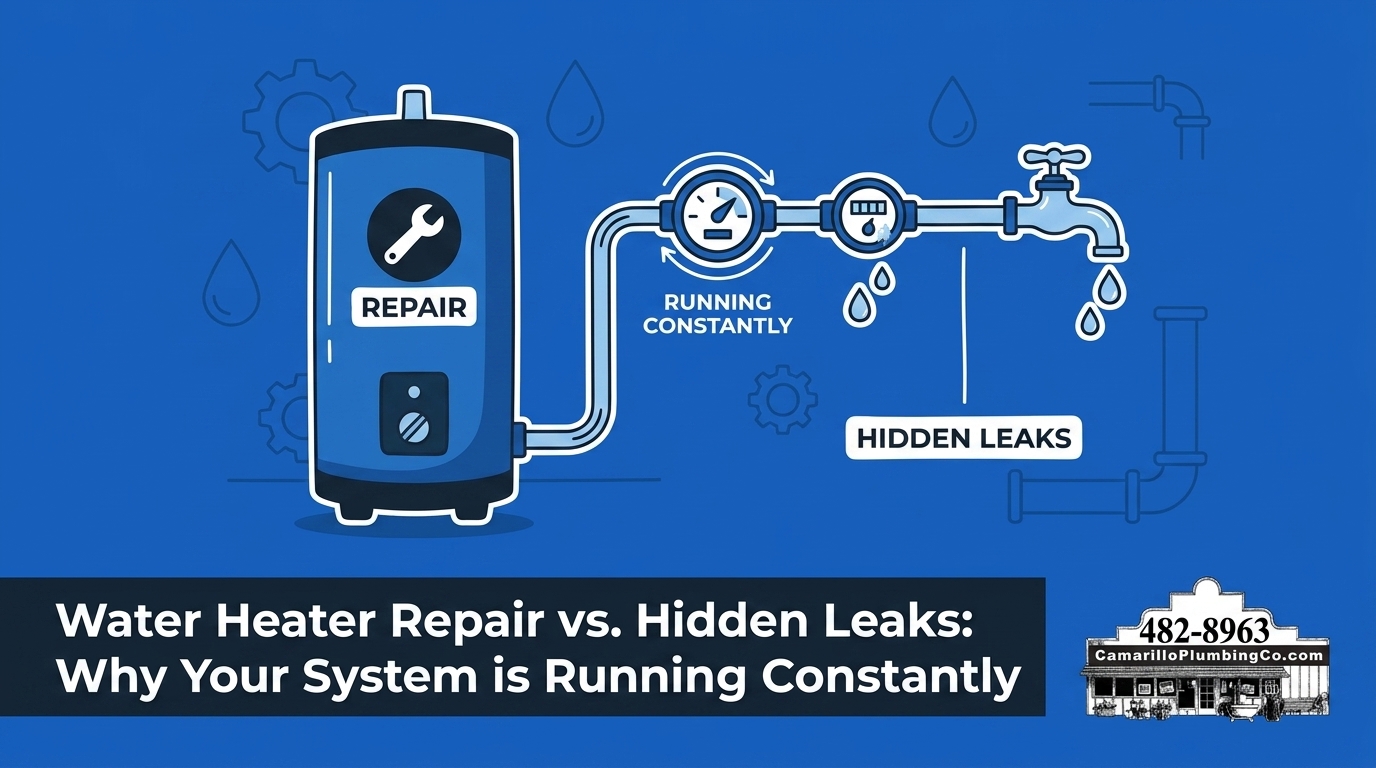
Water Heater Repair vs. Hidden Leaks: Why Your System is Running Constantly
.avif)

The Late-Summer Water Bill Shock: Irrigation or Hidden Leak?
August in Southern California brings intense heat, and mastering your home maintenance tips and troubleshooting often starts with deciphering your suddenly skyrocketing water bill. When late summer arrives, most homeowners expect to see an increase in their monthly water usage. It is entirely normal to assume that a higher August bill is strictly the result of running the sprinklers more often to keep the lawn alive during the hottest weeks of the year. However, a massive spike in usage accompanied by damp foundation edges often points to a much more serious underlying issue.
The hidden threat that many homeowners overlook is a constantly running water heater that is not actually heating water for the home's fixtures, but rather feeding an underground hot water leak. When a pipe bursts beneath your concrete floor, the system continuously pulls in fresh, cold water to replace what is leaking out into the soil. This forces your heating unit to run non-stop, driving up both your water and energy costs simultaneously. Knowing when to write off a usage spike as routine seasonal irrigation and when to investigate further is a critical decision point for protecting your property. Whether you need comprehensive Professional Plumbing Services or targeted Water Heater Repair, diagnosing the root cause early saves your home from lasting structural damage.
How Late-Summer Soil Shifting Stresses Encased Plumbing
To understand why these leaks happen seemingly out of nowhere, you have to look at the ground beneath your home. The specific environmental trigger causing these plumbing failures is rooted in the regional climate. Camarillo's Mediterranean climate features long, arid stretches, and August is historically one of the driest months of the year. This prolonged lack of moisture maximizes soil shrinkage, placing tremendous stress on aging underground plumbing lines.
Expansive soils react dramatically to moisture changes. During the wet winter months, the soil swells and pushes against the concrete. By late summer, the intense heat and lack of rain cause that same soil to contract, dry out, and pull away from the foundation. This phenomenon, known as August / late summer dry soil shifting, removes the physical support beneath the concrete slab. Keeping up with drain cleaning tips and maintenance helps prevent interior blockages, but exterior pressure from shifting earth is a structural hazard that requires a different level of vigilance.
The Mechanics of Foundation Settlement
When the soil recedes, the heavy concrete slab attempts to settle into the newly created void. Unfortunately, the plumbing pipes running through and directly beneath that concrete are rigid. As the foundation settles unevenly, it exerts immense physical torque and shearing force on the encased copper or galvanized pipes. Eventually, the metal fatigues and cracks. When this happens to a hot water line, it creates a sudden, high-volume leak that perfectly mimics the symptoms of a failing water heater appliance.
Signs of a Hot Water Slab Leak Under Your Foundation
Differentiating between a failing water heating appliance and a hot water slab leak is essential for applying the correct solution. Because both scenarios result in a lack of hot water at the tap and a burner that runs constantly, homeowners often misdiagnose the problem. However, Camarillo CA residential slab foundations typically present very specific physical warning signs when an underground leak is present.
Physical indicators of an underground hot water leak:
• Warm spots on the floor: Unexplained patches of radiant heat on your tile, hardwood, or carpet, particularly in rooms far from the heating unit.
• Damp foundation edges: Moisture wicking up the exterior stucco or pooling along the perimeter of the concrete slab, even when the sprinklers have been off.
• Phantom running water: The distinct sound of rushing or trickling water within the walls or floors when all faucets and appliances are completely shut off.
• Loss of water pressure: A noticeable drop in hot water pressure at your showers and sinks, as a significant portion of the flow is escaping beneath the house.
A continuous leak from a hot water line acts like an open faucet that you can never turn off. The heating unit is forced to fire up continuously to warm the endless supply of incoming cold water. This creates a severe dual cost: wasting massive amounts of treated water and significantly increasing your monthly gas or electrical usage. Sudden, severe underground leaks threatening foundation integrity require immediate attention regardless of the hour, which is why having a reliable 24/7 Emergency Plumber on call is critical for mitigating damage.
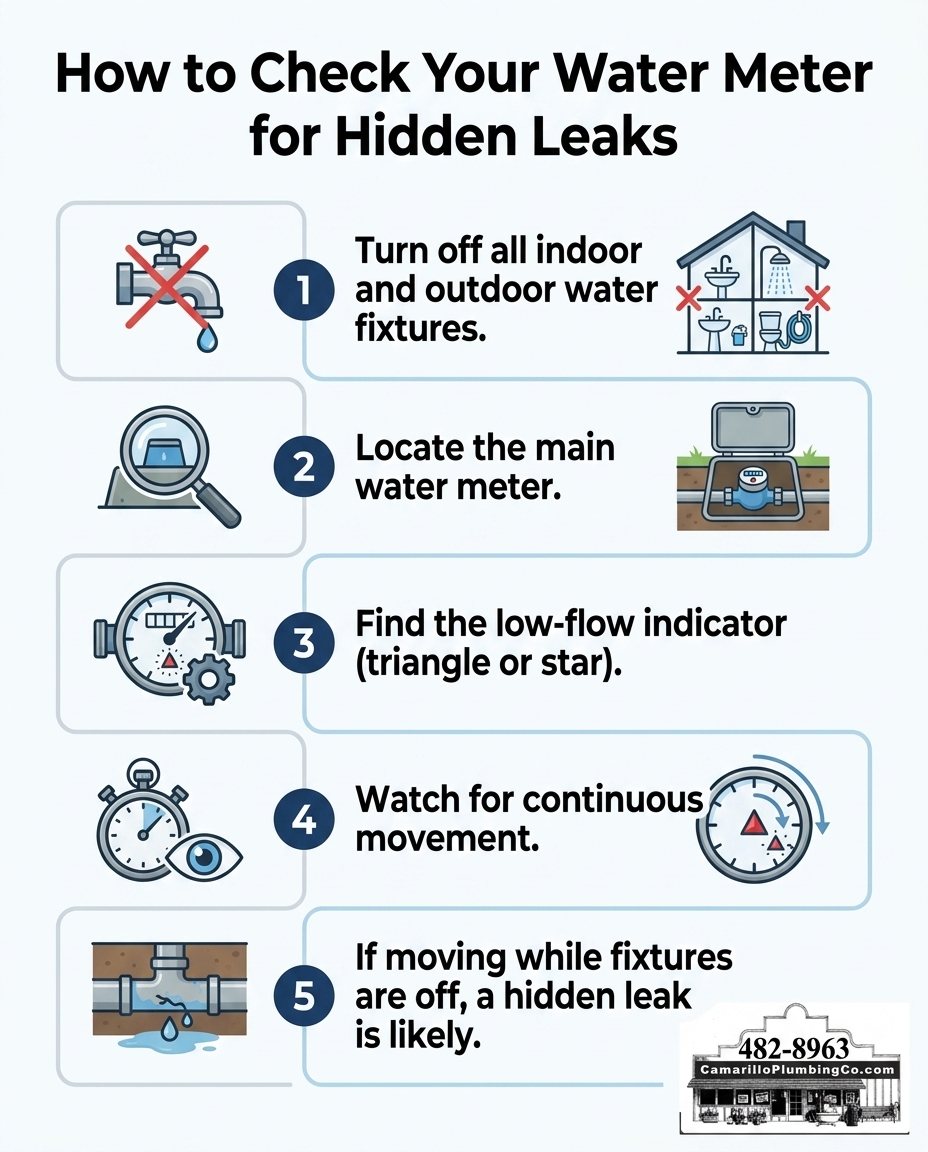
How to Check Your Water Meter for Hidden Leaks
Before assuming your water heater needs to be replaced, you can perform a simple, non-technical diagnostic check to rule out high irrigation usage and confirm the presence of a hidden leak. This process requires no specialized tools and provides immediate answers regarding unexplained continuous spinning on the water meter indicator.
1. Shut off all water sources: Ensure that every indoor and outdoor water fixture is completely turned off. This includes faucets, showers, dishwashers, washing machines, and automated irrigation systems.
2. Locate your main water meter: Find the primary meter box, which is usually located near the street, sidewalk, or property line under a heavy concrete or metal lid.
3. Find the low-flow indicator: Open the meter cover and look at the dial. You will see a small, often red or black, triangle or star-shaped dial. This is the low-flow indicator, designed to detect even the smallest amount of water movement.
4. Observe the dial: Watch the low-flow indicator closely for three to five minutes. Do not use any water inside the house during this observation period.
5. Interpret the results: If the indicator remains perfectly still, your plumbing system is holding pressure, and your high bill is likely due to irrigation. If the indicator is moving or spinning despite all valves being closed, a hidden leak is highly probable.
Hard Water and Appliance Failure: When You Actually Need Water Heater Repair
While August soil shifting is a primary culprit for slab leaks, genuine appliance failures are equally common and require a different approach. It is important to contrast slab leak symptoms with actual tank degradation. Southern California is known for its high mineral content, and this regional hard water creates a dual threat alongside exterior soil stress. Experienced Plumbers in Camarillo routinely see how this combination accelerates wear on residential plumbing systems.
When hard water is heated, dissolved minerals like calcium and magnesium precipitate out of the liquid and fall to the bottom of the tank. Over time, this creates a thick layer of sediment. This mineral buildup acts as an insulator between the heating element or gas burner and the water itself. The unit has to work twice as hard to reach the set temperature, leading to overheating, metal fatigue, and premature failure. Routine flushing is the only effective way to remove this sediment and extend the appliance's lifespan.
Symptoms of a Failing Tank
If your water meter test shows no hidden leaks, but your system is still struggling, the appliance itself is likely the issue. You may notice inconsistent water temperatures despite making thermostat adjustments, or you might find visible moisture and minor pooling directly beneath the tank unit. Another hallmark sign of sediment buildup is a loud popping or rumbling noise coming from the tank—this is the sound of water trapped beneath the mineral layer boiling and bursting through the sediment.
• Constant Burner Operation — Likely Cause: Slab Leak: Yes (replacing leaked water) — Likely Cause: Failing Tank: Yes (struggling to heat through sediment)
• Warm Spots on Flooring — Likely Cause: Slab Leak: Yes (hot water under concrete) — Likely Cause: Failing Tank: No
• Rusty or Discolored Water — Likely Cause: Slab Leak: No — Likely Cause: Failing Tank: Yes (interior tank corrosion)
• Water Meter Spinning — Likely Cause: Slab Leak: Yes (continuous flow) — Likely Cause: Failing Tank: No (unless tank is actively draining)
• Loud Popping Noises — Likely Cause: Slab Leak: No — Likely Cause: Failing Tank: Yes (boiling under sediment)
Modern, Non-Destructive Leak Detection Methods
If your diagnostic checks point toward an underground issue in Camarillo CA residential slab foundations, the next concern is usually the fear of destructive exploratory plumbing work. Many homeowners picture jackhammers tearing up their expensive hardwood or tile floors just to find the source of the problem. Fortunately, modern leak detection technology has eliminated the need for blind digging.
Professional technicians utilize highly sensitive, non-destructive tools to pinpoint the exact location of a pipe failure before a single tile is removed. Acoustic listening devices act like high-powered stethoscopes, allowing professionals to hear the precise frequency of water escaping a pressurized pipe through solid concrete. Thermal imaging cameras scan the flooring to visualize the heat bloom radiating from a hot water leak. Electronic line tracing equipment maps the exact layout of the underground pipes. Accurate diagnosis is the critical first step before any repair work begins, ensuring that any necessary concrete removal is limited to a small, surgically precise area.
Frequently Asked Questions About Water Heater Leaks and Usage
Why is my water heater running constantly?
A water heater runs constantly when it is continually triggered to heat incoming cold water. This usually means you either have a hidden hot water leak draining the system, or thick sediment buildup is preventing the burner from effectively transferring heat to the water. Checking your water meter can help determine if a hidden leak is the actual cause.
How do I know if I have a hot water slab leak?
The most common signs include unexplained warm spots on your flooring, a sudden drop in hot water pressure, and the sound of running water when all fixtures are closed. You may also notice dampness around the exterior edges of your foundation. An unexplained continuous spinning on the water meter indicator is the strongest confirmation of an active leak.
Can a leaking water heater increase my water bill?
Yes, any continuous leak will cause a noticeable increase in your monthly water bill. If the leak is on the hot water side of your plumbing system, you will also see a simultaneous spike in your gas or electric bill because the heating unit is running non-stop to warm the replacement water.
Why is my water bill so high in the summer?
Summer water bills typically rise due to increased lawn irrigation, filling swimming pools, and more frequent showers. However, if your usage doubles or triples suddenly without a major change in your landscaping habits, it is often a sign of a hidden underground leak exacerbated by dry, shifting soil.
How can I tell if my high water bill is from irrigation or a leak?
The easiest way to tell the difference is by performing a simple water meter test. Turn off all indoor fixtures and outdoor irrigation systems, then check the low-flow indicator on your main water meter. If the dial is still moving, water is escaping the system, indicating a leak rather than normal seasonal usage.
Protect Your Home's Foundation Before the Season Changes
Distinguishing between normal summer irrigation usage and a hidden underground leak is a vital skill for any homeowner. When August / late summer dry soil shifting puts immense pressure on your home's infrastructure, knowing how to interpret a spinning water meter and a constantly running heating unit can save you from catastrophic foundation damage. If you notice signs of an underground rupture, modern non-destructive diagnostics can pinpoint the issue and provide peace of mind without ruining your flooring. Take the time to monitor your usage, perform routine visual inspections, and always seek professional evaluation if your water meter shows unexplained, continuous activity when the house is quiet.
hear what our satisfied clients have to say