
Home Maintenance Tips and Troubleshooting: Identifying Hidden Plumbing Leaks
.avif)

Uncovering Hidden Plumbing Threats in the Summer Heat
Your water bill just arrived, and the unexpectedly high numbers immediately force you to reconsider your home maintenance tips and troubleshooting strategy. Unexplained damp spots around the property or a sudden spike in water usage often leave homeowners with a frustrating decision point: determining whether this extra volume is simply due to normal seasonal irrigation or if there is a hidden structural plumbing leak silently damaging the property. When the peak July heat arrives, the environmental shifts put immense pressure on both your landscaping and your underground plumbing infrastructure.
High temperatures cause rapid evaporation, which naturally drives up outdoor water usage. Because you expect to use more water to keep your lawn green, a continuous trickle from an underground pipe fracture can easily masquerade as standard seasonal usage. This perfectly masks the early warning signs of a failing main line or a deteriorating slab foundation. Accurate, professional diagnostics are essential to separate expected environmental demands from serious structural failures before they cause extensive property damage.
For comprehensive support in addressing these hidden issues, explore our General Plumbing solutions to keep your home's infrastructure secure.
How Expansive Soil Impacts Your Plumbing Infrastructure
The problem: Many homeowners do not realize that the soil beneath their property is constantly moving. In regions like Camarillo, the ground is heavily composed of expansive clay soils. These soils react aggressively to environmental changes, swelling massively when saturated and shrinking significantly during severe dry spells.
The cause: When the summer sun bakes the ground for weeks on end, the moisture evaporates deep into the earth. As the clay soil loses its water content, it contracts and pulls away from the concrete slab and the underground plumbing lines. This leaves the heavy, rigid pipes suspended without adequate physical support. The sheer weight of the earth above, combined with the weight of the house, presses down on these unsupported lines, creating immense physical stress that eventually leads to bowing, cracking, and catastrophic fractures.
The solution: Mitigating this risk requires a proactive approach to foundation health and relying on professional Plumbing Services when you suspect a structural shift has compromised your lines. Maintaining consistent moisture levels around your foundation can help stabilize expansive soils, preventing the severe contraction that snaps underground pipes.
The Mechanics of Soil Subsidence
Soil subsidence is the technical term for the ground sinking or settling due to a loss of underground moisture. Think of the earth beneath your home like a dense sponge. When the sponge is wet, it is thick and supportive. When it completely dries out, it shrinks and hardens. As the ground subsides during a prolonged drought, the main water line and the sewer lines are forced to bear loads they were never designed to handle. The microscopic joints connecting the pipe sections are usually the first to fail under this extreme tension, creating tiny fissures that leak water directly into the shifting soil, further complicating the structural integrity of your property's foundation.
Irrigation Spikes vs. Structural Leaks: Reading the Signs
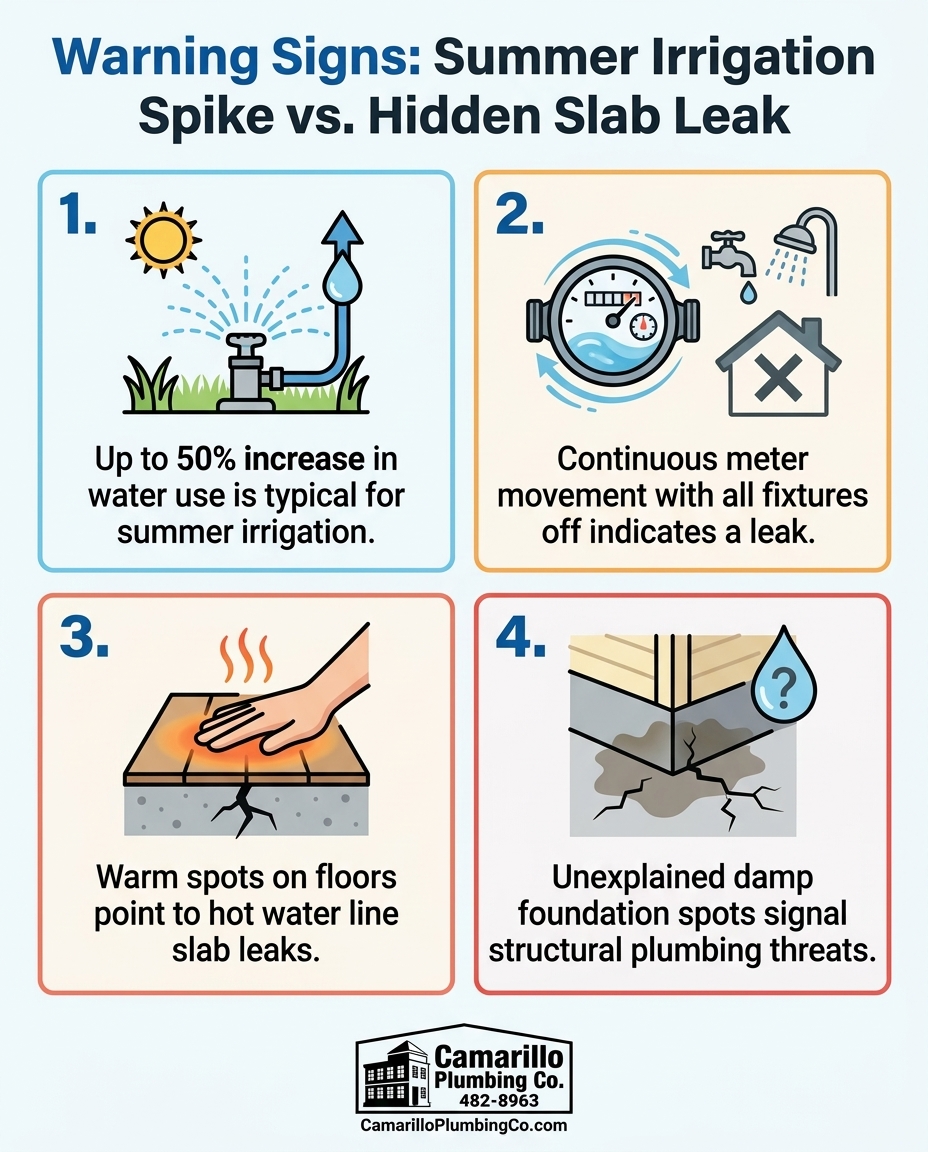
Household water use can easily increase by up to fifty percent during the summer months due to aggressive outdoor irrigation. With the peak July heat demanding daily watering schedules, identifying a hidden leak requires a systematic approach to rule out normal lawn maintenance.
The quick fix: You need to establish a clear baseline by comparing your current utility bills to your winter usage or your bills from previous summers. If your usage has doubled but your watering habits have not changed, you are likely dealing with a hidden leak.
1. Establish a winter baseline: Pull your utility bills from January or February when outdoor watering is minimal. This number represents your base indoor household consumption.
2. Account for standard summer increases: Add a fifty percent buffer to your winter baseline to account for expected summer irrigation. If your current bill drastically exceeds this adjusted number, proceed to the next step.
3. Isolate the irrigation system: Turn off the main shut-off valve to your outdoor sprinkler system. Ensure all indoor fixtures, faucets, washing machines, and dishwashers are completely turned off.
4. Conduct a meter test: Locate your main water meter and check the leak indicator dial. If the dial is spinning while all water sources are secured, you have confirmed a continuous flow that points to a structural leak rather than expected irrigation use.
Monitoring Your Water Meter
Your water meter is the most definitive diagnostic tool available to you. The leak indicator is typically a small triangular or star-shaped dial located on the face of the meter. Because underground leaks can sometimes be intermittent, it is best to monitor the dial for at least fifteen minutes. Even the slightest movement over a fifteen-minute period confirms that water is escaping the closed system.
• Water Bill Increase — Normal Summer Irrigation: Up to 50% higher than winter months — Hidden Structural Leak: Unexplained spikes exceeding 100%
• Meter Leak Indicator — Normal Summer Irrigation: Remains completely stationary when fixtures are off — Hidden Structural Leak: Spins continuously even when all valves are closed
• Lawn Condition — Normal Summer Irrigation: Evenly green in watered zones — Hidden Structural Leak: Isolated, overly saturated muddy patches
• Water Pressure — Normal Summer Irrigation: Consistent across all indoor fixtures — Hidden Structural Leak: Noticeable drop in pressure at the tap
Warning Signs of a Hidden Slab Leak
When the main water lines running beneath your concrete foundation fracture, the resulting leak is known as a slab leak. Because these pipes are buried beneath inches of solid concrete and flooring, the physical symptoms can be subtle at first. However, ignoring these signs in Camarillo can lead to catastrophic foundation damage, extensive mold remediation, and severe structural settling.
• Unexplained damp spots on the floor: Water from a broken pipe will eventually seek the path of least resistance, pushing up through the porous concrete and soaking into your carpets, hardwood, or grout lines.
• Persistent mold or mildew smells: A hidden leak creates a constant source of moisture in dark, enclosed spaces. If a room smells musty despite regular cleaning, water is likely pooling beneath the surface.
• Sudden drops in water pressure: When a significant volume of water escapes through a fractured main line, less water makes it to your faucets and showerheads, resulting in weak, sputtering flow.
• The sound of running water: If you hear a faint hissing or rushing sound coming from the walls or floors when all fixtures are turned off, a pressurized pipe is actively leaking.
When to Suspect the Hot Water Line
Not all slab leaks involve cold water. Hot water lines are particularly susceptible to fracturing due to the constant thermal expansion and contraction they undergo daily. The most obvious indicator of a hot water slab leak is an isolated, unnatural warm spot on your floor. Pets will often seek out these warm patches to sleep on. Additionally, a hot water leak forces your water heater to run continuously as it desperately tries to heat the endless supply of cold water entering the tank to replace what is leaking out. If your water heater is constantly cycling on, or if you are running out of hot water faster than usual, the true problem may be buried in the foundation. In these cases, securing professional Water Heater Services is vital to assess the strain on your equipment and locate the underlying fracture.
Root Intrusions: Thirsty Trees and Sewer Lines
While soil subsidence threatens your pressurized water lines, the peak July heat introduces another severe threat to your drainage system: root intrusion. During severe dry spells, the expansive root systems of large trees go into survival mode. They actively seek out any available source of underground moisture, spreading outward and downward far beyond the tree's canopy.
The biological breach: Underground sewer lines constantly carry warm, nutrient-rich water. This creates condensation on the exterior of the pipes. Thirsty roots detect this moisture gradient and grow directly toward the plumbing. Even the most robust sewer lines have microscopic joints and tiny imperfections. Hair-like feeder roots force their way into these microscopic joints. Once inside the pipe, they have access to an endless supply of water and nutrients, causing them to proliferate rapidly.
The cascading consequences: As the root mass expands inside the pipe, it acts like a net, catching debris, grease, and paper products. This quickly forms an impenetrable blockage. The immense pressure of the growing roots can also crush or shatter older clay or cast-iron pipes. The symptoms of root intrusion usually manifest as slow drains across the entire house, gurgling toilets, and eventually, raw sewage backing up into bathtubs or floor drains. Because this issue compounds the physical stress already caused by shifting dry soil, proactive maintenance is critical. For more detailed insights on maintaining clear lines, review these 6 Things You Must Know About Drain Cleaning.
The Dangers of DIY Diagnostics for Underground Leaks
When faced with the possibility of a hidden plumbing leak, the worst action a homeowner can take is aggressive, destructive guessing. Attempting to locate a slab leak by breaking into drywall, tearing up flooring, or jackhammering into the concrete foundation without professional guidance is incredibly dangerous and almost always results in unnecessary property damage.
The risks of guessing: Water travels along the path of least resistance. The damp spot on your living room floor might be ten feet away from the actual pipe fracture. If you start demolishing the floor based on a surface symptom, you will likely destroy intact infrastructure while completely missing the leak. Furthermore, unauthorized tampering with main water lines or foundation elements can void your homeowner's insurance policies and manufacturer warranties.
The professional advantage: Structural plumbing repairs require the expertise of a licensed professional. As a specialized, localized expert guide, we emphasize relying on trusted professionals for non-invasive, precise leak detection. Modern Camarillo technicians utilize advanced acoustic sensors that listen for the specific frequency of pressurized water escaping a pipe beneath the concrete. They also deploy thermal imaging cameras to detect the temperature anomalies caused by hot water leaks, and use specialized hydrostatic pressure testing to isolate the exact zone of the failure. This non-invasive technology pinpoints the issue accurately, allowing for a targeted, minimally disruptive repair. If you suspect a severe structural breach, immediately contact Emergency Plumbing Services to mitigate the damage.
Frequently Asked Questions About Summer Plumbing Issues
Why is my water bill so high in July?
Your water bill typically spikes in July due to increased outdoor irrigation required to combat the summer heat. As the temperature rises, evaporation rates increase, forcing homeowners to run sprinklers longer to keep landscaping alive. However, if your usage exceeds a fifty percent increase over your winter baseline, it may indicate a hidden plumbing leak rather than just normal seasonal watering.
How do you tell if a high water bill is a leak or sprinkler use?
You can differentiate between a leak and sprinkler use by turning off all water sources and checking your water meter. Ensure the irrigation system, washing machine, and all indoor faucets are completely shut off. If the leak indicator dial on your water meter continues to spin, you have a continuous flow of water escaping the system, confirming a hidden leak rather than standard sprinkler use.
What are the signs of a hidden slab leak?
The most common signs of a hidden slab leak include warm spots on the floor, unexplained dampness, and a sudden drop in water pressure. You might also notice the sound of running water when all fixtures are turned off, or detect persistent mold and mildew odors. Because these leaks occur beneath the concrete foundation, they require immediate professional attention to prevent severe structural settling.
Can dry soil cause underground pipes to break?
Yes, dry soil can cause underground pipes to break through a process known as soil subsidence. As expansive clay soil loses moisture during a drought, it shrinks and pulls away from the plumbing lines, removing vital physical support. The heavy pipes eventually bow and fracture under the weight of the earth and the foundation pressing down on them.
How do professionals detect leaks under a concrete slab?
Professionals detect leaks under a concrete slab using non-invasive technology like acoustic sensors and thermal imaging cameras. Acoustic sensors amplify the sound of pressurized water escaping the pipe, while thermal imaging detects the heat signatures of underground hot water leaks. These specialized tools allow technicians to pinpoint the exact location of the fracture without destroying your flooring or foundation.
Taking the Right Steps for Your Home's Plumbing Health
Accurately identifying the source of high water usage or unexplained damp spots is the most critical step in protecting your property during the harsh summer months. While adjusting your irrigation timers might seem like the easiest solution to a spiking utility bill, ignoring the physical warning signs of a hidden leak can lead to devastating structural damage. Whether it is expansive clay soil crushing a main line or thirsty tree roots invading a sewer pipe, the environmental pressures in Camarillo demand vigilant observation.
Review the checklist of warning signs regularly: monitor your water meter, feel for unusual warm spots on the floor, and listen for the phantom sound of running water. If your home exhibits any of these symptoms, do not attempt destructive DIY diagnostics. Reinforce your home's safety by relying on trusted local Camarillo experts who provide prompt, reliable, and non-invasive diagnostics to secure your plumbing infrastructure for years to come.
hear what our satisfied clients have to say