


Water Softener in Thousand Oaks, CA
.avif)

Hard water is a common concern for many Thousand Oaks homes. Minerals like calcium and magnesium leave scale on fixtures, reduce appliance efficiency, dull laundry and hair, and can shorten the life of water heaters and dishwashers. A properly sized and installed water softener improves water quality throughout your home, protects plumbing and appliances, and delivers softer laundry and cleaner fixtures. Camarillo Plumbing brings decades of residential and commercial plumbing experience to water softener selection, installation, maintenance, and repairs for Thousand Oaks residents.
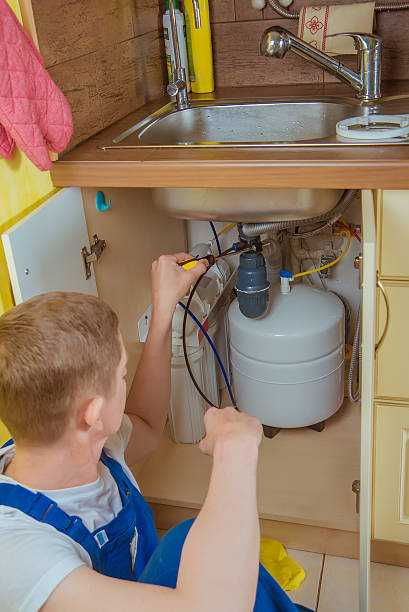
Common hard water problems in Thousand Oaks homes
- Scale buildup on faucets, showerheads, and inside water heaters and pipes
- Soap scum on tile and tubs; laundry feels stiff and colors fade faster
- Reduced flow from mineral-clogged aerators and showerheads
- Higher energy use and premature failure of water-using appliances
- Spotting on glassware and film on dishes after dishwashing
Types of water softening systems (comparison)
Salt-based ion exchange softeners (traditional softeners)
- How they work: Exchange calcium and magnesium for sodium or potassium at the resin tank.
- Benefits: Reliable removal of hardness, consistent soft water for all uses, proven technology for scale prevention.
- Considerations: Requires periodic salt refills and occasional resin maintenance; produces a small brine discharge that may be restricted in some local regulations.
Salt-free conditioners (template-assisted crystallization and others)
- How they work: Change how hardness minerals behave so they are less likely to form scale; do not remove minerals.
- Benefits: Low maintenance, no salt, simpler installation, environmentally friendly for areas with brine discharge concerns.
- Considerations: Best for scale control rather than producing fully soft water; not ideal if you need softened water for appliances or certain fixtures.
Hybrid and specialty systems
- Dual-tank systems for continuous soft water during regeneration.
- High-efficiency metered softeners that regenerate based on actual water use, reducing salt and water waste.
- Systems that combine softening with filtration to handle sediment, chlorine, or iron.
Sizing and selection guidance
Correct sizing ensures consistent soft water and efficient operation. Key factors:
- Household size and daily water usage (number of people, typical usage patterns in Thousand Oaks homes).
- Incoming water hardness (grains per gallon).
- Peak flow rate needs (simultaneous showers, irrigation, laundry).
- Space available for equipment and drain access for regeneration.
A properly sized system balances resin capacity and regeneration frequency so you get soft water without unnecessary salt and water use.
On-site water testing and evaluation
On-site testing provides the data needed for the right recommendation:
- Measure hardness (grains per gallon), pH, and common contaminants like iron or manganese.
- Inspect plumbing layout, water heater size, and space for installation.
- Identify source: municipal vs well supplies can affect system choice and pre-treatment needs.
Testing determines whether you need a straight softener, a pre-filter for sediment/iron, or a combined approach.
Installation process and typical timelines
- Assessment and measurement: Confirm space, test water, and finalize equipment selection (1 visit).
- Preparation: Shut off water and prepare drain and electrical connections where required.
- Installation: Mount tanks, connect bypass valve, plumb into main line, program control valve. Typical residential installs often complete in one day.
- Commissioning: Run initial regeneration, verify soft water at taps, and demonstrate basic operation to residents.
Routine maintenance and care
- Salt refills: Most salt-based systems require salt added every 1-3 months depending on usage and tank capacity. Use recommended salt type (evaporated or pellet).
- Resin care: Resin rarely needs replacement but can require cleaning or replacement if exposed to iron or chlorine. Periodic resin cleaners help if iron is present.
- Sanitization: Annual sanitizing keeps the brine tank and resin clean.
- Inspection: Check for brine tank salt bridging, proper regeneration cycles, and control valve function. Regular maintenance extends system life and performance.
Troubleshooting and repairs
Common issues and what they usually indicate:
- Hard water returning after installation: Check bypass valve, regeneration schedule, and salt level.
- Salt bridging: Solid crust forms in brine tank; break up and remove hardened salt.
- Resin problems: Poor softening with low iron may indicate fouled or exhausted resin.
- Control valve failures: Electronic or mechanical valve issues can prevent regeneration.
Many issues are diagnosable on-site with proper testing and parts replacement.
Expected lifespan and warranty information
- Typical lifespan: Resin tanks and mineral tanks often last 10-15 years; well-maintained units can last longer. Control valves and electronics may need replacement sooner.
- Warranties: Manufacturers provide varying warranties on tanks, resin, and control valves. Verify warranty coverage for specific components and follow recommended maintenance to maintain warranty validity.
Cost factors and financing options
Cost depends on equipment type, size, and any required pre-treatment (sediment or iron filters), plus installation complexity. Financing and payment options are often available to spread the investment over time. Choose systems that match long-term goals: lower upfront cost vs higher efficiency and lower operating cost.
Integrating with whole-home water treatment
A water softener often works best as part of a layered approach:
- Sediment pre-filters protect resin from physical particles.
- Iron filters or oxidizing media may be required before softening if iron or manganese are present.
- Chlorine removal is important when municipal chlorinated water can damage resin.
- Downstream reverse osmosis for drinking water provides polished, mineral-free water at point-of-use while the softener protects household plumbing and appliances.
FAQQ: How do I know if my Thousand Oaks home needs a water softener?A: Signs include scale on fixtures, frequent appliance issues, soap scum, and spotty dishes. An on-site hardness test gives a definitive answer.
Q: Which is better for my home - salt-based or salt-free?A: Salt-based softeners remove hardness for true soft water. Salt-free systems reduce scale but do not remove minerals. Choice depends on desired outcomes and local water chemistry.
Q: How often will I need to refill salt?A: Frequency varies by household water use and tank size but is commonly every 1-3 months for many families.
Q: Can a softener be added to an existing filtration setup?A: Yes. Proper sequencing (sediment pre-filter, then softener, then point-of-use RO if used) optimizes performance and protects equipment.
Q: What maintenance should I expect after installation?A: Routine salt refills, occasional resin cleaning if iron is present, annual inspections, and occasional control valve service.
hear what our satisfied clients have to say