

Reverse Osmosis in Thousand Oaks, CA
.avif)

Reverse osmosis (RO) systems provide some of the cleanest drinking water available for Thousand Oaks homes. An RO system reduces dissolved minerals, chlorine taste and odor, and many chemical contaminants that city or well water can carry. For homeowners focused on water quality at the tap — for drinking, cooking, coffee, or baby formula — a professionally designed and installed RO system delivers consistent, verified results that meet decision-stage needs.
What an RO system does and how it works
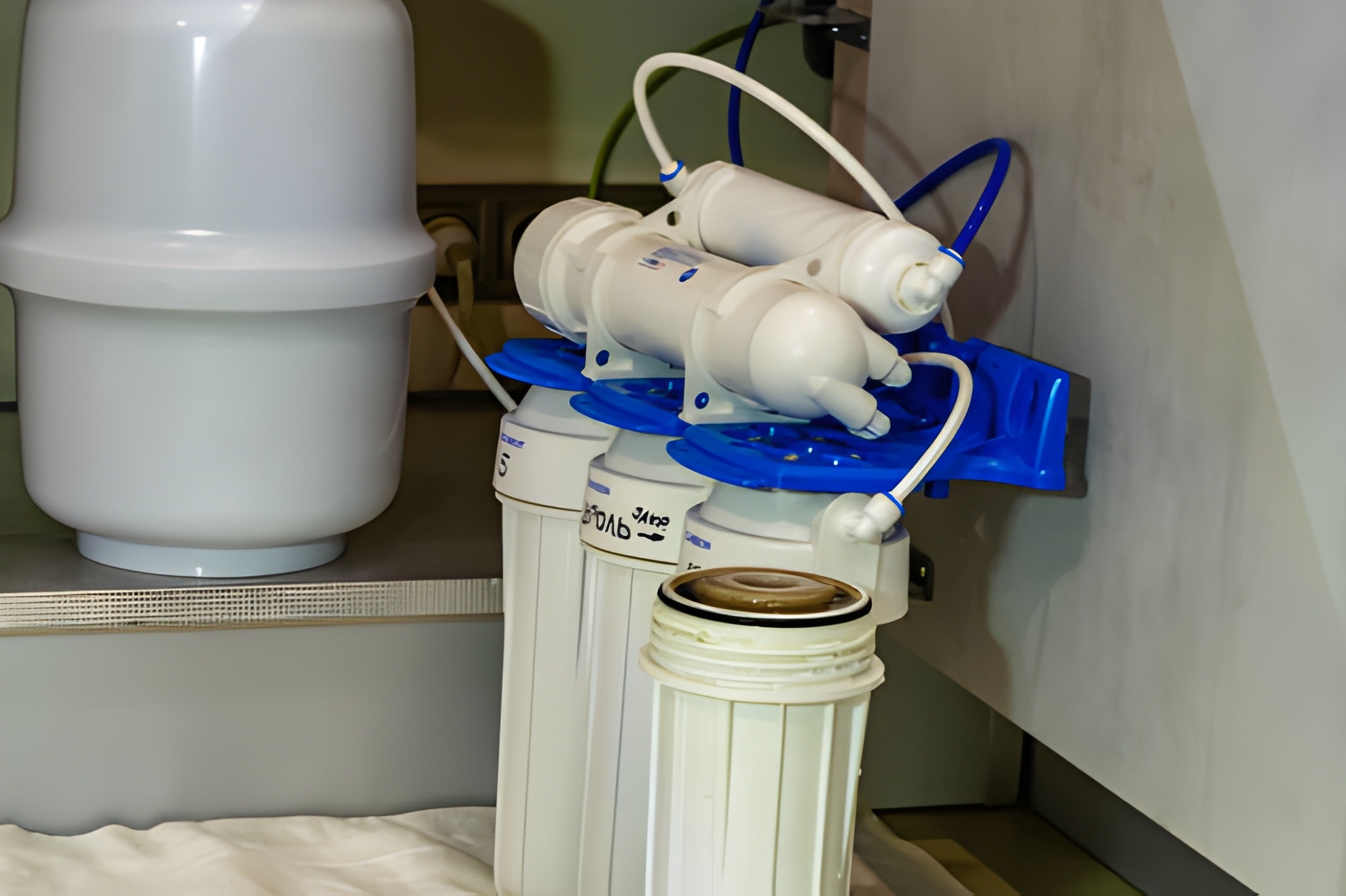
An RO system uses a combination of stages to produce purified water:
- Pre-filters (sediment and carbon) remove particles, chlorine, and large contaminants that can foul the membrane.
- RO membrane is the core component. Under pressure, it separates dissolved solids, heavy metals, and many chemical contaminants from water.
- Storage tank holds purified water so you have immediate access at your faucet.
- Post-filter polishes taste and odor before the water reaches your glass.
Together these stages reduce total dissolved solids (TDS) and chemicals that can affect health and flavor. In Thousand Oaks, where water can carry higher mineral content and residual disinfectants from municipal treatment, RO filtration noticeably improves taste and clarity.
Common reverse osmosis issues in Thousand Oaks homes
- Reduced flow at the RO faucet caused by clogged pre-filters or low feed water pressure.
- Elevated TDS readings after long service intervals when membranes reach the end of life.
- Fouling from hard water minerals or chloramines if pre-filtration is insufficient.
- Leaks or low tank pressure due to aging fittings, valves, or tank bladders.
- Slow system recovery when household water use outpaces system capacity.
Understanding the local water profile in Thousand Oaks — typically treated municipal supply with varying hardness and occasional sediment from older plumbing — helps tailor system choices and pre-filtration to avoid common problems.
Under-sink RO vs whole-home filtration: which fits your needs?
- Under-sink RO systems
- Treat water at a single point of use, usually the kitchen faucet.
- Best for drinking, ice makers, and cooking where very low TDS and improved taste are priorities.
- Require less space and lower installation complexity than whole-home RO.
- Whole-home RO systems
- Treat all water entering the house and protect appliances, fixtures, and plumbing from scaling.
- More complex and larger; typically paired with softening or specialized pre-treatment in areas with hard water.
- Appropriate when complete point-of-entry purification is desired or where specific contaminants are present throughout the household supply.
Camarillo Plumbing recommends system selection based on intended use, household size, water chemistry, and available space.
Professional site assessment and installation process
A thorough site assessment ensures the RO system performs as expected:
- Initial water test measures TDS, hardness, chlorine, and other target contaminants to determine required stages.
- Site inspection checks under-sink space, incoming water pressure, drain access for membrane reject flow, and room for a storage tank.
- System design selects membrane type, pre- and post-filters, booster pump (if needed), and tank capacity matched to household demand.
- Professional installation includes certified plumbing connections, leak testing, line protection, secure mounting, and an install checklist that documents flow rates and pressure.
- Performance verification by measuring TDS and flow after startup to confirm the system meets specifications.
Technicians from Camarillo Plumbing follow local plumbing codes and proven installation best practices to avoid leaks, ensure correct drain connections, and verify system performance.
Routine maintenance and replacement schedules
To keep an RO system operating at peak performance, follow a maintenance rhythm:
- Sediment and carbon pre-filters: Replace every 6 to 12 months depending on feed water quality and usage.
- RO membrane: Typical life is 2 to 5 years; replace when TDS rejection drops or manufacturer recommendations indicate.
- Post-filter: Replace annually or with every major service interval.
- Storage tank and fittings: Inspect annually for pressure and integrity; replace tank bladder or fittings as needed.
Regular maintenance prevents flow reduction, protects the membrane, and reduces waste. Local factors in Thousand Oaks such as higher mineral content or seasonal changes can shorten filter life, so maintenance schedules should be adjusted based on periodic water testing.
Water testing and performance verification
Ongoing verification is a core part of RO ownership:
- TDS testing before and after the system confirms membrane rejection efficiency.
- Chlorine and chemical testing ensures pre-filters continue to protect the membrane.
- Flow and pressure checks detect early signs of clogging or tank issues.
- Leak and drain inspections protect cabinetry and flooring.
Documented testing after installation and at routine service visits gives homeowners confidence that the system delivers safe, great-tasting water.
Cost factors, financing, and warranties
Several variables affect total investment and long-term value:
- System type (under-sink vs whole-home), membrane quality, tank size, and need for a booster pump.
- Required pre-treatment such as water softening or specialized carbon stages to address local contaminants.
- Complexity of installation and any required plumbing modifications.
Camarillo Plumbing supports homeowners with manufacturer-backed warranties on components and service warranties for installation work. Financing options are often available to spread the upfront investment over time while protecting system performance through warranty coverage and planned maintenance agreements.
Typical post-installation benefits
- Noticeable improvement in taste, clarity, and odor for drinking water.
- Lower dissolved solids and reduced heavy metals and chemical contaminants at the tap.
- Reduced reliance on bottled water and improved coffee and cooking results.
- Peace of mind from verified water quality testing and documented maintenance.
For Thousand Oaks residents concerned about municipal or well water quality, an appropriately specified RO system provides reliable, measurable improvements in water purity.
Q: How often should I test my water after installing an RO system?A: Test TDS and basic contaminants at installation, then every 6 to 12 months or anytime you notice taste, smell, or flow changes.
Q: Will an RO system remove hardness that causes scale?A: RO reduces dissolved minerals that contribute to hardness at the point of use, but whole-home scale control usually requires a water softener or specialized pre-treatment.
Q: How much wastewater does an RO system produce?A: Waste rates vary by system design and pressure. High-efficiency membranes and booster pumps reduce reject water; a professional assessment will identify the most efficient option for your home.
Q: Can an RO system be installed under any kitchen sink?A: Most kitchens have space for under-sink RO systems, but an on-site inspection confirms available space, drain routing, and water line access.
Q: What certification should I look for in RO components?A: Look for components certified to NSF/ANSI standards for contaminant reduction and material safety; installers should document certification and test results for verification.
hear what our satisfied clients have to say