

Water Softener in Calabasas, CA
.avif)

Hard water is common across Southern California, and Calabasas homes are no exception. High mineral content in local groundwater and imported supplies can cause scale buildup, spotty dishes, dry skin and hair, and reduced appliance efficiency. A professionally selected and installed water softener removes those friction points and protects plumbing, water heaters, and everyday comfort. Camarillo Plumbing provides expert water softener assessment, installation, and service tailored for Calabasas households and local water conditions.
Benefits of a Water Softener in Calabasas homes
- Improved appliance efficiency and longer service life for water heaters, dishwashers, and washing machines
- Less scale buildup in pipes, fixtures, and showers, reducing repair and repipe risk
- Softer-feeling skin and hair, and reduced soap scum on tubs and shower doors
- Cleaner, spot-free dishes and glassware with less detergent required
- Fewer mineral-related clogs and better hot water delivery across the home
How water softening systems work
Salt-based ion exchange systems
- Resin beads in a mineral tank trade sodium ions for hardness minerals (calcium and magnesium).
- Over time the resin becomes saturated and regenerates using a brine solution from the salt tank.
- Effective at removing hardness and preventing scale; salt consumption and periodic regeneration are required.
Salt-free (conditioning) systems
- Use template-assisted crystallization, chelation, or other physical conditioning to prevent minerals from depositing as hard scale.
- Do not remove hardness minerals from water but change their form so they are less likely to stick to surfaces.
- Lower maintenance and no salt handling, but less effective where soft water is required for soap lathering or specific appliance warranties.
Both system types can be right for different Calabasas properties. Selection depends on water hardness, household preferences, and appliance requirements.
Water hardness testing and system sizing / site assessment
A professional assessment includes:
- Measuring hardness in grains per gallon or parts per million using on-site tests
- Reviewing household peak flow rate and daily water usage to size the softener resin and salt tank
- Inspecting plumbing layout, available drain and electrical access, and space for installation
- Identifying any pre-existing water quality issues such as iron, sediment, or chlorine that affect softener performance
Typical Southern California hardness levels range from moderate to very hard. Accurate testing ensures the system matches your family’s water use and local water chemistry.
Professional installation process
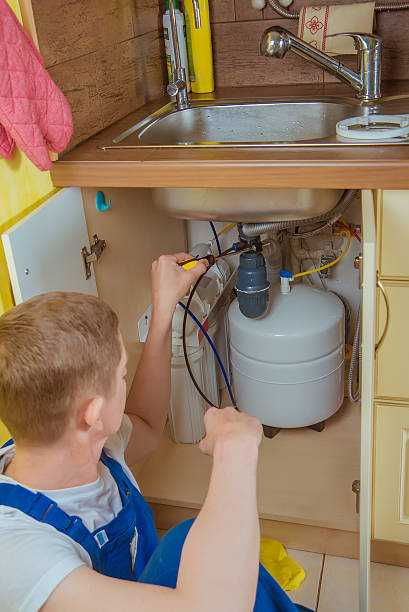
- Site preparation and recommendations for optimal placement near main water inlet, drain, and electrical outlet
- Installation of bypass valve and appropriate plumbing connections to protect existing systems during service
- Assembly and setup of mineral and brine tanks (for salt-based systems) or media components (for salt-free systems)
- Programming control valves based on household size, flow rates, and local hardness measurements
- Initial regeneration and post-install testing to verify hardness reduction at taps and ensure leak-free installation
A professional install minimizes downtime, avoids common DIY pitfalls, and confirms the system integrates with existing filtration or reverse osmosis equipment if present.
Routine maintenance and common repairs
Routine tasks
- Salt refills for salt-based systems, typically every few months depending on usage
- Periodic inspection and cleaning of the brine tank to remove sludge or bridging
- Resin bed maintenance and occasional resin replacement if performance declines
- Control valve checks and software/reprogramming as needed
Common repairs
- Salt bridging or clumping in the brine tank causing regeneration failure
- Brine tank leaks or malfunctioning floats and valves
- Hardness bypass due to control valve seals wearing out
- Electrical or electronic control failures
Regular professional service prevents costly repairs and keeps warranties valid.
Expected lifespan, warranty and financing
- Typical service life for a well-maintained salt-based system is roughly a decade to 15 years; resin life can vary and sometimes needs replacement in 8 to 12 years depending on water quality.
- Salt-free systems can last similar timeframes for their media but require manufacturer-specific maintenance.
- Warranties commonly cover control valves, tanks, and media for specified periods; terms vary by manufacturer.
- Many homeowners use financing or payment plans for larger systems and combined installations with filtration or reverse osmosis to spread the investment over time.
Camarillo Plumbing documents warranty registration details and can explain typical coverage and service options for Calabasas properties.
How water softeners compare with whole-home filtration and reverse osmosis
- Water softeners target hardness minerals and scale prevention but do not remove some contaminants like bacteria, lead, or certain chemicals.
- Whole-home filtration removes sediment, chlorine taste and odor, and some contaminants before they enter plumbing, often protecting softeners and improving lifespan.
- Reverse osmosis (RO) provides point-of-use high-purity drinking water by removing dissolved solids, while softeners and whole-home filters protect appliances and skin at every tap.
- Combining systems is common: whole-home filtration up front, a softener to prevent scale, and an RO under the kitchen sink for drinking water.
Choosing the right combination depends on Calabasas water test results and household priorities.
What affects cost and investment considerations
Factors that influence system selection and installation complexity
- Measured water hardness and presence of iron or sediment
- Household size and peak flow rate requirements
- System type chosen (salt-based vs salt-free) and brand
- Location constraints, additional filtration needs, or repiping work
- Required electrical or drain modifications
Rather than a one-size-fits-all price, understanding these variables produces a tailored recommendation and accurate estimate.
Local service area and response times for Calabasas
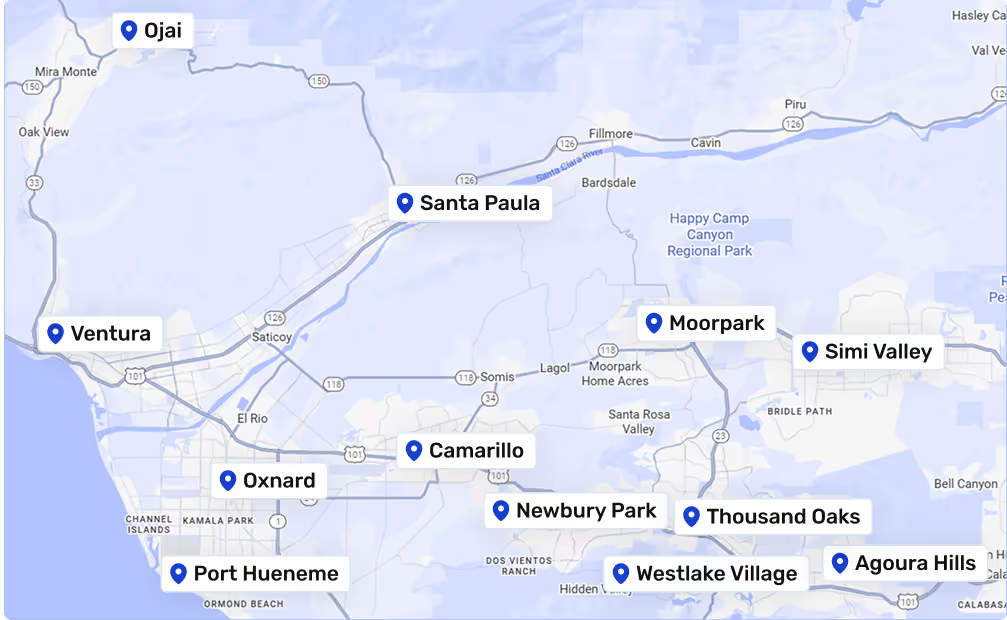
Camarillo Plumbing serves Calabasas and neighboring Ventura and Los Angeles communities with experienced technicians familiar with local water characteristics. Typical on-site arrival times average around 45 minutes in the region, with technicians able to diagnose hardness issues, perform testing, and recommend system options during the initial visit. Emergency availability is offered for urgent water or plumbing failures.
Long-term benefits and maintenance tips
- Regular water testing after installation ensures settings remain optimized as municipal sources change seasonally.
- Keep a salt inventory and schedule routine service visits to avoid unexpected downtime.
- Pair softeners with sediment prefilters where well water or aging infrastructure introduces particulates to protect resin life.
FAQs
Q: How do I know if my Calabasas home has hard water?A: Look for scale on fixtures, reduced soap lather, spotty dishes, frequent appliance scale issues, and dry skin or hair. A professional hardness test provides a definitive measurement.
Q: Which is better for my home salt-based or salt-free?A: Salt-based systems remove hardness completely and prevent scale most effectively. Salt-free systems condition minerals to reduce scale without adding sodium. Choice depends on hardness level, appliance needs, and personal preferences.
Q: How often do I need to add salt to a softener?A: Frequency depends on household water use and system size; many homes refill salt every few months. Routine monitoring and scheduled service avoid regeneration problems.
Q: Will a water softener remove iron and sediment?A: Standard softeners handle small amounts of iron but are not a substitute for sediment filters. High iron or sediment levels usually require a dedicated prefilter or iron-specific treatment.
Q: How long does installation take?A: Most residential installations complete in a few hours to a day depending on site complexity, existing plumbing, and any additional filtration hookups.
Q: Can a softener damage my plumbing or fixtures?A: Properly sized and installed systems protect plumbing by preventing scale. Incorrect installations or skipped maintenance can lead to performance issues, which is why professional assessment and service matter.
hear what our satisfied clients have to say