
Toilet Repair in Fillmore, CA
.avif)
Keeping a toilet working properly is one of the most critical pieces of home comfort and sanitation in Fillmore, CA. Whether you are dealing with persistent clogs, a constantly running tank, or a hidden leak, timely toilet repair prevents water waste, protects flooring and subfloors from damage, and avoids larger sewer or drain problems. Camarillo Plumbing brings decades of residential plumbing experience to Fillmore homes, combining fast diagnostics with proven repairs and licensed workmanship.
Common toilet problems in Fillmore, CA
Fillmore homes face many of the same toilet issues found across Ventura County, often exacerbated by local water hardness, seasonal debris, and older plumbing systems in historic properties.
- Clogs and slow drains — caused by paper buildup, foreign objects, mineral buildup, or partial drainline obstruction.
- Running toilet — water continuously flows from tank to bowl due to faulty flapper, fill valve, or a misadjusted float.
- Leaks at base or tank — flange problems, cracked bowls or tanks, or failed tank-to-bowl gaskets.
- Faulty flappers and fill valves — common wear items that fail over time, causing inefficient flushing or continuous refills.
- Cracked bowls or tanks — from age, impact, or freezing-related stress in colder months; cracks often require replacement.
- Intermittent or weak flush — partial clogs, low water level, or worn internal components.
How technicians diagnose toilet problems
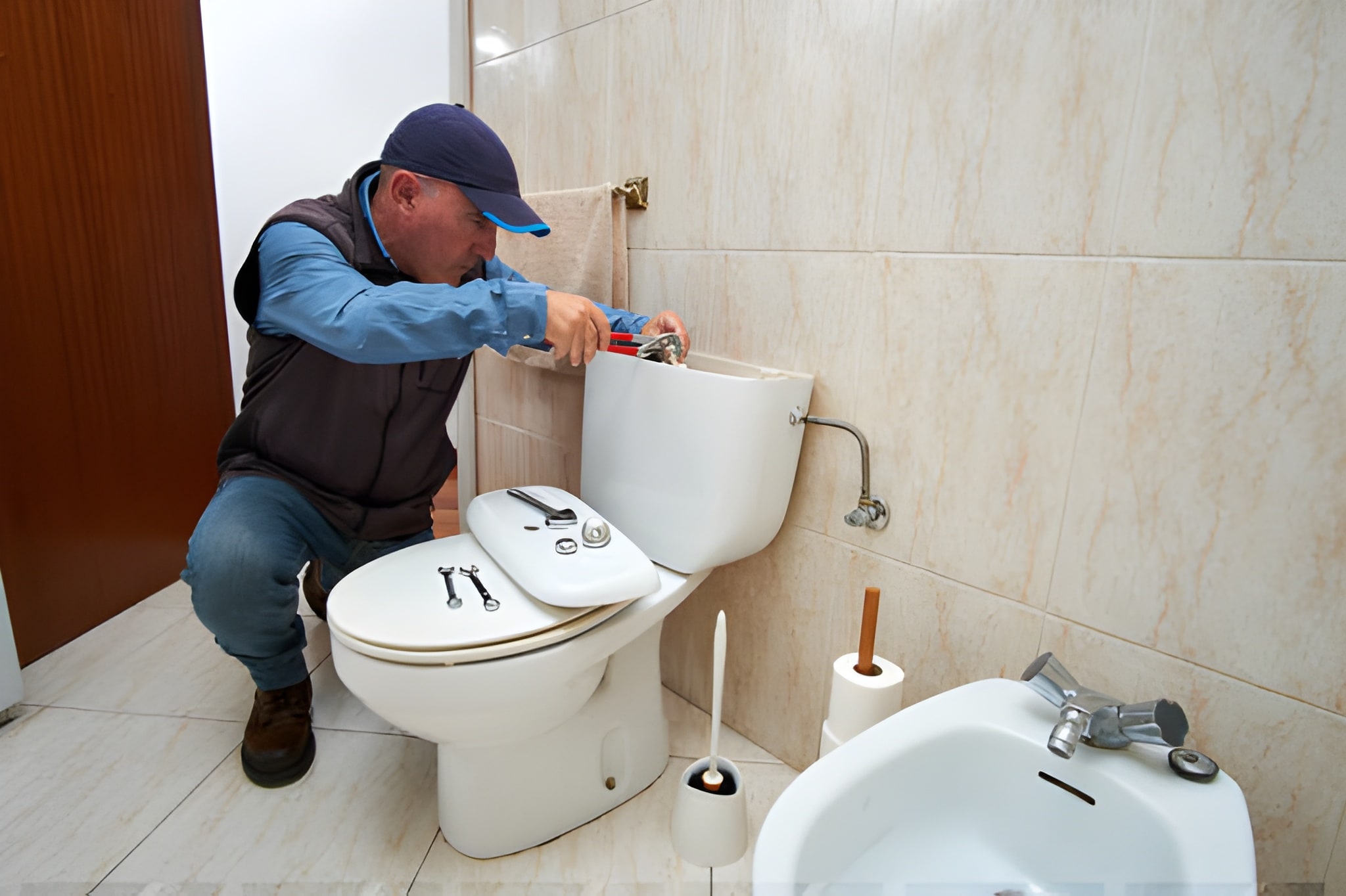
A reliable repair begins with a structured diagnostic approach. Camarillo Plumbing technicians follow a clear process so repairs address root causes rather than symptoms.
- Visual inspection of bowl, tank, and floor area to spot leaks, cracks, or loose connections.
- Functional checks: flush tests, tank refill timing, and observation for intermittent issues.
- Component testing: observing flapper seal, fill valve operation, and trip lever performance.
- Drain assessment: simple auger tests for localized clogs; camera inspection if suspecting deeper sewer or lateral line issues.
- Water supply evaluation: checking pressure, shutoff valve operation, and signs of mineral scaling.
- Documentation and estimate: technicians summarize findings and recommend repair or replacement options with clear parts lists.
Typical repairs and parts replacement
Most toilet issues are repairable with replacement parts and adjustments. Common repair solutions include:
- Flapper replacement — restores a watertight seal and stops running toilets.
- Fill valve replacement or rebuild — ensures correct tank refill level and prevents overflows.
- Flush valve and seat repairs — fixes weak or incomplete flushes.
- Tank-to-bowl gasket and bolt replacement — addresses internal leaks.
- Wax ring or flange replacement — stops leaks at the floor and stabilizes the fixture.
- Drain snaking or augering — removes hair, paper, or small blockages.
- Toilet replacement — recommended when the bowl or tank is cracked, or when repeated repairs are no longer cost-effective.
All replacement parts are industry standard and chosen for durability in area water conditions. Technicians explain the expected life of replaced components so homeowners can plan future maintenance.
Repair vs replacement: when to choose which
Deciding whether to repair a toilet or replace it depends on safety, long-term cost, and performance.
Repair is usually recommended when:
- The problem is isolated to an internal part (flapper, fill valve, gasket).
- The bowl and tank are structurally sound with no cracks.
- The toilet is relatively modern and otherwise functioning well.
Replacement is recommended when:
- The bowl or tank is cracked or leaking into the subfloor.
- Multiple repairs have been made over a short period and reliability is declining.
- The fixture is older and inefficient (high gallons per flush), and upgrading will save water and lower utility costs.
- Repeated clogs stem from a poor trapway design or undersized drain.
Service details: response times, availability, estimates, warranty and licensing
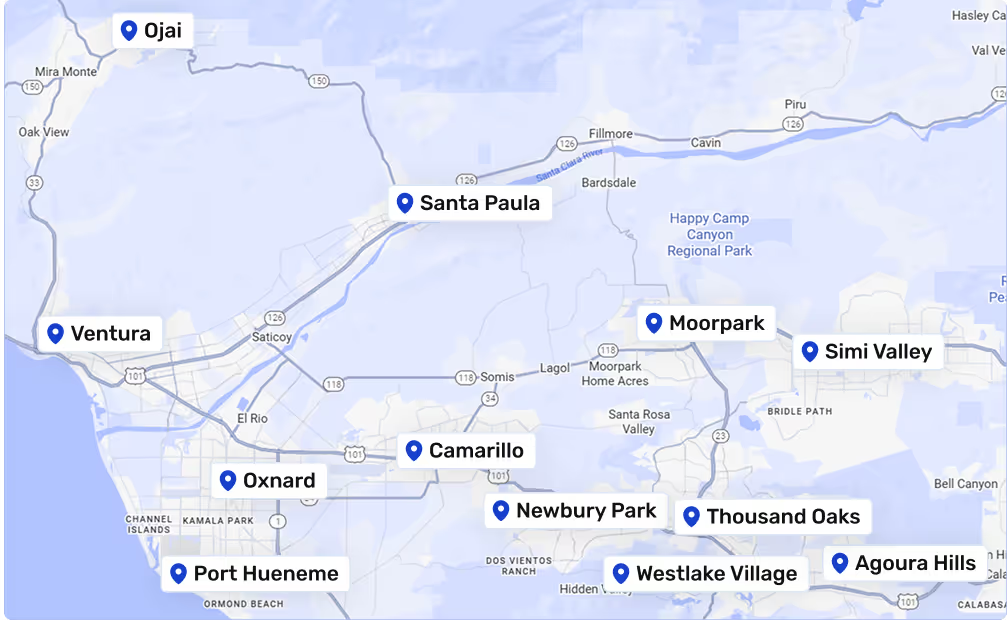
- Response times in the Fillmore area are typically within the same day for non-emergency calls, with many technicians arriving in about 45 minutes from dispatch when available.
- 24/7 emergency repair availability is provided for urgent leaks, overflowing toilets, or situations that threaten property damage.
- Estimates are based on an on-site inspection. Technicians provide a written summary of findings and transparent pricing options, distinguishing parts and labor. Some repairs are provided at flat rates; others use itemized labor and parts for clarity.
- Work commonly includes a parts warranty and workmanship guarantee. Specific warranty terms vary by component; technicians detail warranty coverage before beginning work.
- All work is performed under Camarillo Plumbing licensing and local code compliance. License information is maintained and verifiable for homeowner assurance.
Preventative maintenance tips for Fillmore homes
Regular maintenance cuts down on emergency calls and extends the life of fixtures.
- Replace worn flappers and fill valves proactively every 3 to 5 years in hard water areas.
- Avoid flushing anything other than toilet paper and human waste to prevent clogs.
- Check for slow drips or puddles around the base monthly; early detection prevents subfloor damage.
- Use a mild descaler periodically if mineral deposits reduce flush performance.
- Inspect the shutoff valve and tank bolts annually for corrosion or leaks.
- Schedule a plumbing check after heavy rain or if landscaping work disturbs sewer lines.
Benefits of timely toilet repair
Prompt attention preserves home value and comfort, reduces water waste and utility costs, and prevents costly secondary damage like rotted subfloors or mold. Addressing toilet issues early also avoids emergency disruptions and helps maintain efficient household water use in Fillmore’s climate.
FAQs
Q: How long does a typical toilet repair take?A: Most common repairs (flapper, fill valve, wax ring) take 30 to 90 minutes. More complex issues, replacement, or drainline work may take longer and will be estimated on-site.
Q: Can a running toilet increase my water bill?A: Yes. A continuously running toilet can waste hundreds of gallons per day, noticeably increasing water bills if not repaired.
Q: Is it better to replace an old toilet rather than repair it repeatedly?A: If the fixture has structural damage, repeated failures, or is an older low-efficiency model, replacement is usually the more cost-effective long-term solution.
Q: Do you inspect for hidden leaks under the floor?A: Technicians will look for signs of subfloor moisture and can use moisture meters or cameras as needed. If a hidden leak is suspected, further diagnostic steps are recommended.
Q: What parts are most commonly replaced?A: Flappers, fill valves, flush valves, wax rings, tank bolts, and supply lines are the most common replacement parts.
Q: Are repairs covered by warranty?A: Repaired parts and labor typically carry a warranty. Specific coverage and durations are provided with the estimate and before work begins.
hear what our satisfied clients have to say