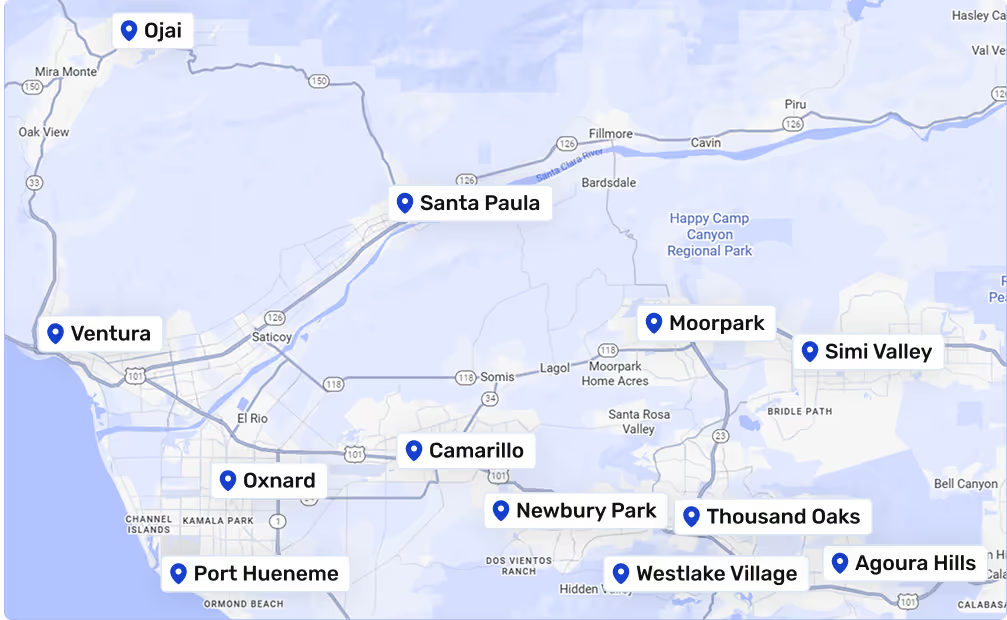


Whole House Water Filter in Ventura, CA
.avif)

Installing a whole house water filter in Ventura, CA protects your home, improves water quality from every tap, and solves the common problems local homeowners face. Whether your water comes from municipal supply or a private well, a professionally selected and installed whole-home filtration system removes chlorine taste and odor, reduces sediment and rust, limits scale-forming minerals, and helps protect plumbing, fixtures and appliances from premature wear.
Why Ventura homes benefit from a whole-home system
- Coastal effects and marine air can accelerate corrosion and contribute to metallic tastes when combined with chlorine in the distribution system.
- Ventura’s mix of older neighborhoods and new construction means pipe condition varies; aging pipes often introduce sediment and rust.
- Regional water supplies frequently rely on chlorine or chloramine for disinfection, producing taste and odor concerns that point-of-entry carbon filtration can address.
- Wildfire runoff and seasonal storms can increase turbidity and sediment after heavy rains, making sediment pre-filtration valuable for local homes.
A whole house water filter treats water at the point where it enters the home, delivering consistent, filtered water to every faucet, appliance and shower.
Common issues addressed by whole house filtration
- Poor taste and chlorine or chemical odor
- Visible sediment, sand or dark particles from aging pipes
- Scale buildup on fixtures and reduced appliance efficiency from hard water minerals (calcium and magnesium)
- Discoloration and rust stains from iron or oxidized piping
- Occasional microbial concerns in private well systems (UV options recommended)
- Premature wear on water heaters, dishwashers and washing machines caused by sediment and scale
Types of whole home systems and when to choose them
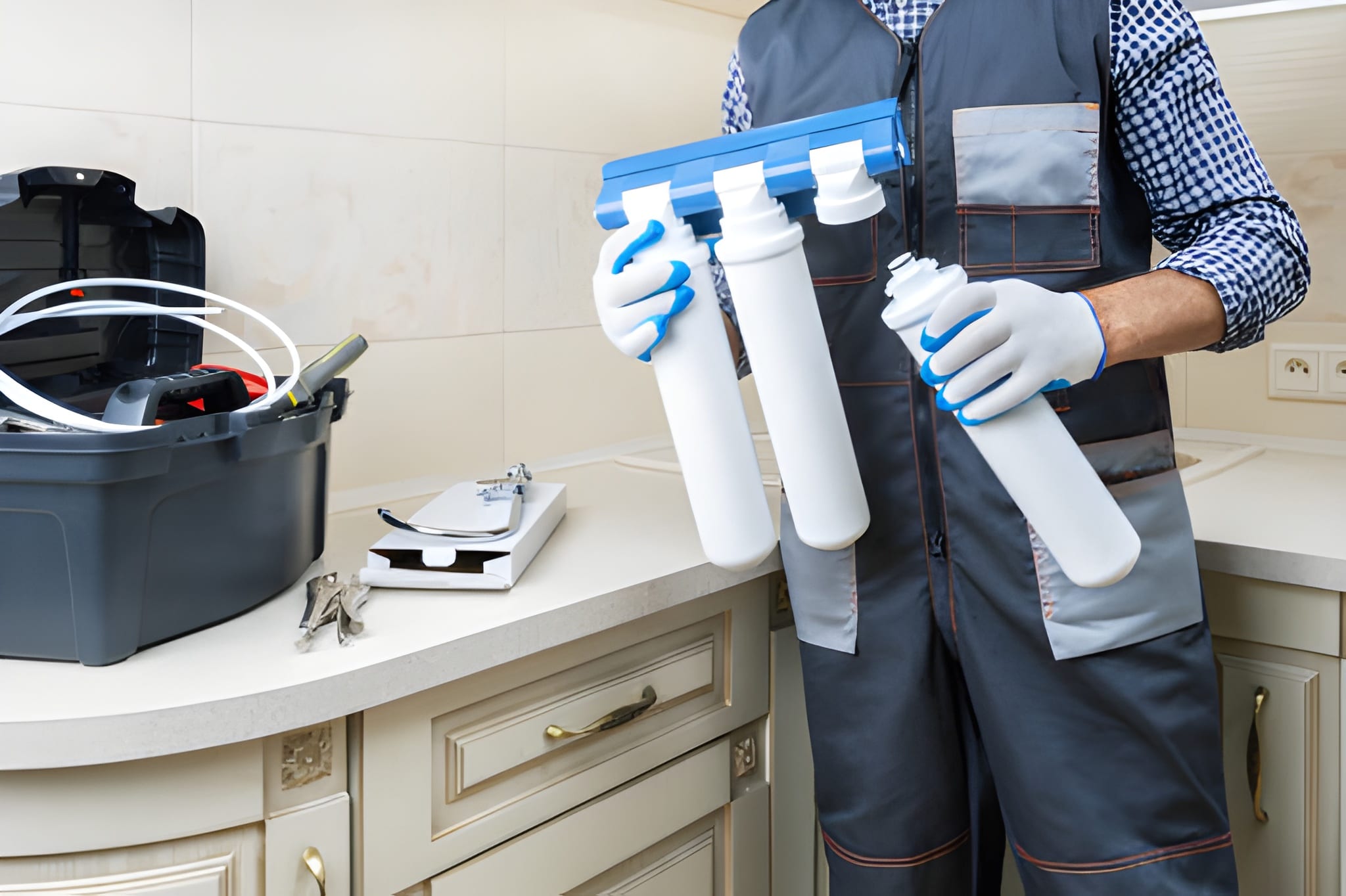
- Point-of-entry (POE) whole-house filters: Installed on the main line, these systems handle high flow for all household needs. Ideal as the primary solution for taste, chlorine and sediment control.
- Carbon filtration (activated carbon or catalytic carbon): Most effective for chlorine, chloramine reduction, organic tastes and odors. Often used as the central stage in a multi-stage system.
- Sediment filters: Protect downstream equipment and prolong carbon and membrane life by removing sand, rust and particulate matter. Recommended as first-stage protection.
- Reverse osmosis pre-treatment: RO is typically used at point-of-use for drinking water; a POE pre-filter protects the RO membrane and improves whole-home water quality.
- UV disinfection: Effective for destroying bacteria and viruses in well water or systems with microbial risk. UV is a complement, not a replacement, for particulate and chemical filtration.
- Water conditioning / softening (when needed): For homes with hard water concerns, a water softener or template-assisted crystallization can reduce scale; these are often combined with filtration for best overall results.
Professional process: testing, selection and sizing
- Onsite water testing: A technician collects samples for immediate field testing (chlorine, pH, turbidity, hardness, iron) and can arrange lab testing for detailed contaminant analysis. Local conditions and customer priorities guide test scope.
- Flow rate and pressure assessment: Measuring peak household flow (gallons per minute) ensures the selected system handles showers, laundry, irrigation and simultaneous faucet use without pressure loss.
- System selection and sizing: Selection is based on test results, household size, appliance count and budget. Sizing includes cartridge capacity, media volume for tank systems and appropriate bypass options.
- Customized proposals: Recommended configurations typically combine a sediment pre-filter, carbon filtration stage, and optional UV or softening components based on test results.
Typical installation steps and timeline
- Site assessment and final layout: Confirm main line access, install location and any electrical or drainage needs. (30–60 minutes on install day)
- Shutoff and bypass setup: Install a bypass valve so water service remains usable during servicing.
- Mounting and plumbing: Secure tanks or housings, plumb in filter stages and make necessary pressure and union connections.
- Commissioning: Flush media, bring system up to operating pressure, and run post-install water testing to confirm performance.
- Owner orientation: Demonstrate bypass operation, show where filters are, and explain maintenance intervals.
Typical residential installations take 3–6 hours for standard systems; complex multi-stage systems or retrofit jobs can require a full day.
Routine maintenance and expected replacement schedules
- Sediment cartridge: Replace every 3–6 months depending on sediment load. Heavy sediment conditions may require more frequent changes initially.
- Carbon filters: Replace every 6–12 months based on chlorine levels and household water use; catalytic carbon for chloramine may require more robust media and scheduled replacement.
- RO membranes (if part of a point-of-use or pre-treatment setup): Replace every 2–5 years depending on feed water quality and pre-treatment.
- UV lamp and sleeve: Lamp replacement annually and sleeve cleaning as recommended to maintain disinfection effectiveness.
- Annual system inspection: A yearly service visit confirms seals, pressure, media condition and verifies performance. Service plans can bundle inspections and scheduled cartridge replacement for predictable maintenance.
Warranty and service-plan options
Most whole house systems include manufacturer warranties on tanks, housings and media, plus limited warranties on mechanical components. Service-plan options commonly cover:
- Scheduled filter replacements at set intervals
- Annual performance inspections and water testing
- Priority service and labor coverage for repairs
Selecting an installation partner that offers clear warranty documentation and service plans helps protect your investment and maintain water quality over time.
Pricing factors
System cost depends on water test findings, required media volume, number of filtration stages, additional components (UV, softener), and complexity of the installation location (retrofit vs new construction). While exact pricing varies, understanding these factors helps set expectations and ensures the selected system matches both performance needs and home plumbing constraints.
Benefits beyond better tasting water
- Protects water-using appliances and extends their useful life by reducing sediment and scale
- Reduces staining on fixtures and laundry discoloration from iron or rust particles
- Delivers cleaner, safer water throughout the house — not just at the kitchen tap
- Minimizes reliance on bottled water and improves daily comfort for showers and cooking
Q: How long does a professional whole house water filter installation take?A: Most standard residential installations are completed in one half-day (3–6 hours). Larger, multi-stage systems or complex retrofits may take a full day.
Q: Will a whole house filter remove hard water minerals?A: Whole house filtration removes sediment, chlorine and many contaminants. Hard water minerals (calcium and magnesium) typically require a water softener or specific conditioning technology to prevent scale.
Q: Do Ventura municipal water systems use chlorine or chloramine?A: Many water utilities use chlorine or chloramine for disinfection. Activated or catalytic carbon stages in a whole-home system are effective at reducing related tastes and odors.
Q: How often should I have my filters serviced?A: Sediment filters are often changed every 3–6 months, carbon media every 6–12 months, UV lamps annually, and RO membranes every 2–5 years; exact intervals depend on local water quality and household usage.
Q: Can a UV system protect my family from bacteria?A: UV is effective at inactivating bacteria and viruses in water when sized and installed correctly. It should be paired with pre-filtration to remove particulates that can shield microorganisms.
hear what our satisfied clients have to say