


Whole House Water Filter in Simi Valley, CA
.avif)

Clean, safe water at every tap is more than a convenience for Simi Valley homes—it protects plumbing and appliances, improves drinking and cooking water taste, and reduces exposure to common municipal and environmental contaminants. A professionally designed whole house water filtration system treats water at the point it enters your home, so every faucet, shower and appliance benefits. Camarillo Plumbing provides experienced assessments and installations tailored to the local water conditions in Simi Valley and surrounding Ventura County communities.
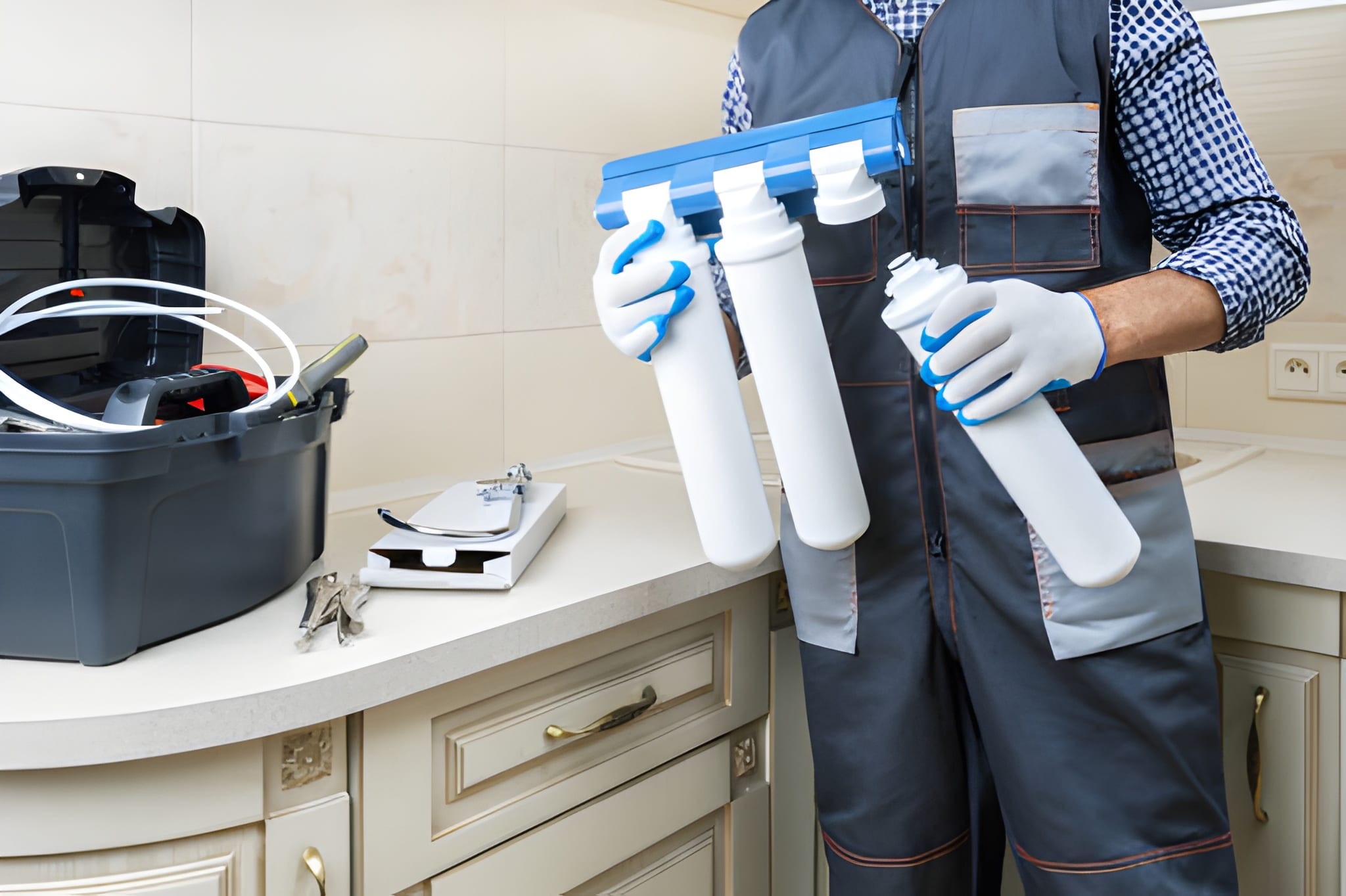
Common water issues in Simi Valley homes
- Chlorine or chloramine taste and odor from municipal disinfection.
- Sediment, sand or rust particles after heavy rains or pipeline work.
- Hard water scale buildup on fixtures, water heaters and appliances.
- Occasional discoloration or turbidity following regional storms or construction.
- Trace agricultural or urban runoff contaminants that affect sensitive households.
Understanding which of these problems affect a particular home is the first step toward an effective whole-house filtration solution.
Whole-house filtration system types and what they do
- Sediment filters: Capture sand, rust and particulate matter to protect downstream equipment and improve water clarity.
- Carbon (activated carbon) media filters: Reduce chlorine, chloramine byproducts, organic tastes and odors, and many chemical contaminants that impact flavor and smell.
- Whole-home reverse osmosis pre-filtration: RO systems installed at the point of entry use sediment and carbon pre-filters to protect an RO unit serving drinking and cooking needs; when used as a whole-home strategy, RO is typically applied to specific outlets because full-house RO can be wasteful and costly.
- UV disinfection: Kills or inactivates bacteria and viruses that can pass through other filters; often added where private wells or localized microbiological concerns exist.
- Water conditioning / scale reduction: Catalytic media or electronic descalers reduce scale buildup from calcium and magnesium without ion-exchange softening; softeners remain an option where hardness is a primary concern.
Systems are often combined: a sediment pre-filter, followed by carbon media, plus optional UV or conditioning media depending on water quality goals.
How Camarillo Plumbing assesses water and sizes systems
- Water testing: A comprehensive analysis identifies sediment levels, chlorine/chloramine, hardness, pH, and any site-specific contaminants. Tests consider municipal reports and seasonal variability common to Simi Valley.
- Flow-rate measurement: We measure your peak household demand (showers, appliances, irrigation) to size filters and housings so pressure and performance remain reliable.
- Site survey: Inspect plumbing layout, space for equipment (garage, utility room, or exterior enclosure), shutoff valves, and drain access for backwash or RO waste.
- System design: Based on results, a tailored system is specified with appropriate filter micron ratings, media types, and service access to meet both contaminant removal goals and household flow needs.
Professional installation process and timeline
- Preparation and planning: After assessment and system selection, the installation plan outlines equipment placement, required permits if any, and expected service interruptions.
- Installation day(s): Most whole-house filter installs for typical single-family homes are completed in one day. Larger or multi-stage systems, or those requiring electrical or permit work for UV/RO components, may take longer.
- Connection and testing: Technicians install isolation valves, pressure relief, pre- and post-filter access, and perform pressure and leak testing. Flow and pressure checks ensure the system performs under real-world demand.
- Walkthrough and documentation: Homeowners receive an explanation of system components, maintenance intervals, and warranty details. Operational checks include demonstrating filter access and any electronic controls.
All work adheres to local plumbing codes and recommended industry practices to protect home plumbing and maintain warranties.
Maintenance, filter replacement schedules, and service plans
- Sediment pre-filters: Typically replaced every 3–12 months depending on particulate load.
- Carbon media cartridges: Often replaced every 6–12 months for point-of-entry systems; larger media tanks are usually serviced less frequently (every 1–3 years) depending on contaminant levels.
- UV lamps: Replace annually to maintain germicidal output; quartz sleeve cleaning as needed.
- RO pre-filters and membranes: Pre-filters every 6–12 months, RO membranes every 2–5 years depending on usage and feed water quality.
- Routine inspections: Annual or biannual service checks confirm pressure, media condition, and verify no bypass or leak issues.
Camarillo Plumbing provides standard warranty information and optional ongoing maintenance plans designed to keep systems operating efficiently and protect equipment longevity.
Warranty and service-plan options
Many whole-house filtration systems include manufacturer warranties for individual components (filters, housings, UV chambers), and local service warranties cover installation workmanship. Service-plan options often bundle scheduled filter replacements, annual inspections, and priority service visits to reduce downtime and maintain performance. Warranty and plan specifics vary by system type and manufacturer.
Benefits for Simi Valley homeowners
- Improved taste and odor: Carbon filtration reduces chlorine/chloramine impacts that affect drinking and cooking water.
- Appliance and plumbing protection: Removing sediment and reducing scale extends the life of water heaters, dishwashers and laundry machines.
- Health and hygiene: UV disinfection and appropriate filtration reduce microbiological risks for properties with private wells or after regional water disturbances.
- Consistent performance: Properly sized systems maintain household water pressure while delivering filtered water to every tap.
Investment considerations and financing
System complexity, home flow requirements, and desired treatment goals determine the overall investment. Single-stage whole-house filters are a lower-cost entry point; multi-stage systems with UV or conditioning media represent higher investment and broader protection. Financing and flexible payment options are commonly available through local providers to match system scope with household budgets.
FAQs
Q: How do I know if my home in Simi Valley needs a whole-house filter?A: Signs include persistent chlorine taste or smell, visible sediment, scale buildup, frequent appliance maintenance, or concerns after regional storms. A water analysis confirms specific needs and guides the right solution.
Q: Will a whole-house filter soften hard water?A: Not all filtration systems soften water. Scale-reduction media or a dedicated water softener addresses hardness. Filtration systems focus on sediment, chlorine, and contaminants unless a softening component is included.
Q: How often do filters need to be changed?A: Replacement frequency depends on filter type and water quality—sediment filters often every 3–12 months, carbon cartridges 6–12 months, and larger media tanks 1–3 years. A site-specific maintenance schedule is provided after assessment.
Q: Can a whole-house system handle my entire home’s water flow?A: Yes, when properly sized. Flow-rate measurement during the assessment ensures the chosen system meets peak household demand without significant pressure loss.
Q: Are there municipal contaminants specific to Simi Valley I should worry about?A: Municipal supply commonly includes disinfectants like chlorine or chloramine and can deliver variable sediment after storms or infrastructure work. A water test identifies any local issues and informs system design.
Q: What does a water quality consultation include?A: A consultation generally includes a visual plumbing inspection, collection of water samples for lab analysis, flow-rate measurements, and a system recommendation tailored to water test results and household needs.
hear what our satisfied clients have to say