


Reverse Osmosis in Simi Valley, CA
.avif)

Reverse osmosis (RO) delivers some of the cleanest, best-tasting water available for drinking and cooking. For Simi Valley homes, where municipal water is treated but can carry chlorine taste, elevated total dissolved solids (TDS), and occasional sediment from aging pipes, an RO system provides reliable removal of contaminants while improving odor and flavor. Camarillo Plumbing installs, services, and maintains RO systems tuned to local water conditions and household needs.
Common water concerns in Simi Valley homes
- Chlorine taste and odor from disinfected municipal supplies
- Elevated mineral content and TDS that affect taste and appliance scaling
- Sediment or rust from older distribution lines or internal plumbing
- Trace contaminants such as lead, nitrates, or volatile organic compounds depending on local sources
- Occasional effects from regional events (wildfire ash, construction runoff)
Understanding the specific mix of issues in a home starts with water testing and a site assessment.
How reverse osmosis works (simple explanation)
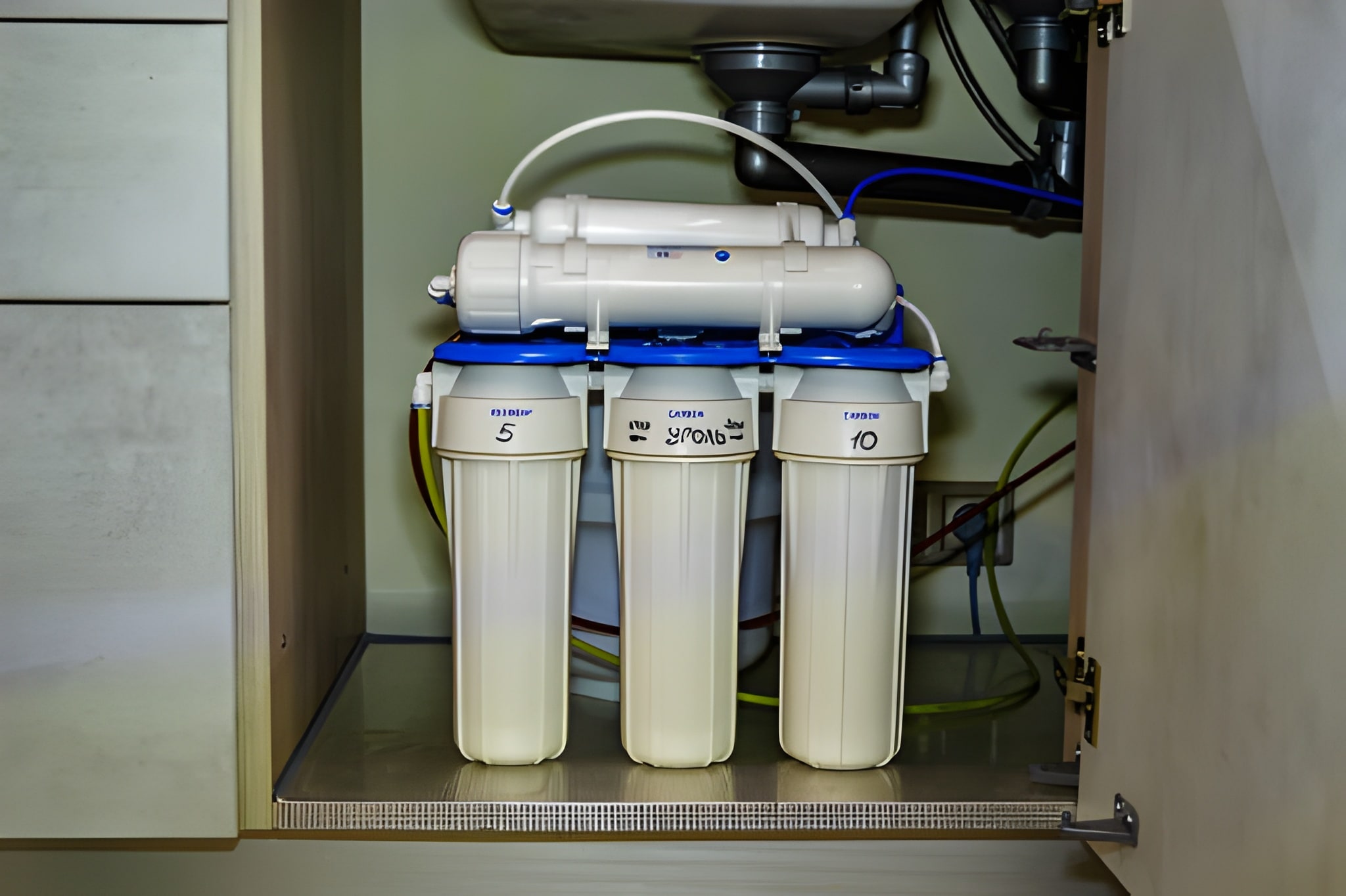
An RO system forces water through a semi-permeable membrane that blocks dissolved solids and many contaminants. Typical stages:
- Pre-filter(s) — sediment and activated carbon remove dirt, chlorine, and particles that can damage the membrane.
- RO membrane — the core element that removes dissolved salts, heavy metals, many organic contaminants, and fluoride to varying degrees.
- Post-filter — final carbon polishing to improve taste and odor before the water reaches the faucet.
- Storage tank and delivery — a pressurized tank stores purified water for on-demand use; optional booster pumps or permeate pumps improve flow and efficiency.
Optional add-ons include UV sterilization for microbiological protection and remineralization cartridges to restore healthy minerals and pH for taste.
Under-sink vs whole-home RO: which is right for you?
Under-sink RO (point-of-use)
- Pros: Lower cost, compact, focused on drinking and cooking water, easier to install under a kitchen sink.
- Cons: Limited daily output, not practical for supplying every tap or appliances.
Whole-home RO (point-of-entry)
- Pros: Purifies all incoming water for bathing, laundry, and appliances; reduces scale and staining throughout the house.
- Cons: Larger footprint, higher installation complexity and cost, higher water usage and sometimes reduced flow without a booster pump.
Most Simi Valley households choose under-sink RO for drinking water and a separate whole-home filtration or water softening solution to address hardness and scale.
System components explained
- Membrane: rated by flow and rejection percentage; lifespan depends on feed water quality.
- Pre-filters: sediment and carbon protect the membrane and improve lifespan.
- Post-filters: carbon polishing for taste.
- Storage tank: pressurized vessel that stores purified water for immediate use.
- Booster/permeate pump: increases production rate and reduces waste water for low-pressure systems.
- Automatic shut-off valve and flow restrictor: manage production and reduce continuous drain flow.
- Optional UV and remineralization stages: address microbiological risks and add back beneficial minerals.
Site assessment and professional installation process
- On-site evaluation of water source, pressure, and available space.
- Water testing (TDS, chlorine, pH, hardness, and targeted contaminants) to recommend the right system and pre-treatment.
- Review of plumbing layout and drain access, plus discussion of under-sink vs whole-home goals.
- Installation day: mount system components, connect drain and faucet, install storage tank and any pumps, and test for leaks.
- Post-installation testing to confirm TDS reduction and proper system operation.
- Training on simple user checks and an agreed maintenance schedule.
Professional installation ensures correct pressure balancing, proper drain setup, and compliance with local plumbing practices in Simi Valley.
Routine maintenance and replacement schedule
- Sediment and carbon pre-filters: typically every 6 to 12 months depending on usage and incoming water quality.
- RO membrane: generally 2 to 5 years; high TDS or poor pre-filtration accelerates replacement.
- Post-filters: every 6 to 12 months for consistent taste.
- Storage tank: sanitize annually or as advised by your installer.
- Annual system inspection: check for leaks, verify auto shut-off and pressure, test TDS.
Keeping records of filter changes and annual tests preserves manufacturer warranties and maintains peak performance.
Water testing and troubleshooting guidance
- Baseline test: measure TDS pre- and post-system to verify expected reduction. An RO should produce a significant drop in TDS; if not, check pre-filters and membrane integrity.
- Low output or slow recovery: common causes include clogged pre-filters, low feed pressure, faulty storage tank bladder, or a failing pump.
- Continuous drain flow: check automatic shut-off valve and flow restrictor; excessive drain may indicate membrane failure or incorrect installation.
- Taste or odor returns: usually indicates exhausted carbon filters or bacterial buildup if system sits unused. Replace filters and sanitize system.
- Cloudy or discolored water: investigate sediment in feed lines or failed pre-filters.
Homeowners can perform basic checks; complex diagnostics and membrane replacement are best handled by a technician familiar with local water characteristics.
Pricing, warranties, and service agreements (what to expect)
Pricing depends on system type (under-sink vs whole-home), number of purification stages, additional equipment (booster pump, UV, remineralizer), installation complexity, and required pre-treatment. Warranties commonly include manufacturer coverage for membranes and components for a set period and labor warranties from the installer for workmanship. Service agreements typically offer scheduled filter changes, annual inspections, and priority service for repairs. Keep documentation of water tests and maintenance to preserve warranty coverage.
Local support and why it matters in Simi Valley
Camarillo Plumbing has experience with Ventura County water conditions and the common issues Simi Valley residents face. Local technicians can tailor RO system selection and pre-treatment to seasonal variations, regional sourcing, and household demand. Professional local support ensures faster service, accurate on-site testing, and long-term system care aligned with community water characteristics.
Benefits recap and simple homeowner tips
- Cleaner, better-tasting water for drinking and cooking.
- Reduced dissolved solids and contaminants that affect health and flavor.
- Extended life of small appliances that use purified water.
- Lower dependence on bottled water and improved convenience.
Maintenance tips:
- Monitor TDS periodically with a handheld meter.
- Replace pre- and post-filters on schedule.
- Flush and sanitize after long inactivity.
- Keep installation and test records for warranty and service planning.
FAQs
Q: Is reverse osmosis water safe to drink?A: Yes. RO removes a wide range of contaminants and produces very low TDS water. Many systems include a post-remineralization stage to restore healthy minerals for taste and pH balance.
Q: Does RO waste a lot of water?A: RO systems produce wastewater during rejection. Newer systems with permeate pumps or high-efficiency membranes reduce waste. Overall waste depends on feed pressure, membrane design, and system configuration.
Q: Can RO remove fluoride and lead?A: RO membranes are effective at reducing many dissolved solids, including significant reductions in fluoride and lead. Exact removal rates depend on membrane type and system design.
Q: How often must the RO membrane be replaced?A: Commonly every 2 to 5 years, but heavy TDS or insufficient pre-filtration can shorten life. Regular pre-filter changes extend membrane lifespan.
Q: Do I need a booster pump in Simi Valley?A: A booster pump is recommended when municipal or well pressure is low. The site assessment will determine if a pump is required for reliable production.
Q: Can I install an RO system myself?A: Under-sink systems can be DIY for skilled homeowners, but professional installation ensures proper drainage, optimal pressure, correct fittings, and preserves warranties. Whole-home RO should be professionally installed.
Q: Will RO affect water pressure in my home?A: Under-sink RO supplies a dedicated faucet from a storage tank and does not reduce pressure at other taps. Whole-home RO can affect flow without proper sizing or booster pumps.
hear what our satisfied clients have to say