

Whole House Water Filter in Santa Paula, CA
.avif)

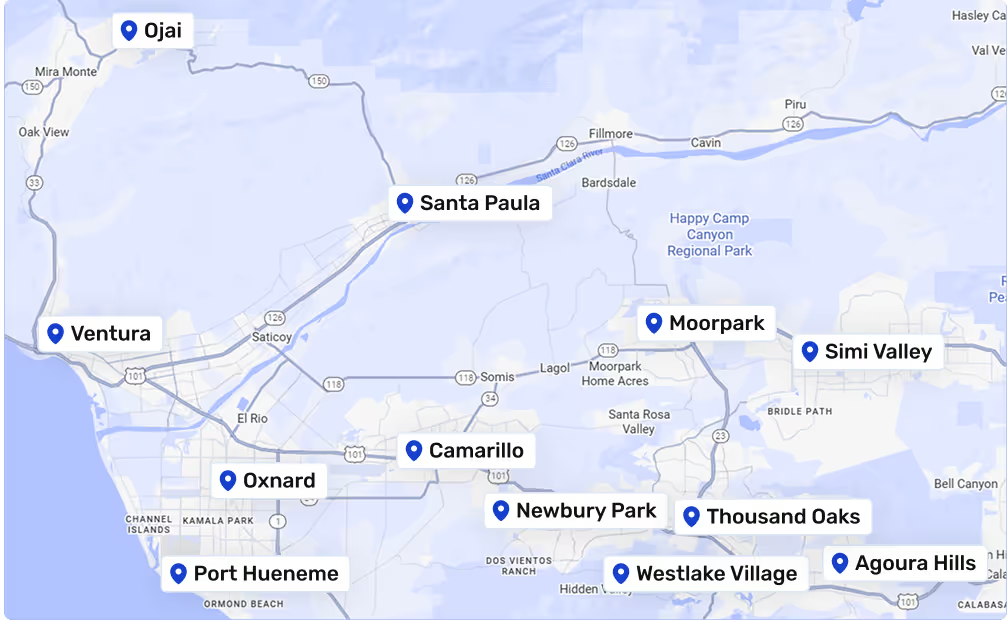
A whole-house water filtration system protects every faucet, shower and appliance in your Santa Paula home from chlorine, sediment, scale and other contaminants that affect taste, odor and plumbing longevity. With local water characteristics — seasonal agricultural runoff, groundwater variability, and moderate to hard water common in Ventura County — a properly designed whole-home system brings cleaner water to every tap without the need for point-of-use cartridges or bottled water.
Common water problems in Santa Paula homes
- Chlorine taste and odor: Municipal treatment often uses chlorine or chloramines, causing off-flavors and smells in drinking and shower water.
- Sediment and rust: Older pipes and regional sediments can create visible particles and discoloration.
- Hard water (scale): Mineral buildup shortens appliance life, reduces heater efficiency and leaves soap scum.
- Agricultural contaminants: In some areas near farmland, trace levels of nitrates or pesticides may be a concern, especially for private wells.
- Iron, manganese, and elevated TDS: Groundwater sources may contain minerals that stain fixtures and affect taste.
Whole-house filter types and what they remove
- Sediment pre-filters: Remove sand, silt and rust particles to protect finer media downstream.
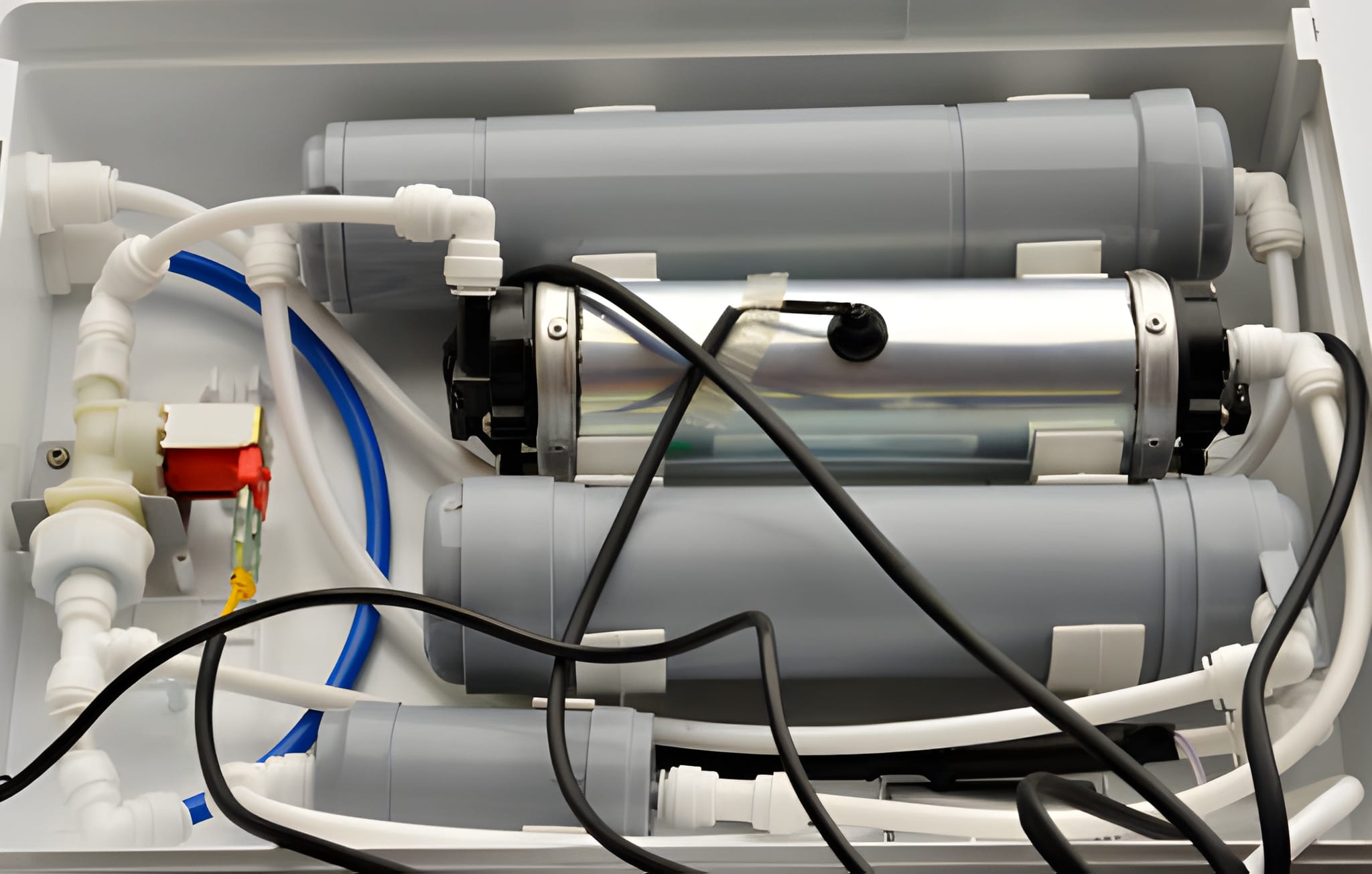
- Activated carbon (block or granular): Excellent for chlorine, taste, odor, and many organic compounds; essential for improving drinking water flavor at every tap.
- Catalytic carbon / KDF media: Designed to handle chloramines, hydrogen sulfide and reduce certain metals.
- Water softeners (whole-home): Salt-based or salt-free systems reduce hardness minerals (calcium and magnesium) that cause scale; softeners are typically separate from carbon filtration.
- Specialty media: Options exist for iron, manganese, arsenic, nitrate or VOC removal when tests show those contaminants.
- Reverse osmosis (RO): Best as a point-of-use system for kitchen drinking water; whole-house RO is rare due to cost and waste water.
- UV disinfection: Adds microbial protection for well water or systems with biological concerns.
Consultation and on-site water testing in Santa Paula
Camarillo Plumbing begins with a homeowner consultation and on-site testing to determine what’s in your water and what you need. The process commonly includes:
- Reviewing water source (municipal vs well), household usage, and sensitivity concerns.
- Collecting samples for laboratory analysis (hardness, chlorine/chloramine, pH, iron, manganese, nitrates, coliforms, TDS and sediment).
- Performing immediate field tests for hardness and chlorine and inspecting plumbing for signs of scale or corrosion.
- Reviewing test results with you and recommending a tailored system that balances contaminant removal, flow rate and maintenance requirements.
Sizing and selection guidance
Selecting the right whole-house filter depends on:
- Peak flow rate: Sizing must match showers, laundry, irrigation and other simultaneous demands to avoid pressure loss.
- Household size and water use patterns: Larger families and irrigation needs increase capacity requirements.
- Water quality results: High sediment or specialized contaminants may require multi-stage systems or pre-treatment.
- Space and installation constraints: Closet, garage or utility room location affects tank and filter placement.
Camarillo Plumbing evaluates these factors to design a system with the correct filter capacities, bypass arrangements and pressure-rated components.
Professional installation steps and timeline
Typical installation includes:
- Site preparation and placement planning to allow bypass and maintenance access.
- Water shutoff and mainline tie-in with a bypass valve to maintain service during maintenance.
- Mounting tanks, housings and any softener brine tanks; connecting media and control valves.
- System flushing, pressure testing and programming control heads.
- Final water quality check and a walkthrough explaining operation and filter replacement points.
Most single-family installations can be completed in a day; multi-stage systems, specialty media or structural modifications may extend the timeline to multiple days.
Routine maintenance and replacement schedules
- Sediment filters: Inspect and replace every 3 to 12 months depending on sediment load.
- Carbon cartridges: Typically replaced every 6 to 12 months; catalytic carbon or large-capacity cartridges may last longer.
- RO membranes and pre-filters (point-of-use): Membranes last 2 to 5 years; pre-filters are changed more frequently.
- Water softener maintenance: Check salt levels monthly and clean brine tanks as needed; resin typically lasts many years.
- UV lamps: Replace annually and clean sleeves as recommended.
Regular monitoring of pressure and taste, plus annual professional inspections, preserves system performance and prolongs component life.
Expected costs, financing and warranty information
Costs vary based on system type, capacity, pre-treatment needs and installation complexity. Key cost drivers include multi-stage systems, specialty media for contaminants like nitrates or arsenic, and modifications to existing plumbing. Financing options are commonly available through home service providers to spread investment over time. Equipment and workmanship warranties vary by manufacturer and installer; typical warranties cover media housings and control valves for multiple years, while consumable parts such as filters and membranes have shorter coverage. Service agreements that bundle regular maintenance and filter replacement are often offered to preserve warranty conditions and system performance.
Appliance protection and health advantages
- Extended appliance life: Removing sediment and reducing scale lowers repair frequency and improves efficiency for water heaters, dishwashers and washing machines.
- Improved comfort and appearance: Softer, filtered water reduces soap scum, makes skin and hair feel better after bathing and prevents staining of fixtures and laundry.
- Better drinking water quality: Carbon filtration and point-of-use RO improve taste and reduce disinfection byproducts; specialty media can address specific contaminants identified in testing.
- Targeted safety for private wells: Well owners in the Santa Paula area benefit from testing-driven solutions that address bacterial risks, iron, manganese or nitrate concerns.
Frequently Asked Questions
Q: Will a whole-house filter remove bacteria and viruses?A: Standard sediment and carbon systems do not reliably remove bacteria or viruses. UV disinfection or specialized filtration validated for microbiological removal is required when microbial contamination is present.
Q: Do I still need a water softener if I install a whole-house filter?A: Filtration and softening serve different purposes. Filters remove particles and many chemicals; a softener specifically reduces hardness minerals. Combining both delivers cleaner, scale-free water throughout the home.
Q: How long does installation take for most homes?A: A straightforward whole-house filtration system is often installed within one business day. More complex systems or homes requiring plumbing updates may take longer.
Q: Will filtration lower my water pressure?A: Properly sized systems maintain normal flow. Undersized filters or clogged cartridges can reduce pressure, which is why correct sizing and regular maintenance are important.
Q: Can reverse osmosis be used for whole-house filtration?A: Whole-house RO is uncommon because of high cost, large waste water volumes and reduced flow. RO is best used as a point-of-use system for kitchen drinking and cooking water.
Q: How will I know when filters need replacement?A: Signs include a change in taste or odor, decreased flow or pressure, and visible particulate. Scheduled maintenance and periodic testing are the best indicators.
Camarillo Plumbing uses on-site testing and industry-standard designs to match Santa Paula homes with solutions that address local water conditions while protecting plumbing and improving everyday water quality.
hear what our satisfied clients have to say