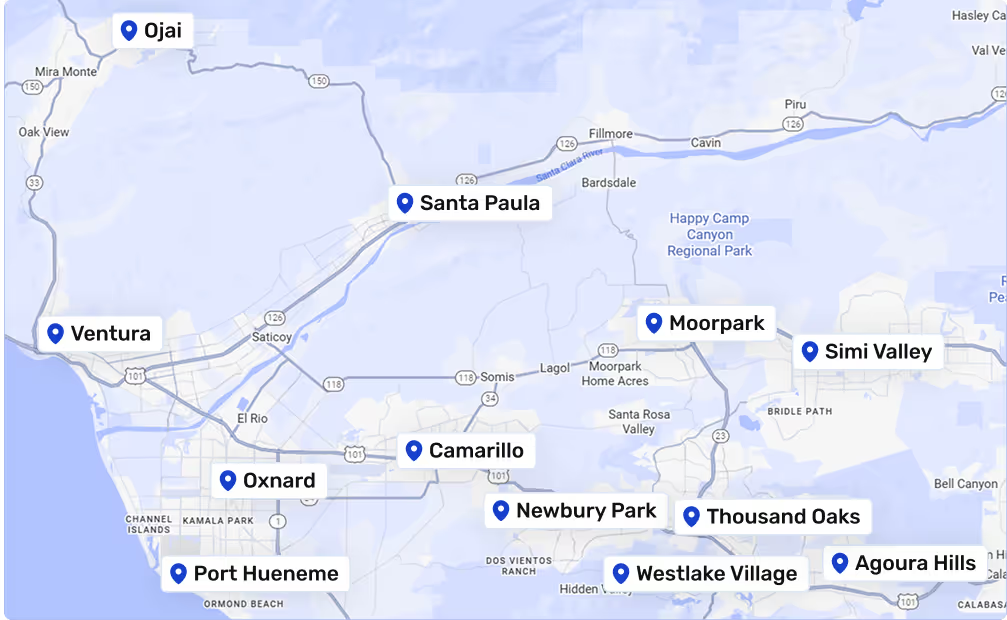


Reverse Osmosis in Santa Paula, CA
.avif)

Reverse osmosis (RO) is one of the most effective ways to improve drinking water quality for Santa Paula homes. Whether your water comes from a municipal connection or a private well, RO systems remove common contaminants like sediment, chlorine taste and odor, heavy metals, nitrates, and a large portion of dissolved solids. For homeowners concerned about agricultural runoff, well water variability, or simply wanting cleaner tasting water at the tap, an RO system delivers measurable water quality improvements and reliable day to day performance.
Why Santa Paula homeowners choose reverse osmosis
- Local groundwater and some smaller water systems in the Santa Clara River Valley can show higher nitrate levels or agricultural byproducts. RO effectively reduces nitrates and many organic compounds.
- Seasonal changes and summer heat increase reliance on bottled water; RO provides consistent on-demand drinking water without single-use bottles.
- For families with infants, people on sodium-restricted diets, or anyone sensitive to taste and odor from chlorine, RO provides noticeable benefits at the kitchen sink.
Common RO system types and which fits your home
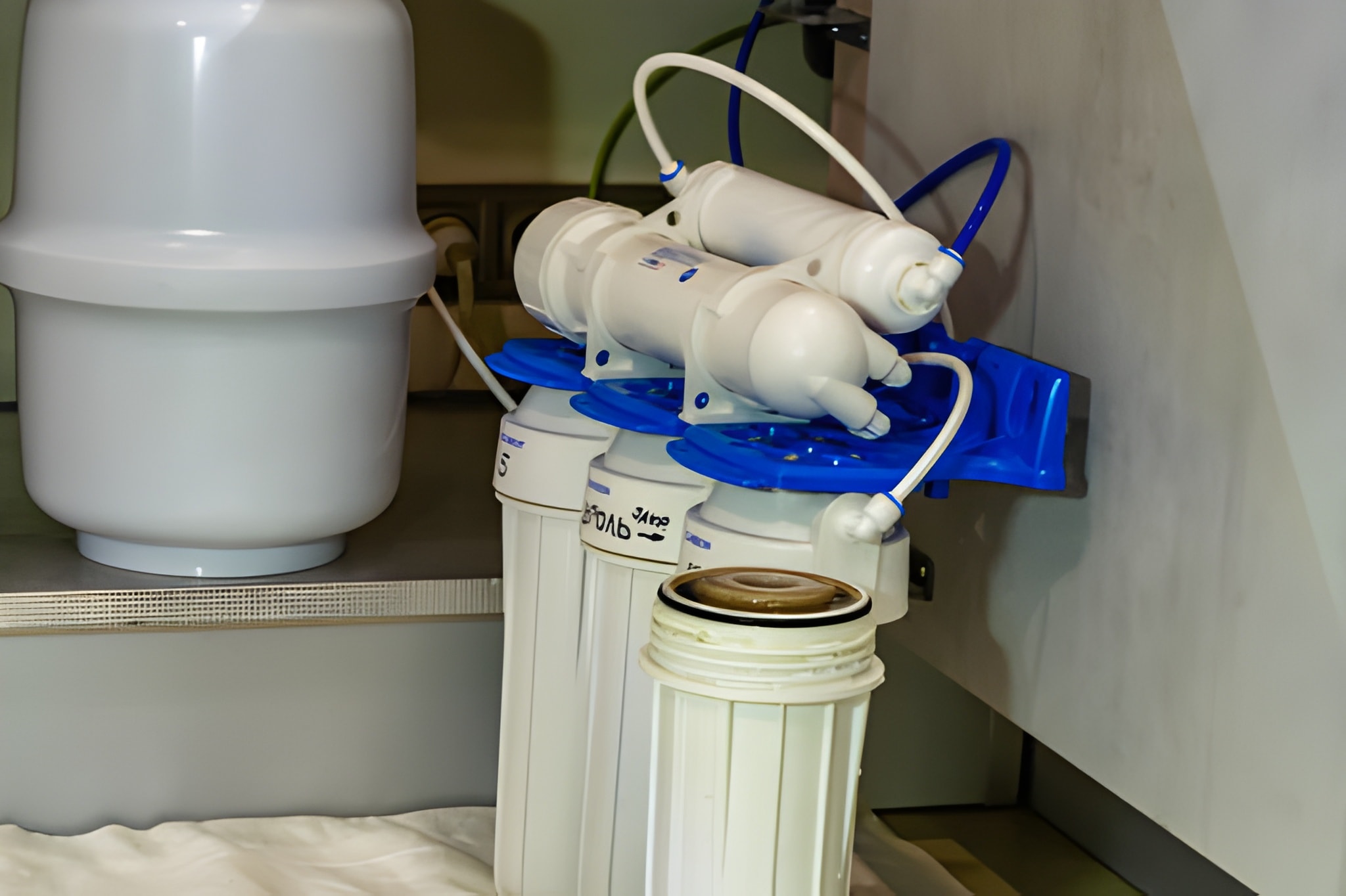
- Under-sink RO (point-of-use)
- Sits beneath the kitchen sink and supplies a dedicated faucet.
- Best for drinking, cooking, and filtered ice. Compact and cost-effective for single-point needs.
- Whole-house RO (point-of-entry)
- Treats all water entering the home. Used when homeowners require low TDS for appliances, or when well water contains wide-ranging contaminants.
- Larger footprint, requires more maintenance, and is typically chosen for complete home remediation or sensitive equipment.
What reverse osmosis removes
- Sediment and particulates (with pre-filtration)
- Chlorine and chloramine taste and odor (pre-carbon filters)
- Heavy metals such as lead and arsenic (membrane plus pre/post treatment)
- Nitrates and some agricultural chemicals
- Total dissolved solids (TDS) to improve taste and clarity
Pre- and post-filtration components
- Sediment pre-filter: captures sand, rust, and larger particles to protect finer filters and the RO membrane.
- Activated carbon pre-filter: removes chlorine and organics that can damage the membrane and affect taste.
- RO membrane: the core semi-permeable membrane that rejects dissolved solids and contaminants.
- Post-carbon polish: improves taste by removing any residual odors after storage tank.
- Optional UV or remineralization stages: UV inactivates bacteria if microbiological risk exists; remineralization restores healthy minerals and balances pH for better taste.
Installation process — what to expect
- Site assessment and water testing
- A technician evaluates water source, available under-sink space, water pressure, and drain access. Pre-install testing identifies specific contaminants and determines the appropriate system configuration.
- System sizing and configuration
- Choose between 3- to 5-stage under-sink systems or larger capacity whole-house RO depending on household demand, storage needs, and water quality results.
- Plumbing connections
- Install dedicated faucet, connect feed line, and integrate shut-off valves. If on a well, a pressure tank and booster pump may be required for consistent membrane performance.
- Drain and storage tank setup
- RO systems require a drain connection for reject water and a pressurized storage tank for treated water. Proper drain saddle or adapter and an air gap faucet will be installed per code.
- Commissioning and verification
- After installation the system is flushed, membrane and filters checked, and post-install test of TDS and other target contaminants is performed to verify performance.
Routine maintenance and expected service
- Filter replacement schedule
- Sediment and carbon pre-filters: typically every 6 to 12 months depending on water quality and usage.
- RO membrane: commonly every 2 to 5 years depending on feed water TDS and maintenance practices.
- Post-filters and remineralization cartridges: usually annually.
- Sanitization and tank care
- Annual sanitization of the system and tank is recommended, especially for well sources or if the unit has not been used for extended periods.
- Performance monitoring
- Periodic TDS testing of product water helps confirm membrane health. A rising TDS value is the clearest sign the membrane needs replacement.
Water testing and quality verification
- Before-and-after testing is critical for confidence in results. Typical metrics tested:
- TDS (ppm)
- Nitrate levels
- Lead and other heavy metals (if present in source)
- Chlorine residuals and total coliform for microbiological concerns
- Tests can be done as part of the initial assessment and again after installation to demonstrate reduction percentages. Homeowners should keep records of test results and replacement dates.
Warranties and financing options
- Manufacturer warranties
- Most RO components carry manufacturer warranties on membranes and tanks for a specified period. Coverage varies by brand and component.
- Installer workmanship warranty
- Installers like Camarillo Plumbing often provide a workmanship warranty covering installation defects for a set period. Registering the system and keeping maintenance records helps ensure warranty validity.
- Financing and payment plans
- Many homeowners finance larger whole-house systems through standard home-improvement financing or installment plans offered by local service providers. Financing options can cover equipment, installation, and recurring maintenance plans.
Benefits beyond taste
- Reduced dependence on bottled water and fewer plastic containers
- Longer appliance life for coffee makers and refrigerators when point-of-use RO reduces scale and sediment
- Peace of mind with measurable contaminant reduction, especially for homes on private wells or near agricultural areas
Choosing the right RO system for your Santa Paula home
Consider these factors:
- Source water type: municipal vs well will influence pre-treatment needs.
- Primary concerns: nitrates, heavy metals, taste, or complete TDS reduction.
- Space and capacity: under-sink for drinking-only; whole-home if you need treated water throughout the property.
- Ongoing maintenance willingness: whole-house systems require more frequent servicing and higher consumable costs.
Q: How often should filters and membrane be replaced?
A: Pre-filters are generally replaced every 6 to 12 months; membranes typically last 2 to 5 years depending on feed water quality; post-filters are usually changed annually. Regular TDS checks help refine these intervals.
Q: Can an RO system handle well water in Santa Paula?
A: Yes. RO can treat well water effectively, but well supplies often require additional pretreatment such as sediment filtration, water softening, or UV disinfection based on test results.
Q: Will RO systems waste a lot of water?
A: RO systems produce some reject or concentrate water. Modern systems and permeate pumps reduce waste ratios substantially. For homes concerned about efficiency, higher recovery RO setups or graywater reuse can be evaluated.
Q: Do I need a storage tank with an RO system?
A: Under-sink RO systems use a pressurized storage tank to deliver immediate water flow at the faucet. Whole-house installations may rely on larger storage or demand tanks to meet household usage.
Q: Is remineralization necessary after RO?A: Remineralization is optional. RO removes many dissolved minerals that affect taste and alkalinity. A post-filter remineralizer can restore desirable minerals and improve flavor for drinking water.
Q: How do I verify performance after installation?
A: Request pre-installation water test results and obtain post-installation testing for TDS and targeted contaminants. Retain test certificates and maintenance records for warranty and ongoing performance tracking.
hear what our satisfied clients have to say