


Water Softener in Westlake Village, CA
.avif)

Installing a water softener in Westlake Village, CA addresses everyday problems caused by hard water — scale buildup in heaters and plumbing, shortened appliance life, dull laundry, and dry skin. Westlake Village and surrounding Ventura/Los Angeles neighborhoods commonly experience moderate to high water hardness. Pairing the right softening system with professional testing and installation preserves home plumbing, improves appliance efficiency, and delivers softer water throughout your home.
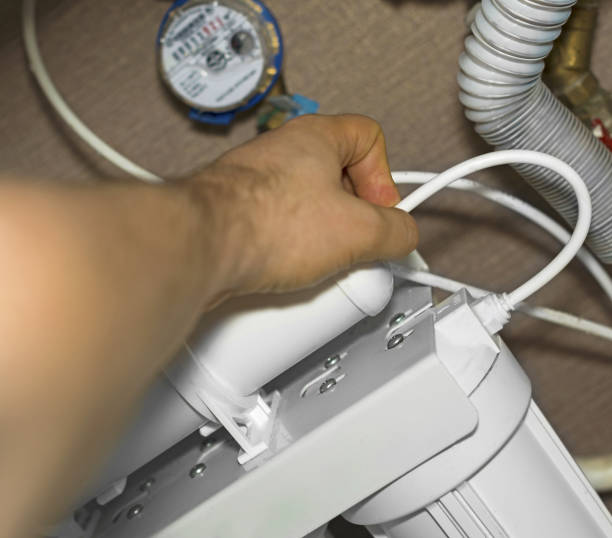
Why Westlake Village homes benefit from a water softener
- Reduced scale in water heaters and dishwashers — Southern California’s hard groundwater accelerates mineral deposits that lower efficiency and increase energy use.
- Longer appliance and fixture life — soft water reduces plumbing corrosion and scale on faucets, showerheads, and tank interiors.
- Better laundry and skin care — clothes stay brighter and softer; residents report less dry skin and soap scum with softened water.
- Improved irrigation performance — mineral buildup can clog irrigation emitters and sprinkler heads common in drought-conscious Westlake Village landscapes.
How water softening systems work
- Ion-exchange softeners (salt-based): Hardness minerals (calcium and magnesium) are exchanged for sodium (or potassium) on a resin bed. Periodic regeneration with salt is required to recharge the resin.
- Pros: Removes hardness completely; proven effectiveness for high-hardness homes.
- Cons: Requires salt storage, brine discharge to drain, and periodic maintenance.
- Salt-free alternatives (template-assisted crystallization or TAC): Condition minerals so they do not form hard scale; do not remove hardness ions from the water.
- Pros: Low maintenance, no salt use or brine discharge, good for areas with septic systems or discharge restrictions.
- Cons: Less effective at eliminating all signs of hardness when levels are very high.
Testing: the first step
Accurate water testing determines the hardness (reported as grains per gallon, gpg, or ppm). Typical thresholds:
- Soft: 0–1 gpg
- Slightly hard: 1–3.5 gpg
- Moderately hard: 3.5–7 gpg
- Hard: 7–10 gpg
- Very hard: >10 gpg
Professional testing by a licensed plumber confirms both hardness and other water quality factors (iron, chlorine) that influence system choice. In Westlake Village, municipal water frequently registers in the hard to very hard range, making an ion-exchange system the common solution.
Selecting and sizing a system
Key factors:
- Household hardness (gpg)
- Daily water usage (gallons/day)
- Desired days between regenerations (typical 7–14 days)
- Peak flow rate (gallons per minute)
Sizing formula (simple approach):Required softening capacity (grains) = hardness (gpg) × household gallons per day × days between regenerations.Example: A family of four using 75 gallons per person/day = 300 gpd. If hardness is 10 gpg and you plan 7-day regenerations:10 × 300 × 7 = 21,000 grains. Choose a softener with at least that capacity plus a safety margin.
Match resin tank diameter and flow rating to household peak flow (commonly 8–12 gpm for typical single-family homes in Westlake Village) to avoid reduced performance during showering or simultaneous appliance use.
Professional installation process
- Site assessment and water test to confirm hardness and plumbing layout.
- Selection of system model, location for tanks (brine tank and resin tank), and any pre-filtration if sediment or chlorine is present.
- Shutoff and bypass valve installation to allow service without disrupting the home.
- Plumbing and drain connection, including properly sized drain line for regeneration.
- Electrical hookup for metered/control valve if required and brine tank setup.
- Initial programming and first regeneration cycle; verification of output water quality.
- Post-installation water test and homeowner orientation on salt use and settings.
Licensed plumbers install and commission systems to ensure proper regeneration scheduling, backflow prevention where required by local code, and correct drain connections to comply with municipal rules in Ventura and Los Angeles counties.
Routine maintenance and common repairs
Routine maintenance:
- Salt refills: Frequency depends on capacity and water usage; most households need refills every 4–8 weeks. Potassium chloride is an alternative to sodium chloride.
- Check for salt bridging or mushing: Break up hardened salt and remove excess residue.
- Resin care: Resin typically lasts 10–15 years; chlorine or iron contamination can shorten lifespan — pre-filters can protect the resin.
- Brine tank cleaning: Recommended annually or when heavy sediment accumulates.
- Inspect control valve and program regeneration interval annually.
Common repairs:
- Salt bridge or clogged injector
- Control valve malfunction or meter sensor failure
- Resin fouling from iron or bacterial contamination
- Leaks at fittings or drain connections
- Motor or timer failures on older units
Cost expectations and long-term value
Typical installed price ranges in Westlake Village:
- Ion-exchange whole-house softener: $1,500 to $4,000, depending on capacity and features.
- Salt-free conditioning systems: $800 to $2,500.
- Annual operating and maintenance: $50 to $300 (salt, annual checks, filters).
- Resin replacement or major repairs: $400 to $1,200 when required.
While initial investment varies, savings come from longer-lasting water heaters and appliances, reduced energy use, and lower plumbing maintenance costs from scale control.
Warranties and financing
- Warranties: Most manufacturers provide parts warranties from 1 to 10 years; tanks and resin often have extended coverage. Verify specifics on control valves, resin, and tanks.
- Financing: Local plumbing companies commonly offer financing plans or payment options to spread costs. Ask about financing terms and warranty transferability when choosing a system.
Scheduling local service and what to expect
A typical service flow in Westlake Village involves an initial consultation and on-site water test, a recommendation based on the test results and household needs, an installation appointment with site preparation and system commissioning, and a follow-up performance check. Professional installers will consider local plumbing codes, drainage allowances, and any homeowner association guidelines that affect system placement and discharge.
Maintenance tips for Westlake Village homeowners
- Test water yearly to monitor hardness and iron levels.
- Use a pre-filter if your municipal supply shows sediment or chlorine that can damage resin.
- Consider a softener with a programmable control valve to minimize water and salt use.
- If on a septic system or concerned about brine discharge, evaluate salt-free conditioning or potassium chloride options.
FAQs
Q: How do I know if my home in Westlake Village needs a water softener?A: Signs include visible scale on fixtures, frequent appliance descaling, spotty glassware, dry skin or dull laundry. A professional hardness test confirms levels and helps decide between salt-based or salt-free options.
Q: Can a water softener remove other contaminants like chlorine or iron?A: Ion-exchange softeners primarily remove calcium and magnesium. Iron can foul resin and may require an iron-specific pre-filter. Chlorine should be removed before the softener to protect resin, typically with activated carbon filtration.
Q: Are salt-free systems effective for very hard water?A: Salt-free systems condition minerals to reduce scale but do not remove hardness ions. For very hard water (>10 gpg), salt-based ion-exchange systems typically deliver more complete scale control.
Q: How often will I need to add salt to a salt-based softener?A: Most households refill salt every 4–8 weeks, depending on system capacity, family size, and water hardness. A properly sized system reduces refill frequency.
Q: What maintenance will the installer provide after setup?A: Professional installers perform initial testing, program the system, and can set a maintenance schedule for annual checks, brine tank cleaning, and resin inspections as needed. Camarillo Plumbing follows industry-standard commissioning and testing procedures for Westlake Village homes.
hear what our satisfied clients have to say