
Pipe Bursting in Newbury Park, CA
.avif)

Pipe bursting is a trenchless pipe replacement method ideal for Newbury Park homes and businesses where aging sewer and water lines need full replacement but large-scale excavation would damage landscaping, driveways, or mature trees. For property owners facing recurring clogs, sewage backups, or leaking lines, pipe bursting offers a durable, low-disruption alternative to traditional dig-and-replace work. Camarillo Plumbing installs new, long-life pipe while removing the old pipe in place, minimizing surface disturbance and speeding up project completion.

When pipe bursting is recommended vs traditional excavation
Pipe bursting is typically recommended when:
- Existing pipe is cracked, collapsed, or badly offset and cannot be repaired with lining.
- Root intrusion is widespread and pipe structural integrity is compromised.
- Surface restoration costs (lawns, mature trees, patios, or driveways) make open-trench work impractical.
- Access limitations make large excavation difficult - steep slopes or tight yards common in Newbury Park.Traditional excavation may still be required when there are complex lateral connections that cannot be accessed, extremely shallow utilities that conflict with bursting equipment, or when local permit conditions mandate open-trench work.
Common pipe problems in Newbury Park
- Root intrusion from large oaks and landscaping trees that are common in the area.
- Clay and cast iron pipes that are prone to cracking and joint separation as houses age.
- Corrosion in older metal pipes influenced by soil conditions and coastal air in the broader Ventura County region.
- Collapses or offset joints after heavy winter rains or seismic ground movement.Camarillo Plumbing frequently evaluates these conditions during the pre-inspection phase to determine whether pipe bursting is the best long-term solution.
How pipe bursting works - step by step
Pre-inspection and sewer camera survey
- A full video inspection locates damage, measures slope, and identifies laterals and existing utility locations. This step confirms that pipe bursting is appropriate and helps scope the project precisely.
Access pits and utility locating
- Small entry and exit pits (typically 3 to 6 feet) are excavated at two access points. All utilities are located and marked before any ground work begins.
Bursting the existing pipe while pulling in the new pipe
- A bursting head is pulled through the old pipe by winch. The head fractures the old line outward while simultaneously pulling new pipe (commonly high-density polyethylene - HDPE, or sometimes PVC) into place.
Connection and lateral reinstatement
- After the new main is in place, lateral connections are located and reconnected or reinstated. Technicians reconnect service lines and make final fittings at junctions.
Testing and post-installation camera inspection
- The new line is pressure-tested or camera-inspected to confirm flow, slope, and watertight joints. Surface backfill and compaction are completed to restore the short-term site conditions.
Typical timelines and disruption expectations
- Residential projects for a single lateral or short main typically complete in one day to two days from initial excavation to final testing.
- Larger runs or commercial jobs can take several days depending on length, lateral work, and required permits.
- Disruption is limited compared to open-trench methods: expect small access pits, temporary equipment staging, and brief periods of noisy operation during bursting. Landscaping and hardscapes are largely preserved, reducing restoration time and cost.
Advantages of pipe bursting
- No large trenches - minimal surface disturbance to lawns, mature trees, driveways, and paved areas.
- Faster completion than full excavation for comparable replacement scope.
- Reduced landscaping and hardscape damage, preserving property value and aesthetics.
- Environmental benefits - less soil hauling, lower emissions from reduced excavation, and reduced disturbance to root systems and habitats.
- Durable replacement materials - new HDPE or PVC provides long-term resistance to roots and corrosion.
Project scoping - materials and sizes supported
- Existing pipe types supported: clay, cast iron, brittle PVC, and deteriorated ABS.
- Replacement pipe materials: HDPE (preferred for flexibility and joint integrity) or PVC where appropriate.
- Typical residential sizes: 4 inch to 8 inch sewer mains; water service upgrades often fall within similar common ranges.
- Commercial or municipal applications: larger diameters can be accommodated depending on site access and equipment - engineers will confirm feasibility during the survey.
Cost factors that influence jobs
- Length and diameter of the run to be replaced.
- Depth and accessibility of the pipe and location of laterals.
- Number and complexity of lateral reconnections.
- Soil conditions - heavy rock or extremely compacted soil can increase time and equipment needs.
- Pavement or roadway crossings where street opening permits and pavement restoration may be required.
- Required testing, inspections, and permit fees charged by the city or county.
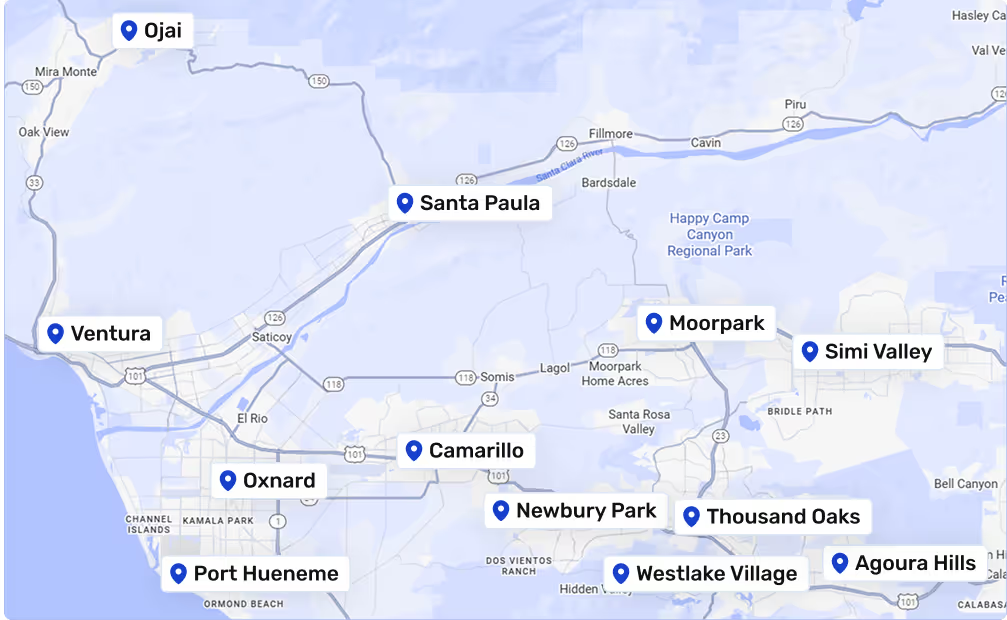
Permits and site preparation in Newbury Park
- Projects generally require permits from the City of Thousand Oaks or Ventura County (depending on whether the property lies inside city limits). Street openings or work within public right of way typically need additional permitting and inspection.
- Site prep from the property owner usually includes clearing vehicles and movable items from staging areas and ensuring safe access to the access pit locations.
- Utility locating and marking is mandatory before work begins to avoid gas, electric, and telecom conflicts.
Post-installation inspection and warranties
- A final camera inspection verifies the new pipe alignment, slope, and joint integrity. Pressure or leak testing may also be performed for water lines.
- Manufacturer warranties cover material defects for replacement pipe, and a workmanship warranty is provided by the contractor for the installation. Specific warranty terms vary by material and contract, so they should be documented prior to work.
Why pipe bursting makes sense for Newbury Park properties
Newbury Park properties often feature mature landscaping, steep lot grades, and older underground systems that are vulnerable to roots and corrosion. Pipe bursting reduces the need to remove prized trees, minimize slope disturbance, and avoid lengthy landscape restoration. The method aligns with local priorities for preserving property aesthetics and reducing disruption while delivering a modern, long-lasting underground system.
Q: How do I know if my sewer or water line is a candidate for pipe bursting?
A: A professional camera inspection is the only reliable way to determine candidacy. The inspection shows pipe condition, joint status, and lateral locations, which allows Camarillo Plumbing to recommend pipe bursting or an alternative method.
Q: Will bursting the pipe affect my trees or landscaping?
A: Pipe bursting minimizes surface disruption compared to open excavation, preserving root zones and landscaping in most cases. Small access pits are required, but large-scale root cutting and landscape removal are usually avoided.
Q: How long will a typical residential pipe bursting job take?
A: Many residential runs are completed in one to two days from excavation to final testing, though more complex jobs with multiple laterals or permit requirements can take longer.
Q: What types of new pipe are used when bursting?
A: HDPE is the most common replacement material due to flexibility and joint strength. PVC is used in specific cases. Material choice depends on soil conditions, required diameter, and local code.
Q: Are permits required for pipe bursting in Newbury Park?
A: Yes. Permits are typically required from the City of Thousand Oaks or Ventura County depending on property jurisdiction. Work in public right of way or street crossings often requires additional permits and inspections.
Q: What warranties are provided after installation?
A: Manufacturer warranties cover pipe materials, and the installer provides a workmanship warranty. Exact warranty terms vary, so request documentation during project scoping.
hear what our satisfied clients have to say