

Sewer Camera Inspection in Ventura, CA
.avif)

Sewer camera inspection in Ventura, CA provides a clear, noninvasive way to diagnose problems inside your sewer line before they become costly emergencies. Whether you are dealing with recurring clogs, slow-draining fixtures, suspicious odors, prepping a house for sale, or planning a renovation, a video inspection gives a factual record of pipe condition and the exact location of issues. In coastal Ventura homes, where older cast iron and clay pipes face salt air corrosion and shifting soils, a camera inspection is often the fastest path to a reliable repair plan.
When to schedule a sewer camera inspection
- Recurrent clogs or backups that return after snaking
- Multiple slow drains across the home indicating a main sewer issue
- Strong sewage odors in the yard or near the foundation
- Suspected pipe damage after heavy rains or ground movement
- Tree root intrusion in neighborhoods with mature eucalyptus, ficus, or avocado trees
- Pre-sale or purchase inspections and lender or escrow requirements
- Before trenchless sewer repair or hydro jetting to confirm scope and suitability
What to expect during the video inspection
- Preparation and access: The technician locates cleanouts or other access points. If interior access is required, simple precautions protect flooring and finishes. In most residential jobs the process is completed without significant disruption.
- Cleaning and prep: A preliminary cleanout or limited rodding may be performed to remove loose debris so the camera can pass. This step improves visibility and reduces the chance of the camera becoming obstructed.
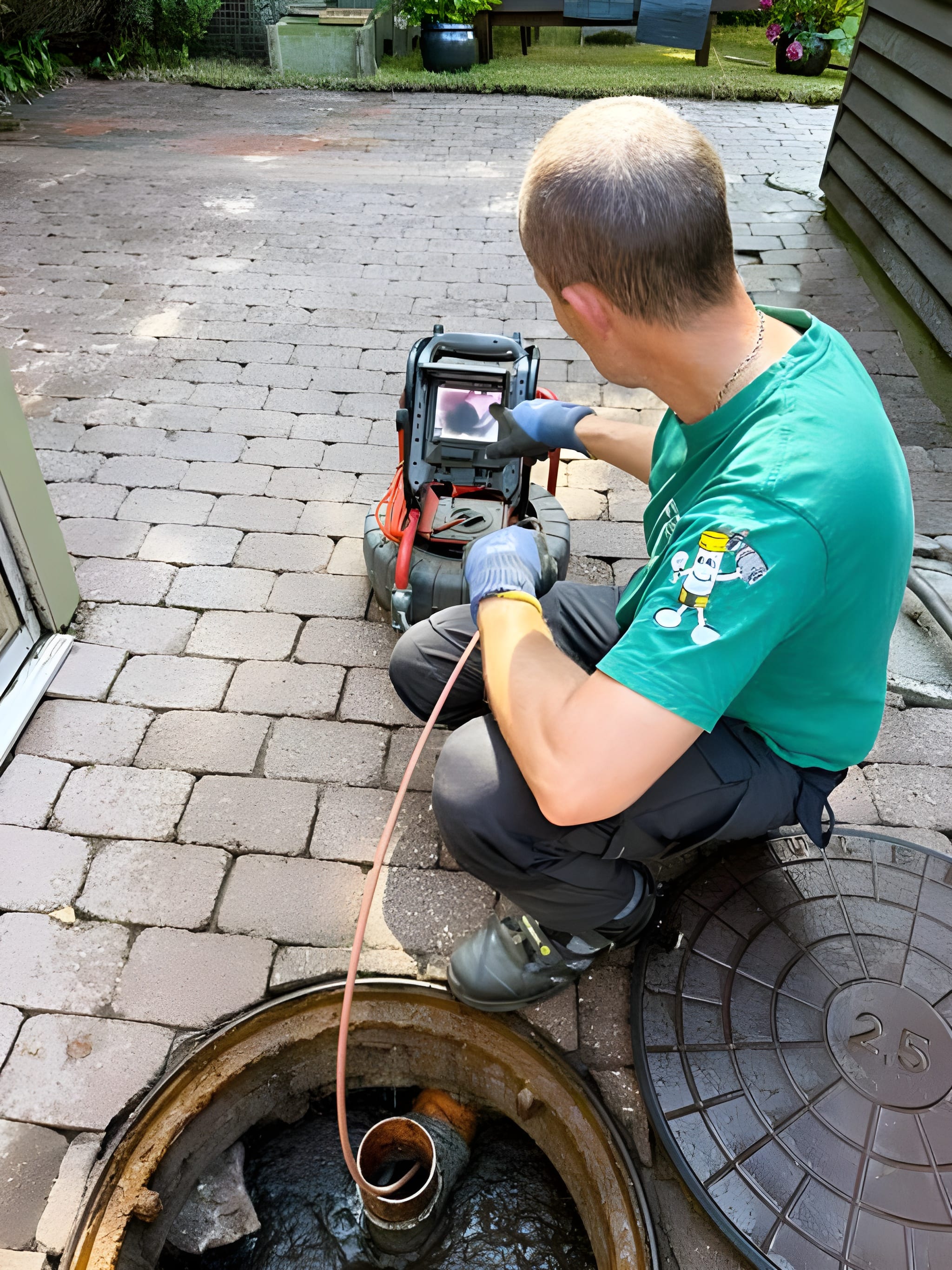
- Camera insertion and inspection: A flexible push camera (for typical residential lines) or a crawler camera (for larger-diameter or heavily damaged segments) is inserted and advanced through the pipe. Live video is monitored on a high-resolution screen.
- Real-time diagnosis: Technicians can pause, pan, and record at trouble spots. Distance markings on the cable provide approximate location from the access point so problems can be mapped relative to the house and property features.
- Duration: Most single-line residential inspections take 30 to 90 minutes depending on line length, flow conditions, and whether preliminary cleaning is required.
Typical diagnostics provided
A video inspection identifies a wide range of issues that are otherwise hidden:
- Location and type of blockages: grease, scale, debris, or foreign objects
- Tree root intrusion: size, severity, and exact penetration points
- Cracks, fractures, and pipe collapse or bellied sections where the pipe sags and collects solids
- Offsets or separated joints caused by ground movement or freezing/thawing cycles
- Pipe material and approximate age: PVC, clay, cast iron, concrete, or outdated materials like Orangeburg
- Corrosion or pinhole leaks common in cast iron lines in coastal environments
- Sewer line depth and approximate distance to the obstruction or defect
Deliverables you can expect
- Full-length recorded video file of the inspection, time-stamped for reference
- Annotated still images captured from the video showing defects and distances
- A written condition report describing findings in plain language, including the location of defects relative to the home, likely causes, and severity classification
- Clear repair recommendations and the sequence of next steps (for example, recommend hydro jetting first if grease build-up is primary, or trenchless lining vs spot excavation for localized cracks)
Recommended follow-up services
- Hydro jetting: High-pressure water cleaning to clear grease, roots, and mineral buildup. Ideal when the pipe is structurally sound but blocked.
- Mechanical root cutting: Rotary root cutters remove root mass prior to lining or further repair. Best used when roots are the main issue but the pipe wall remains intact.
- Trenchless sewer repair (pipe lining or pipe bursting): Minimally invasive solutions to rehabilitate or replace a pipe without full excavation. Often preferred in Ventura to protect landscaping and irrigation systems.
- Traditional spot repair or replacement: Excavation and section replacement when damage is localized but severe, or when pipe slope and alignment require correction.
- Full sewer replacement: Recommended when pipes are extensively corroded, collapsed, or constructed from obsolete materials that make repair impractical.
Timelines and scheduling, including emergency options
- Typical appointment window: A standard inspection is scheduled for a 1- to 2-hour arrival and on-site window. More complex properties or longer laterals may require additional time.
- Urgent matters: Active backups, sewage in the yard, or repeated overflows are safety concerns that require immediate attention. 24/7 emergency options are available for active sewer backups and hazards.
- Pre-sale and renovation planning: For real estate transactions or remodels, schedule inspections early in escrow or planning to allow time for recommended repairs and permit timelines. Camarillo Plumbing’s decades of local experience helps coordinate inspections with other trades and timelines.
Why regular inspections matter in Ventura
Ventura’s coastal climate, mature urban trees, and older neighborhoods create conditions that accelerate certain sewer problems: salt air can speed cast iron corrosion, seasonal storms and shifting soils can create offsets, and deep-rooted trees commonly invade joints. Regular inspections protect property value, reduce the risk of unexpected emergencies, and provide documentation useful for real estate transactions or renovation planning. An accurate inspection lets you choose the least invasive, most cost-effective repair method and avoid repeated short-term fixes.
Q: How long does a sewer camera inspection take?
A: Most residential mainline inspections take 30 to 90 minutes. Jobs that require preliminary cleaning or cover long lateral runs may take longer.
Q: Will the camera inspection damage my pipes?
A: No. Inspection cameras are designed to be noninvasive. Preliminary cleaning is performed carefully to avoid harm and to improve visibility.
Q: Can a camera inspection locate the exact depth and position of a blockage?
A: Yes. Technicians use distance markings and locating equipment to provide an approximate position and depth relative to access points and property features.
Q: Do I need a camera inspection before trenchless repair?
A: Yes. A thorough video inspection confirms pipe condition and helps determine whether trenchless lining or replacement is appropriate.
hear what our satisfied clients have to say