
Hydro Jetting in Ventura, CA
.avif)

Hydro jetting in Ventura, CA is a powerful, reliable method for clearing sewer and drain lines that removes grease, tree roots, mineral scale, and accumulated debris using high-pressure water. Camarillo Plumbing performs professional hydro jetting services tailored to Ventura homes and businesses, addressing common coastal and inland plumbing challenges so your drains flow freely and your sewer system stays healthy.
Why hydro jetting matters in Ventura
Ventura’s Mediterranean climate, older neighborhood infrastructure, and proximity to restaurant districts and beaches create recurring problems for sewer lines. Grease from coastal eateries, root intrusion from mature trees, and mineral buildup from hard water and marine-influenced soils all contribute to recurring clogs and reduced flow. Hydro jetting removes the full cross-section of buildup rather than just punching a hole through it, helping prevent repeat backups and costly repairs.
Common issues hydro jetting solves
- Severe grease and oil buildup in kitchen lines and commercial grease traps
- Root intrusion in aging sewer mains and lateral lines from mature oaks and sycamores common in Ventura neighborhoods
- Mineral and scale deposits from hard water and sediment accumulation
- Recurring or multiple drain clogs indicating a mainline restriction
- Sand and sediment carried by coastal runoff into older, lower-gradient lines
When hydro jetting is recommended vs. mechanical snaking
- Hydro jetting is preferred when you need to remove grease, roots, scale, or layered buildup across a large section of pipe. It cleans pipe walls and restores full diameter.
- Mechanical snaking (augering) is effective for simple, localized obstructions like a single hair or toilet clog and can be quicker and less invasive for minor problems.
- A sewer camera inspection usually determines the best approach. If the camera shows heavy coating, root mass, or broad-scale mineral deposits, hydro jetting is the recommended solution.
Diagnostic steps — what to expect before hydro jetting
- Initial assessment: Technician reviews symptoms (slow drains, gurgling, backups) and property history (recent landscaping, restaurant waste, or prior repairs).
- Sewer camera inspection: A camera is run through the line to identify the clog location, pipe material, diameter, and condition (cracks, offsets, root intrusion).
- Scope and plan: Based on the camera footage, Camarillo Plumbing proposes hydro jetting if safe and effective; if structural damage is present, trenchless repair or pipe replacement may be recommended instead.
The hydro jetting process (what happens during service)
- Prep: Technicians clear access to cleanouts and fixtures, cover nearby surfaces, and confirm water and drainage points. Furniture or obstructions near outside access points are moved as needed by the technician.
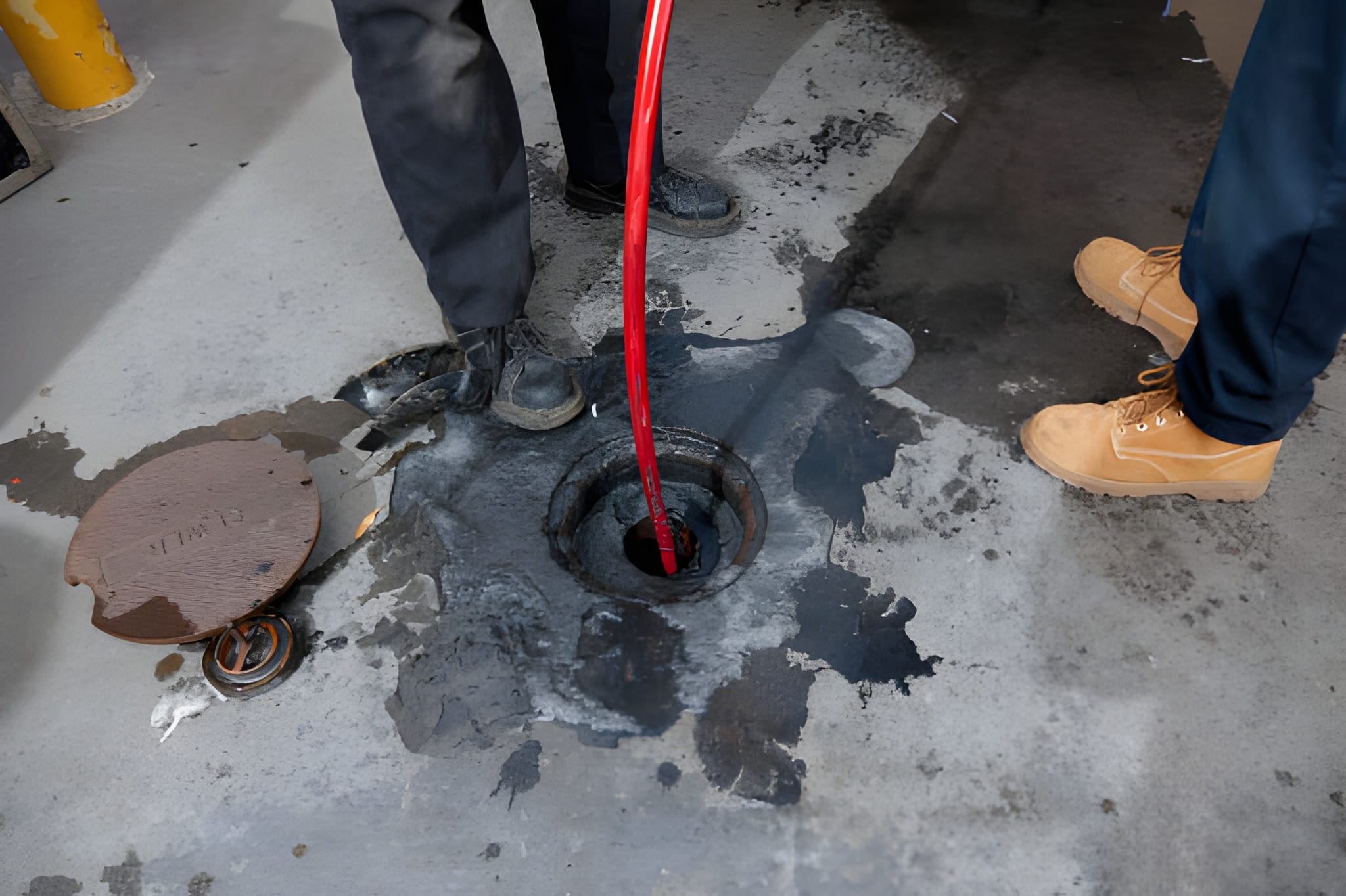
- Setup: A high-pressure hose with a rotating nozzle is inserted into the line via the cleanout. Pressure typically ranges from 1,500 to 4,000 psi depending on the pipe and blockage.
- Cleaning pass: Water is forced against the pipe walls to shear off grease, roots, and scale. Multiple passes may be made to fully restore flow.
- Camera verification: After jetting, the line is re-inspected with the camera to confirm clearing and assess pipe condition.
- Cleanup: Technicians remove equipment, dispose of dislodged material in compliance with local regulations, and restore the work area.
What customers should expect during service
- Noise and activity: You will hear the truck-mounted or trailer-mounted pump and equipment; expect moderate noise for the duration of the job.
- Access requirements: Exterior cleanouts are commonly used. Inside access to basement or crawlspace cleanouts may be necessary for some homes.
- Timeframe: Typical residential jobs take 1–3 hours; larger mains or heavy root infestations can take longer. Camera inspections and cleanup add to total time.
- Cleanup: Debris flushed from the line is handled through the municipal sewer. Technicians will leave the workspace clean and report on the camera findings.
Factors that affect timeframe and cost
- Length and diameter of the line being cleaned
- Severity and type of buildup (roots and scale take longer than single blockages)
- Pipe material and condition (older clay or cast iron can be fragile)
- Access difficulty (landscaping, fences, or confined crawlspaces increase labor)
- Need for additional repairs discovered on camera inspection
- Emergency vs. scheduled service (after-hours work may affect availability)
Preventative maintenance plans
- Residential recommendation: Every 2–4 years for homes with trees or heavy kitchen grease use; every 4–6 years for low-risk homes.
- Commercial recommendation: Restaurants, multi-unit buildings, and properties with high grease load should schedule hydro jetting and camera inspections every 3–12 months per local grease control regulations.
- Maintenance plans generally include scheduled camera inspections, prioritized scheduling windows, and record-keeping of line conditions to catch issues early.
Environmental and safety considerations
Hydro jetting uses only high-pressure water—no harsh chemicals—making it an environmentally responsible option when performed correctly. Debris is flushed into municipal sewer systems; technicians follow local disposal rules to prevent downstream issues. For safety, trained operators control pressures to avoid damaging vulnerable pipe materials and use protective measures to prevent property damage or sewage backups during cleaning.
Warranty and guarantee information
Camarillo Plumbing stands behind workmanship for hydro jetting services and documents pre- and post-inspection footage to demonstrate results. Warranty and guarantee terms vary based on the service scope and any subsequent repairs needed; customers receive details about coverage, limitations, and follow-up inspections as part of the service agreement.
How scheduling and emergency service typically work
- Emergency hydro jetting is prioritized when active backups threaten property. Technicians follow a dispatch protocol to reach properties quickly and perform an immediate assessment with a camera before jetting when possible.
- Routine hydro jetting and maintenance are scheduled in advance with an agreed time window. During scheduling, technicians will confirm access points, any special site conditions, and permit needs for larger commercial jobs.
- For both emergency and routine work, expect a pre-job assessment, camera inspection, a service plan, and documentation of outcomes.
Q: Is hydro jetting safe for older clay or cast iron pipes?A: Yes when preceded by a camera inspection. Technicians adjust pressure settings and nozzle types to protect older pipes. If severe structural damage is found, hydro jetting may be deferred in favor of repair or trenchless replacement.
Q: How long does a hydro jetting service take?A: Most residential jobs are completed in 1–3 hours including camera inspection. Time increases for long runs, heavy root intrusion, or complex commercial systems.
Q: Will hydro jetting prevent future root intrusion?A: Hydro jetting removes existing roots and debris but does not prevent regrowth. Follow-up treatments, root barriers, or pipe repair/relining may be recommended to reduce recurrence.
Q: How often should my sewer line be hydro jetted?A: Frequency depends on use and risk: high-risk properties (restaurants, greased lines, mature trees) may need service every 3–12 months; typical homes often benefit from hydro jetting every 2–4 years.
Q: Does hydro jetting use chemicals?A: No. Hydro jetting relies solely on high-pressure water to mechanically clean pipe walls, making it a chemical-free cleaning option.
Camarillo Plumbing applies experienced diagnostics, proven hydro jetting techniques, and post-service verification to restore and protect Ventura sewer and drain systems while minimizing disruption and environmental impact.
hear what our satisfied clients have to say