
Pipe Repair in Westlake Village, CA
.avif)

When a leaking or damaged pipe threatens your home or business in Westlake Village, CA, timely, professional pipe repair prevents water damage, mold, and costly replacements. Camarillo Plumbing delivers expert residential and commercial pipe repair solutions tailored to the local environment — from hillside properties near the Santa Monica Mountains to established neighborhoods with mature landscaping. Below is a clear, decision-focused guide to how pipe repair works, what to expect, and how to choose the right option for long-term reliability.

Why timely pipe repair matters in Westlake Village
Westlake Village homes face a mix of conditions that influence pipe performance: seasonal heavy rains, extended dry spells that shift soils, mature trees with aggressive roots, and mineral-rich water that can create buildup. Left unaddressed, a small leak can cause structural damage, pest entry, and unhealthy indoor air from mold growth. Prompt diagnosis and repair protect property value and reduce long-term costs.
Common pipe problems we see in Westlake Village
- Root intrusion from oaks and ornamental trees that crack or displace sewer lines.
- Corrosion and pinhole leaks in older metallic domestic water piping exposed to mineral content.
- Bellied or collapsed pipe where shifting soils or poor original installation cause sagging lines.
- Joint separation in older clay or cast iron systems after ground movement.
- Blockages and buildup from grease, mineral scale, or foreign objects leading to backups.
- Freeze-related damage is less common but can occur in shaded, poorly insulated runs.
How Camarillo Plumbing diagnoses pipe issues
Our diagnostics combine visual inspection with specialized technology to pinpoint problems without unnecessary disruption:
- Visual inspection of exposed plumbing, fixtures, and cleanouts to identify obvious leaks or damage.
- Electronic leak detection that locates hidden leaks behind walls and under slabs using acoustic and tracer methods.
- Sewer camera inspection that sends a high-definition camera through the line to identify cracks, root intrusion, blockages, and joint separation. Camera footage provides a clear, documented view to base repair decisions on.
Pipe repair options and when to use them
- Spot repairs: Targeted patching or section replacement for localized cracks or breaks. Best when damage is limited and accessible.
- Trenchless relining (CIPP): A cured-in-place pipe liner restores the interior of the pipe without full excavation. Ideal for sewage lines with extensive root intrusion or multiple small cracks. Relining typically minimizes landscaping disruption and is faster than open excavation.
- Partial or full pipe replacement: Necessary when pipes are extensively corroded, collapsed, or made from failing materials. Replacement provides a long-term solution for severely deteriorated systems.
- Copper repiping: Recommended for older homes with failing galvanized steel or heavily corroded copper runs. Copper repipe offers durability and improved water quality for potable lines.
Typical project timelines and what to expect during work
- Diagnosis and plan: Same-day to a few days depending on scheduling. Camera inspections usually take 1 to 3 hours.
- Spot repair: Often completed in a few hours; excavation may be minor.
- Trenchless relining: Frequently completed in a single day for standard residential runs; larger commercial projects may span 1 to 3 days.
- Partial/full replacement: Timeline varies by access, permit needs, and job size. Small exterior replacements can take 1 to 2 days; full repipes may take several days to a week.
During work, technicians will protect floors and landscaping, contain work areas, and explain the process before starting. Expect clear updates on progress, any permit processes, and post-repair testing to confirm the repair is leak-free.
Emergency response and 24/7 availability
Pipe failures do not follow business hours. Camarillo Plumbing maintains emergency response capabilities and 24/7 availability for urgent leaks and sewer backups. Emergency interventions focus on stopping water flow, mitigating immediate damage, and stabilizing the situation until a permanent repair can be completed.
Cost factors and warranty information
Repair costs depend on multiple variables:
- Scope and location of damage (visible vs hidden under slab).
- Repair method (spot repair, relining, open excavation, or full repipe).
- Pipe material and diameter.
- Site access, landscaping, and restoration needs.
- Permit and inspection requirements.
- Additional services such as hydro jetting, root removal, or water heater/pump integrations.
Camarillo Plumbing stands behind workmanship and commonly offers warranties on labor and installed materials. Manufacturer warranties on replacement parts vary by product. Warranty details are provided with scope and estimates so you understand coverage duration and inclusions.
Preventative maintenance to avoid future problems
- Schedule periodic sewer camera inspections every 3 to 5 years for older systems or after root-related issues.
- Use professional hydro jetting to remove grease and mineral buildup before blockages form.
- Install or maintain root barriers and avoid planting large trees near sewer lines.
- Consider a water softener if hard water causes mineral scale in plumbing.
- Monitor water bills and meter readings for unexplained increases that signal hidden leaks.
- Insulate exposed pipes in cooler microclimates to prevent stress from temperature swings.
Choosing the right repair approach for your property
Selecting the right repair depends on condition, budget, property layout, and long-term goals. Trenchless relining is often the best compromise between cost and minimal disruption for sewer lines, while full replacement may be the preferred choice for long-term reliability in older homes. Camarillo Plumbing assesses structural conditions, material longevity, and local site factors like tree proximity and soil movement to recommend the most durable solution.
Frequently Asked Questions
Q: How do I know if I need trenchless relining versus full replacement?A: A sewer camera inspection reveals the extent and type of damage. Relining is effective for interior cracks, corrosion, and joint leaks when the pipe structure is intact. Full replacement is recommended for severely collapsed or offset pipes, or when old materials make relining impractical.
Q: Will repairs require digging up my yard?A: Spot repairs and full replacements often require excavation at the damaged area. Trenchless relining minimizes surface excavation, usually only at two access points, greatly reducing landscaping disruption.
Q: How long will a relined pipe last?A: Cured-in-place pipe liners are engineered to last for decades under normal conditions. Exact lifespan depends on traffic loads, chemical exposure, and installation quality.
Q: Are emergency repairs available at night or on weekends?A: Emergency response is available 24/7 to stop leaks and backups, stabilize the situation, and arrange permanent repairs during standard hours.
Q: What maintenance should Westlake Village homeowners prioritize?A: Annual visual checks, sewer camera inspections every 3 to 5 years for older lines, hydro jetting as needed, and root management in landscaped properties help prevent major failures.
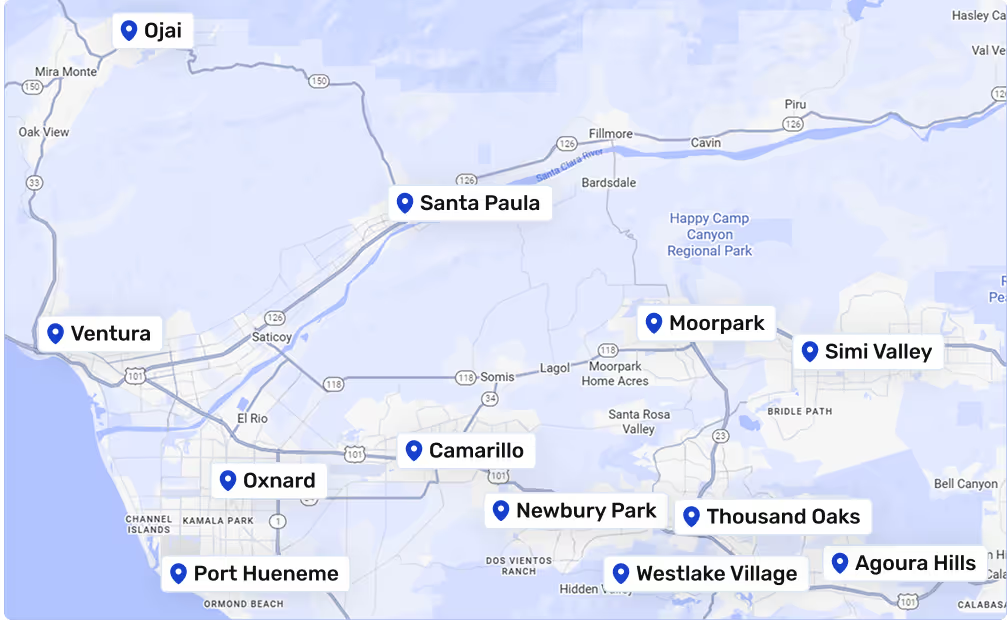
Camarillo Plumbing brings decades of experience serving Ventura and Los Angeles area communities. For Westlake Village properties, matching the repair method to local conditions and long-term performance needs ensures reliable, long-lasting plumbing.
hear what our satisfied clients have to say