

Water Heater Repair in Agoura Hills, CA
.avif)

When your hot water stops flowing or your water heater behaves unpredictably, it disrupts daily life and business operations. Camarillo Plumbing provides professional water heater repair in Agoura Hills, CA for both residential and commercial systems. Local climate, water quality, and older installations in this part of the Conejo Valley can accelerate common failure modes, so fast, accurate diagnostics and repairs are essential to restore reliable hot water and avoid property damage.
Common water heater problems in Agoura Hills homes and businesses
- Leaks - Corrosion at the tank bottom, loose fittings, or failing shutoff valves cause visible leaks. In areas with seasonal temperature swings, thermal cycling can worsen small weaknesses.
- Pilot or ignition failure (gas units) - Dirty pilots, thermocouples, or faulty gas valves prevent ignition. Intermittent failures are common after power outages or when venting is restricted.
- Thermostat or control malfunctions - Inconsistent water temperatures or overheating often point to a failed thermostat, dip tube issues, or electronic control faults on tankless systems.
- Sediment buildup - Agoura Hills water can carry mineral content that settles in tanks, reducing capacity, insulating heating elements, and causing noisy operation or premature element failure.
- No hot water or limited supply - This can indicate a failed element (electric), a burned-out burner (gas), or substantial sediment reducing usable volume.
- Strange noises - Popping or rumbling usually means sediment is trapped against the burner or heating element and is being heated repeatedly.
Diagnostic and repair process — what to expect
- Initial inspection
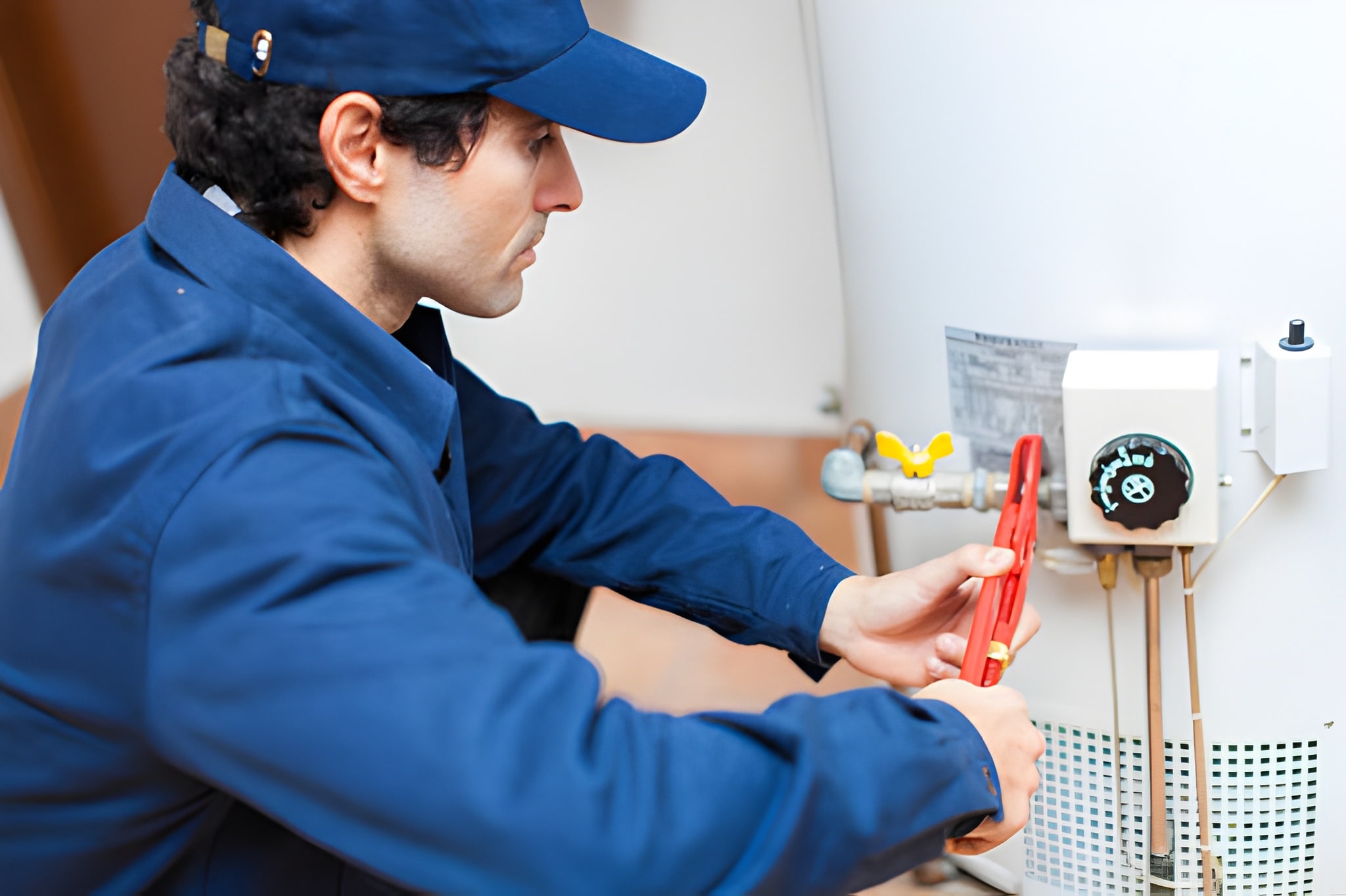
A certified technician assesses the system visually and checks venting, water lines, and nearby damage. For commercial systems, capacity and usage patterns are reviewed to identify performance issues. - Leak detection and safety checks
We locate the leak source, test pressure relief valves, and inspect gas connections for leaks. If a leak is significant, the water and gas are safely shut off to prevent further damage. - Electrical and ignition testing
For electric heaters, elements and thermostats are tested for continuity and proper operation. For gas models, ignition systems, thermocouples, and gas valves are checked and cleaned or replaced as needed. - Sediment removal and flushing
Tanks showing mineral buildup receive a flush to restore efficiency. Severe sediment may require element replacement or, in worse cases, tank replacement consideration. - Parts replacement and repairs
Only compatible, high-quality parts are used when replacing heating elements, thermostats, valves, anode rods, or control boards. For tankless units, sensors and heat exchangers are inspected and repaired when practical. - System testing and verification
After repairs, the system is refilled, venting and gas paths are verified, and the unit is run through cycles to confirm proper operation and temperature control. - Documentation and warranty information
The technician documents the work performed and provides warranty details for parts and labor applied during the repair.
Typical repair timelines and what affects them
- Minor repairs (thermostat, element, valve replacement) generally take a few hours to complete once the correct part is available.
- Flushing and maintenance appointments typically take about 1 hour for a single-family tank system; heavy sediment can extend this.
- Complex repairs (heat exchanger work, commercial system repairs) may take longer or require scheduled return visits if specialized parts are needed.
- Factors that influence timelines include system accessibility, part availability, severity of corrosion or damage, and whether additional safety upgrades are required for older installations.
Cost factors to expect (without specific pricing)
- Age and condition of the water heater — older tanks are more likely to have cascading failures.
- Type of unit — tankless, hybrid, electric, and gas heaters have different component costs and labor needs.
- Parts required — anode rods, elements, thermostats, sensors, and control boards vary in price and availability.
- Extent of damage — leaks that have caused surrounding structural or pipe damage increase repair scope.
- Location and accessibility — units in tight utility closets or rooftop installations require more labor time.
Warranty and parts information
Camarillo Plumbing honors manufacturer warranties where applicable and provides warranties on replacement parts and repair work. Warranties depend on the original equipment manufacturer terms and the specific parts installed during repair. Technicians will review existing warranty coverage during diagnostics and document repairs to support any manufacturer claims.
24/7 emergency response availability
Hot water failures and leaks can cause immediate property risk, especially in multi-family or commercial properties. Emergency repairs are available around the clock for urgent situations such as major leaks, gas smell or suspected carbon monoxide risk from venting issues, and complete system failures during extreme usage periods.
Preventive maintenance and tips to avoid future problems
- Schedule annual inspections and flushing to reduce sediment and extend tank life.
- Replace the sacrificial anode rod every 3 to 5 years or sooner in areas with higher mineral content to protect the tank from corrosion.
- Test the temperature and pressure relief valve annually and replace if it shows signs of leakage or sticking.
- Set thermostats to recommended safe limits (typically 120 F for homes) to reduce scaling and scald risk while saving energy.
- For homes with hard water, consider whole-house water treatment to reduce mineral buildup and protect heating elements.
- Keep the area around the water heater clear for proper airflow and technician access.
Why timely repair matters in Agoura Hills
Delaying repairs can lead to catastrophic tank failure, water damage to attics or garages, or unsafe gas conditions. Agoura Hills homes often have mixed plumbing ages and can experience seasonal demand spikes; addressing issues quickly preserves comfort, prevents secondary damage, and can extend the service life of your water heater.
FAQsQ: How can I tell if my water heater needs repair or replacement?A: Frequent leaks, repeated failures, noise from sediment, rising costs to repair, and units older than 10 to 15 years are common signs that replacement should be considered instead of repeated repairs.
Q: Are tankless water heaters repairable or do they need full replacement more often?A: Tankless units are repairable; common repairs include sensor replacement, descaling, and control board repairs. Severe heat exchanger damage or multiple component failures may make replacement more practical.
Q: How often should I flush my water heater in Agoura Hills?A: Annual flushing is recommended for most homes; in areas with higher mineral content, twice-yearly flushing can protect efficiency and lifespan.
Q: Will repairing my water heater affect its manufacturer warranty?A: Using authorized parts and certified technicians helps maintain manufacturer warranty eligibility. Repair documentation is important to support warranty claims.
Q: Can sediment damage cause hot water to run out faster?A: Yes. Sediment reduces effective tank volume and can insulate heating elements, reducing efficiency and usable hot water supply.
Q: Is emergency service available if I smell gas near my water heater?A: Emergency technicians are available for gas leaks and related safety concerns; immediate action is important for safety and property protection.
hear what our satisfied clients have to say