

Whole House Water Filter in Moorpark, CA
.avif)

Clean, reliable water for every tap matters in Moorpark homes. A whole house water filter treats water at the point it enters your plumbing so every faucet, shower, and appliance benefits. For Moorpark residents dealing with chlorine taste, hard-water scale, or sediment from older pipes, a professionally selected and installed whole-home filtration system improves taste, protects appliances, and reduces skin and hair irritation — all while lowering dependence on bottled water.
Common water problems in Moorpark homes
- Chlorine taste and odor: Municipal treatment commonly uses chlorine. Many homeowners notice a chemical taste, especially in hot water.
- Hard water and scale: Like much of Ventura County, local water can carry dissolved minerals that cause scale buildup on fixtures, water heaters, and appliances.
- Sediment and turbidity: Older distribution lines or household plumbing work can introduce sand, rust, and visible particles.
- Bacteria and well water concerns: Properties on private wells may face bacterial or nitrate concerns that require targeted treatment.
- Chloramine and VOCs: Some utilities use chloramine or older infrastructure can introduce trace organic compounds; these require specific media to remove.
Types of systems and how they work
Understanding options helps match the right system to your household needs.
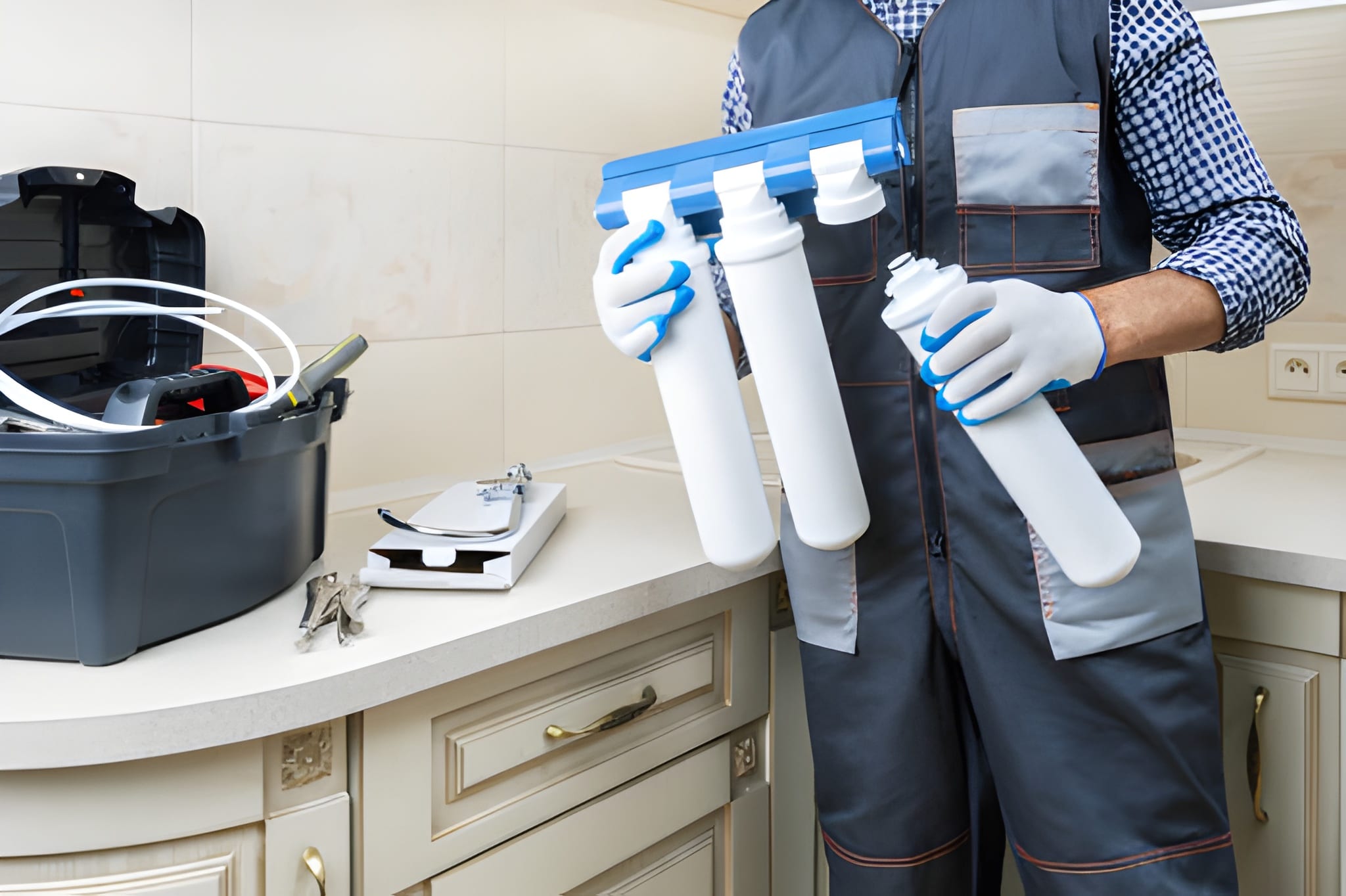
- Whole-home (point-of-entry) filtration: Installed where water enters the house; treats every outlet. Typical configuration pairs a sediment pre-filter with a carbon or specialty media filter.
- Point-of-use systems: Undersink reverse osmosis (RO) or countertop filters treat only drinking and cooking water. RO produces the highest drinking-water purity but is not practical for whole-home use.
- Activated carbon filtration: Removes chlorine, taste, odor, and many organic contaminants. Effective for improving water aesthetics and protecting membranes downstream.
- Catalytic carbon: Required if chloramine removal is needed; more effective than standard carbon for persistent disinfectants.
- Sediment filters / multimedia: Capture sand, rust, and large particles to protect downstream equipment and improve clarity.
- UV disinfection: Kills bacteria and viruses without chemicals; commonly used for well water or as a final-stage safeguard.
- Water softeners (ion exchange): Reduce hardness (calcium and magnesium). Softening is different from filtration but often paired with filtration for comprehensive protection.
- Whole-house reverse osmosis: Rare due to high cost, wastewater, and pressure drop; typically replaced by a point-of-use RO for drinking water plus whole-home filtration for distribution.
Whole-home vs point-of-use — which do you need?
- Choose a whole-home system if you want consistent taste and protection for appliances, plumbing, and bathing.
- Add a point-of-use RO if you require ultrapure drinking water for cooking and beverages.
- Combine technologies: sediment + carbon + UV is a common multi-stage layout for Moorpark homes that balances cost and performance.
Water testing and system sizing
Proper selection begins with testing. A comprehensive approach includes:
- Cold and hot water samples analyzed for hardness, chlorine, chloramine, iron, manganese, sediment, bacteria (if well), and any site-specific contaminants.
- Flow rate measurement to size filter housings and media for peak household demand (gallons per minute).
- Pressure assessment to ensure filters do not cause undue pressure loss.Sizing considers household size, daily water use, and local water characteristics. Camarillo Plumbing technicians use onsite testing and lab analysis to recommend the correct combination of micron ratings, carbon volume, and flow capacity so filters last as expected and deliver consistent results.
Professional installation process and timeline
A typical professional installation follows clear steps:
- Pre-install inspection and verification of plumbing layout and water test results.
- Mounting filter housings, media tanks, or softener units near the main line with a bypass valve and pressure relief.
- Plumbing tie-in, electrical hookup if required (UV or smart controllers), and secure mounting.
- Startup: flushing media, sanitizing system components, and commissioning with a final water sample and pressure check.Standard single-stage whole-home installs often take 2 to 4 hours; multi-stage or complex setups (including water softeners, UV, or large pre-tanks) may require a half-day or a full day.
Routine maintenance and filter replacement
Maintaining performance extends equipment life and preserves water quality:
- Sediment pre-filters: Replace every 3 to 6 months depending on sediment load and pressure drop.
- Carbon cartridges or media: Typically changed every 6 to 12 months; catalytic carbon may have different life based on contaminant load.
- UV lamps: Replace annually and clean sleeves as recommended.
- System inspection: Annual professional service to check seals, valves, and media condition is recommended.Monitoring pressure gauges and water clarity helps predict replacement timing. Proper maintenance prevents premature appliance scale and ensures the system continues to protect your household.
Warranties, service plans, and financing options
Most manufacturers provide limited warranties on housings, tanks, and components (commonly 1 to 5 years on parts). Service plans often include annual inspections, scheduled filter changes, priority service, and documented water quality checks. For homeowners preferring predictable budgeting, many providers offer financing or payment-plan options through third-party lenders or in-house plans to spread the cost of equipment and professional installation over time. Utility rebates or local incentive programs may occasionally apply for water-saving or energy-efficient combinations; a professional assessment identifies those opportunities.
Benefits for Moorpark homes
- Consistently better-tasting water at every tap and reduced chlorine odor in showers.
- Extended equipment life: water heaters, dishwashers, and washing machines operate with less scale and clogging.
- Health and comfort: softer-feeling skin and hair, fewer soap scum issues, and lower exposure to certain contaminants.
- Fewer bottled-water purchases and reduced hassle from point-of-use filters needing frequent replacement.
FAQsQ: How long does a whole house water filter installation take?A: Typical installations take 2 to 4 hours for single-stage systems; multi-stage or softener combinations commonly require a half-day or full day. Site conditions or additional plumbing complexity can extend time.
Q: Will a whole house system remove hard water?A: A standard whole house carbon filter improves taste and reduces chlorine and sediment but does not remove hardness. To address scale, pair filtration with a water softener or scale-reduction technology.
Q: Do I need a UV light if I have municipal water?A: Municipal water is generally disinfected, but UV is recommended for private wells or if bacterial contamination is detected in testing. UV adds an extra layer of protection without chemicals.
Q: How often do filters need to be changed?A: Sediment cartridges are typically replaced every 3 to 6 months. Carbon filters usually require replacement every 6 to 12 months depending on use and water quality. Annual professional checks are recommended.
Q: Can whole-home filtration improve my laundry and appliances?A: Yes. Removing chlorine and sediment reduces fabric fading and appliance wear. If hardness is an issue, combining filtration with softening provides the most benefit.
Camarillo Plumbing provides local expertise for Moorpark, evaluating water characteristics and recommending solutions that balance performance, maintenance needs, and household priorities.
hear what our satisfied clients have to say