


Whole House Water Filter in Fillmore, CA
.avif)

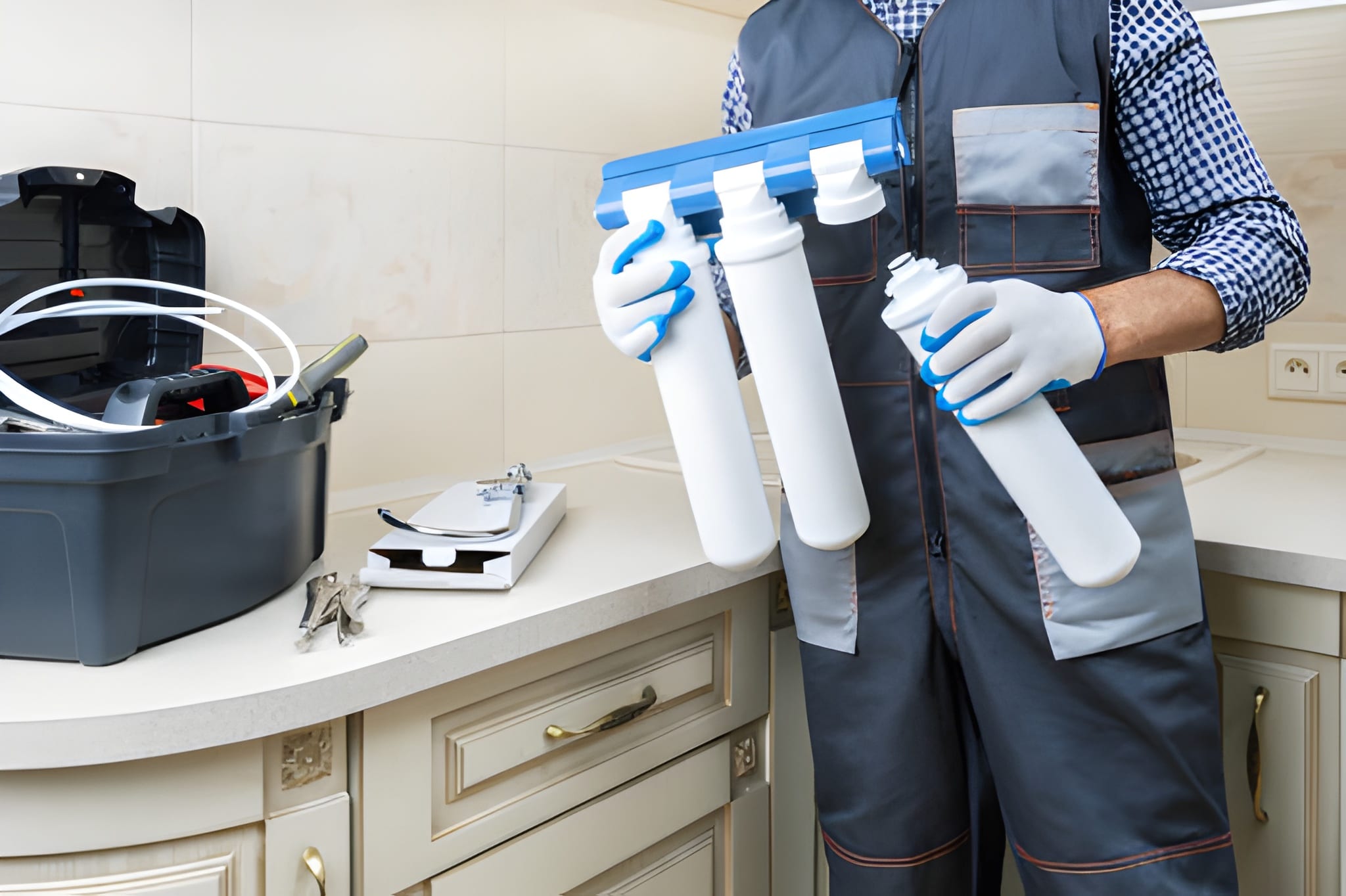
A whole house water filter in Fillmore, CA delivers filtered water at every tap, protecting your plumbing, appliances, and family from common contaminants while improving taste and odor. Whether your home uses municipal water or a private well, installing a properly sized whole-home filtration system addresses local water quality challenges—hard water, sediment from older pipes, agricultural runoff, and seasonal taste changes—so appliances last longer and daily living is more comfortable.
Why Fillmore homes benefit from whole-home filtration
- Local groundwater and distribution systems can introduce minerals (calcium, magnesium), iron, and sediment that cause scale and staining.
- Agricultural activity in the Fillmore area raises the risk of nitrates and pesticides in well water.
- Municipal supplies may contain chlorine or chloramine for disinfection, which affects taste and can damage rubber seals and fixtures over time.
- Warm Southern California climate increases demand on water heaters and plumbing, accelerating the effects of scale and sediment.
A whole house water filter reduces those risks at the point water enters your home, protecting water-using appliances, improving laundry results, and giving you cleaner water for bathing, cooking, and cleaning.
Common contaminants removed
- Sediment: sand, rust, and particulate matter that clog fixtures and shorten appliance life.
- Chlorine and chloramine: treated water disinfectants that impact taste and fade fabrics.
- Iron and manganese: cause staining and metallic taste.
- Hardness minerals (calcium and magnesium): cause scale buildup on water heaters, fixtures, and inside appliances.
- Organic compounds and some pesticides: affect taste and odor; certain carbon filters reduce these.
- Volatile organic compounds (VOCs): reduced by appropriate carbon media.
- Note: Whole house systems typically reduce particulates and chemical contaminants but do not always remove dissolved solids like nitrates or all bacteria; point-of-use RO or UV units are used when needed.
Types of whole-home systems and how they differ
- Sediment filters: first line of defense, capture particles and protect downstream media. Typically rated by micron size (e.g., 5, 1 micron).
- Activated carbon filters: remove chlorine, organic compounds, and improve taste and odor. Varieties include granular activated carbon (GAC) and coconut-shell carbon.
- Catalytic carbon: more effective at removing chloramines than standard carbon.
- Catalytic carbon or specialty media: used for specific contaminants like hydrogen sulfide (rotten egg odor) or volatile organics.
- Water softening and scale control: ion-exchange softeners remove hardness minerals; template-assisted crystallization and other salt-free options reduce scaling without salt.
- Reverse osmosis pre-filters: whole-home RO is rare due to high waste flow, but RO is commonly used at point-of-use for drinking water. RO pre-filters protect downstream RO systems and provide cleaner feed.
- Multi-stage systems: combine sediment, carbon, and specialty media to target a broad suite of contaminants while maintaining flow rates suitable for whole-house use.
Consultation and on-site water testing process
- Initial consultation: review your home’s water source (municipal vs well), plumbing layout, water use patterns, and concerns (taste, staining, health).
- On-site sampling: technicians collect water samples for immediate testing (TDS, pH, hardness, chlorine, iron) and, if required, send samples to a lab for nitrates, bacteria, and pesticide analysis.
- Flow and pressure assessment: measure household peak flow (GPM), incoming pressure, and pipe sizes to determine system capacity and placement.
- Customized recommendation: based on results, a specific multi-stage system and maintenance schedule is proposed to address Fillmore-specific issues.
Sizing and placement considerations
- Flow rate matters: whole house filters must handle peak simultaneous use (showers, laundry, dishwasher). Typical residential sizing targets the measured peak GPM with a safety margin.
- Pressure drop: choose media and sizing that minimize pressure loss; larger housings or parallel filters are common where high flow is required.
- Placement: installed at the main water shutoff or point of entry, usually in a garage, utility room, or outdoors in frost-free enclosures. Consider proximity to water heater and easy access for filter changes.
- Bypass valves: a bypass loop is recommended so you can isolate the system for maintenance without disrupting water to the home.
Professional installation – step-by-step
- Pre-install inspection and final measurements.
- Shutoff and drain incoming water; install a temporary bypass.
- Mount filter housings or tank assemblies and connect to the main line using approved fittings.
- Install pre-filters, carbon or specialty media, pressure regulators, and bypass valves as specified.
- Pressure test the system, purge trapped air, and flush new media to remove fines.
- Re-check water chemistry post-install and confirm flow and pressure at fixtures.
- Walk through maintenance access and replacement intervals.
Typical residential installations are completed within a single workday for standard systems; larger or multi-tank systems may require a full day or two.
Recommended maintenance and filter replacement
- Sediment filters: inspect every 3 months; replace every 3–12 months depending on turbidity.
- Carbon filters: replace every 6–12 months depending on contaminant load and household use.
- Specialty media tanks (iron, catalytic carbon, KDF): service intervals vary; many need professional evaluation annually.
- Backwashing systems and softeners: require periodic regeneration and annual checks.
- Annual professional service: recommend a yearly check to test system performance, inspect seals, and log filter life based on actual water quality in Fillmore homes.
Warranty and financing options
- Manufacturer warranties commonly cover media housings and components for 1–10 years depending on brand and part; media and filter cartridges often carry separate limited warranties.
- Extended parts and labor warranties are available from some manufacturers or service providers.
- Financing and payment plans are commonly offered through third-party lenders to spread equipment and installation costs; terms vary by provider and equipment chosen.
Common homeowner questions
Q: How do I know whether I need whole-home filtration or just a drinking water filter?A: If you experience staining, scale buildup, poor appliance performance, or must filter water at multiple taps, whole-home filtration protects fixtures and appliances broadly. A point-of-use drinking filter is useful for drinking water taste and dissolved solids removal but does not prevent scale or sediment from damaging plumbing.
Q: Will a whole house filter remove bacteria in well water?A: Standard whole-house sediment and carbon systems do not reliably remove bacteria. If lab tests show biological contamination, a UV disinfection unit or targeted treatment designed for microbial control is required.
Q: How often will my water pressure be affected?A: A properly sized system has minimal pressure drop. Undersized or heavily clogged filters can reduce pressure; routine maintenance and correct sizing prevent this in Fillmore homes.
Q: Can a whole house filter address hard water scaling?A: Ion-exchange water softeners remove hardness minerals effectively. Salt-free scale inhibitors reduce scaling but do not remove hardness; choose based on appliance protection goals and local water hardness levels.
Q: What should I expect during the first year after installation?A: Expect initial water chemistry testing after startup, a filter cartridge change within 6–12 months, and an annual service check to confirm media performance and check for seasonal variations common in Fillmore water quality.
hear what our satisfied clients have to say