

Reverse Osmosis in Oxnard, CA
.avif)

Reverse osmosis (RO) is one of the most effective point-of-use water filtration technologies for homes and businesses in Oxnard, CA. Whether you want cleaner tasting drinking water, lower total dissolved solids (TDS), or removal of specific contaminants common to coastal and agricultural regions, an RO system provides reliable, measurable improvements. How RO works, the system components, sizing and installation guidance, maintenance expectations, and local factors Oxnard customers should consider when choosing an RO solution from Camarillo Plumbing.
Why Oxnard homes and businesses benefit from RO
Oxnard’s coastal location and surrounding agricultural areas influence local water quality. Municipal supplies often carry chlorine and variable mineral content; private wells can show elevated nitrates, iron, or other dissolved solids. Reverse osmosis reduces dissolved salts, many inorganic contaminants, and particulates that affect taste, odor, and appliance performance. For households that value better-tasting drinking water, safer infant formula preparation, or protection for coffee machines and ice makers, RO is a practical decision.
What reverse osmosis removes and typical improvements
RO systems force water through a semipermeable membrane that screens out dissolved particles and many contaminants. Typical reductions include:
- Total dissolved solids (TDS): often 85 to 98 percent reduction depending on feed water quality and membrane rating
- Heavy metals: lead, copper, and similar dissolved ions
- Nitrates and fluoride: significant reduction depending on membrane and system design
- Some pesticides and herbicides: reduction varies by compound and should be verified by testing
- Sediment, turbidity, and particulate matter when combined with proper pre-filters
Expect noticeable improvements in taste, clarity, and lower TDS readings on a TDS meter after installation.
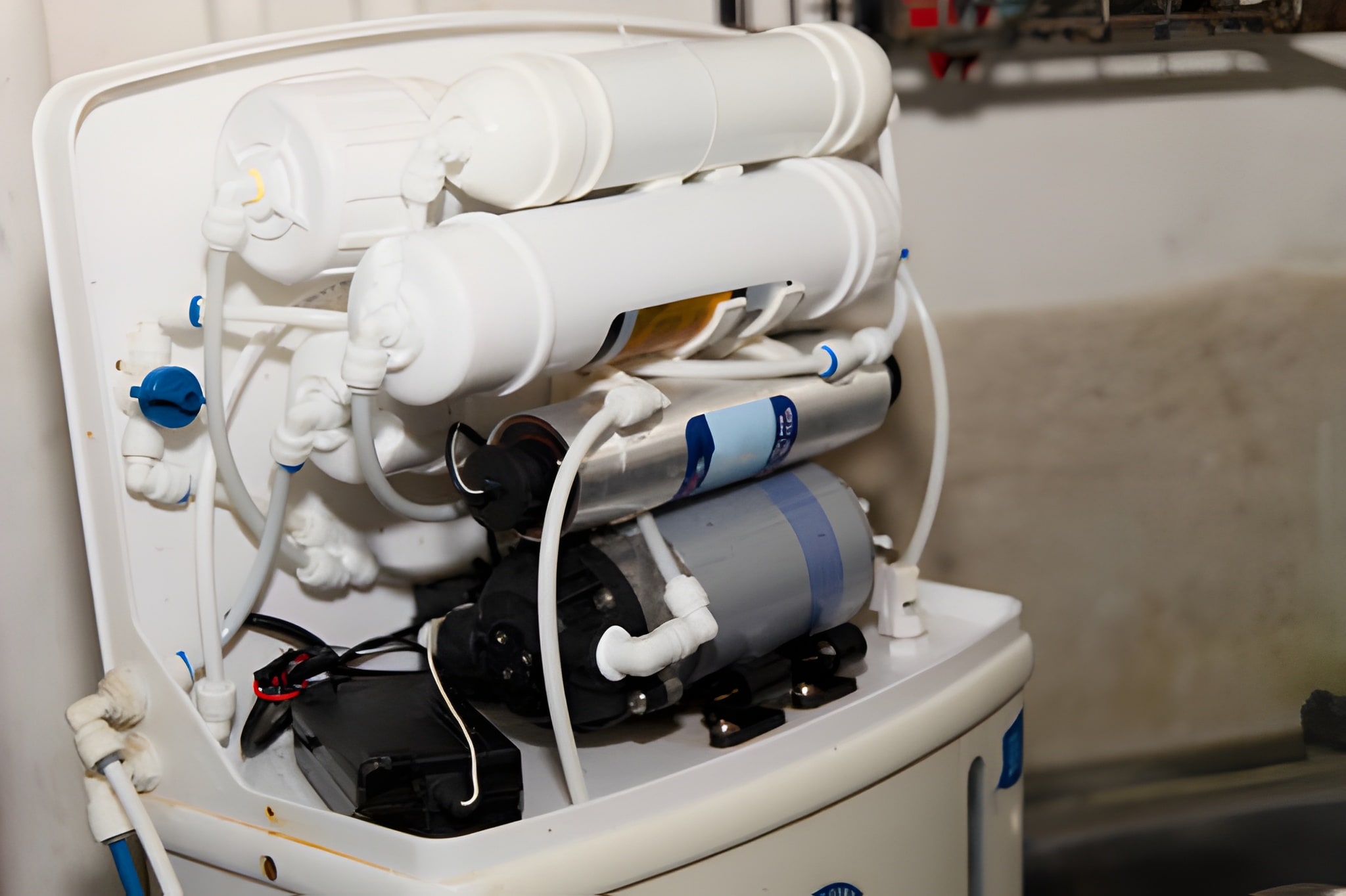
Common RO system components
A standard residential RO setup includes:
- Pre-filters (sediment and carbon) to protect the membrane and remove chlorine and particulate matter
- RO membrane (the core component that removes dissolved solids)
- Post-filter (polishing carbon filter) to improve taste after storage
- Pressurized storage tank to hold purified water
- Dedicated faucet at sink or plumbed dispenser
- Drain connection for reject water; optional permeate pump to reduce waste
Commercial or higher-capacity units add booster pumps, larger membranes, and larger storage tanks.
Under-sink vs larger-capacity and commercial units
- Under-sink RO: Compact, designed for point-of-use drinking and cooking water. Typical capacities: 50 to 100 gallons per day (GPD) membranes; storage tanks 2 to 4 gallons. Suitable for most households.
- Larger-capacity POE/point-of-use: 100 to 300 GPD membranes with larger tanks for homes with heavy water demand or small businesses.
- Commercial/industrial: Multi-membrane racks, high flow, and treatment up-front for very high capacity or special contaminant removal.
Choosing between unit types depends on the number of users, daily bottled water replacement goals, and whether RO is required for only drinking water or for broader uses.
Sizing guidance and water capacity
- Typical family of 3 to 4: a 50 to 75 GPD membrane with a 2 to 4 gallon tank is usually sufficient.
- Heavy use (multiple beverage stations, frequent filling of pitchers, business use): 100+ GPD and larger tanks.
- High TDS feed water or well water: choose higher GPD or multi-stage systems because membranes will produce slower flow under heavy loading.
- Consider recovery and waste rate: standard systems may produce 3 gallons of waste per 1 gallon of purified water; permeate pumps and newer high-efficiency membranes can improve ratios.
A water test is the best way to determine accurate sizing and expected output.
Professional installation process
A professional install by Camarillo Plumbing typically follows these steps:
- On-site water quality test and inspection of sink space and drain/line availability.
- Recommendation of an appropriately sized system (membrane GPD, tank size, number of filter stages).
- Pre-install preparation: mounting bracket placement, drain saddle or dedicated drain line, and faucet hole assessment.
- System installation: connect cold water feed, install pre-filters, membrane, post-filter, storage tank, and faucet. Pressure and leak checks.
- System sanitization and initial flush, then post-install testing (TDS reading) to confirm performance.
- Review of maintenance schedule and demonstration of filter changes.
Professional installation ensures correct drain connection, avoids leaks, and optimizes flow and recovery for local water conditions.
Routine maintenance and replacement schedule
Maintaining an RO system is straightforward but essential for performance:
- Sediment and carbon pre-filters: replace every 6 to 12 months depending on feed quality.
- RO membrane: replace every 2 to 5 years depending on TDS, chlorine exposure, and usage.
- Post-filter: replace annually.
- Sanitize and change filters when replacing the membrane or at least once per year.
- Annual water test to confirm contaminant rejection and TDS reduction.
Keeping up with maintenance protects the membrane, reduces bacterial growth risk, and preserves water quality.
Water testing and expected quality improvements
Before and after testing is recommended:
- Baseline test shows TDS, hardness, chlorine, nitrates, and specific contaminants of concern.
- Post-install TDS readings should show significant reduction; other contaminants will fall based on membrane and pre/post filtration.
- Tests can also confirm removal targets such as lead or nitrate when required for peace of mind.
Testing documents system performance and helps schedule replacements.
Cost considerations, financing, and warranty options
Costs depend on system capacity and complexity. Residential under-sink RO systems have a typical price range that reflects equipment and professional installation differences. Higher-capacity or specialized contaminant-removal systems increase costs. Many homeowners finance installations through monthly payment plans offered by plumbing providers and manufacturers. Warranty coverage varies by component and installer; membranes and filters often have limited warranties, while installer workmanship warranties can add protection. Camarillo Plumbing can advise on applicable warranty and financing options available for Oxnard installations.
Long-term benefits for Oxnard properties
- Consistently better tasting and clearer drinking water
- Reduced reliance on bottled water
- Protection for small appliances and fixtures from scale and sediments when paired with appropriate pretreatment
- Peace of mind with contaminant reduction tailored to local water concerns
Properly chosen and maintained RO systems deliver measurable, ongoing improvements that fit Oxnard homes and businesses.
FAQs
Q: How often should I test my water after installing an RO system?A: Test initially after installation to verify TDS reduction, then annually or whenever you notice a change in taste, odor, or flow.
Q: Will an RO system remove chlorine and improve taste?A: Pre-filters (carbon) remove chlorine before the membrane to protect it, and the post-filter polishes the water for improved taste.
Q: Can RO handle well water found in some Oxnard properties?A: Yes, but well water often requires pre-treatment for iron, manganese, or heavy sediment and a larger membrane capacity; a water test will determine necessary pretreatment.
Q: How much wastewater does an RO system produce?A: Traditional systems may produce about 2 to 4 gallons of reject per gallon of purified water; higher-efficiency membranes and permeate pumps reduce waste.
Q: What maintenance should I expect in the first year?A: Replace pre-filters at 6 to 12 months, post-filter at 12 months, and perform system sanitization at installation and annually.
Q: Do RO systems remove fluoride and nitrates?A: RO membranes typically reduce nitrates and fluoride substantially, but removal levels depend on membrane type and system design; testing confirms results.
hear what our satisfied clients have to say