

Trenchless Sewer Repair in Westlake Village, CA
.avif)

Trenchless sewer repair in Westlake Village, CA provides an effective, low-impact alternative to open excavation for damaged or failing sewer lines. Westlake Village homes often feature mature landscaping, tight side yards, pools, and hillside lots where large trenches would be disruptive and costly to restore. Camarillo Plumbing delivers trenchless solutions that preserve landscaping and hardscapes while repairing or replacing problematic pipes with minimal surface disturbance.
Why trenchless sewer repair matters in Westlake Village
- Westlake Village properties commonly have mature trees and manicured yards that HOAs and homeowners want to protect.
- Many neighborhoods sit on a mix of stable and expansive clay soils; repeated digging accelerates ground disturbance and can destabilize plantings.
- Narrow access, driveways, and proximity to neighboring properties make traditional excavation impractical or prohibitively intrusive.
- Faster repairs reduce the time homeowners live with backups, odors, or disrupted utilities.
Common sewer problems we see in Westlake Village homes
- Tree root intrusion cutting and breaking older clay or cast iron pipes.
- Pipe corrosion and deterioration in legacy materials from mid-century installations.
- Crushed or offset joints from ground movement or compaction.
- Bellied or sagging sections where flow collects and causes frequent clogs.
- Recurring backups and slow drains despite repeated snaking.
- Leaks that affect landscaping or pool equipment and reduce irrigation efficiency.
The diagnostic process: how problems are identified
- Initial assessment — a technician reviews symptoms, history of backups, and visible signs like soggy patches in the yard.
- Sewer camera inspection — a high-definition camera is run through the line to locate damage, roots, cracks, offsets, and lateral connections. Camera footage documents conditions and helps determine whether trenchless repair is suitable.
- Leak detection and locating — when leaks affect landscaping or structures, electronic locating or smoke testing can pinpoint exact leak spots and depths.
- Scope and access evaluation — technicians evaluate access points, depth, proximity to trees and structures, and whether existing laterals or service connections will be impacted.
- Recommendation and explanation — based on findings, Camarillo Plumbing explains whether cured-in-place lining, pipe bursting, or traditional excavation is the best fit and what restoration will be required.
Trenchless techniques explained
- Cured-in-place pipe (CIPP) lining
CIPP installs a resin-saturated liner inside the existing pipe. The liner is inverted or pulled into place, then cured to create a seamless, jointless new pipe within the old one. CIPP is ideal for cracks, corrosion, and root intrusion when the host pipe has maintained its alignment and there are no significant collapses. - Pipe bursting
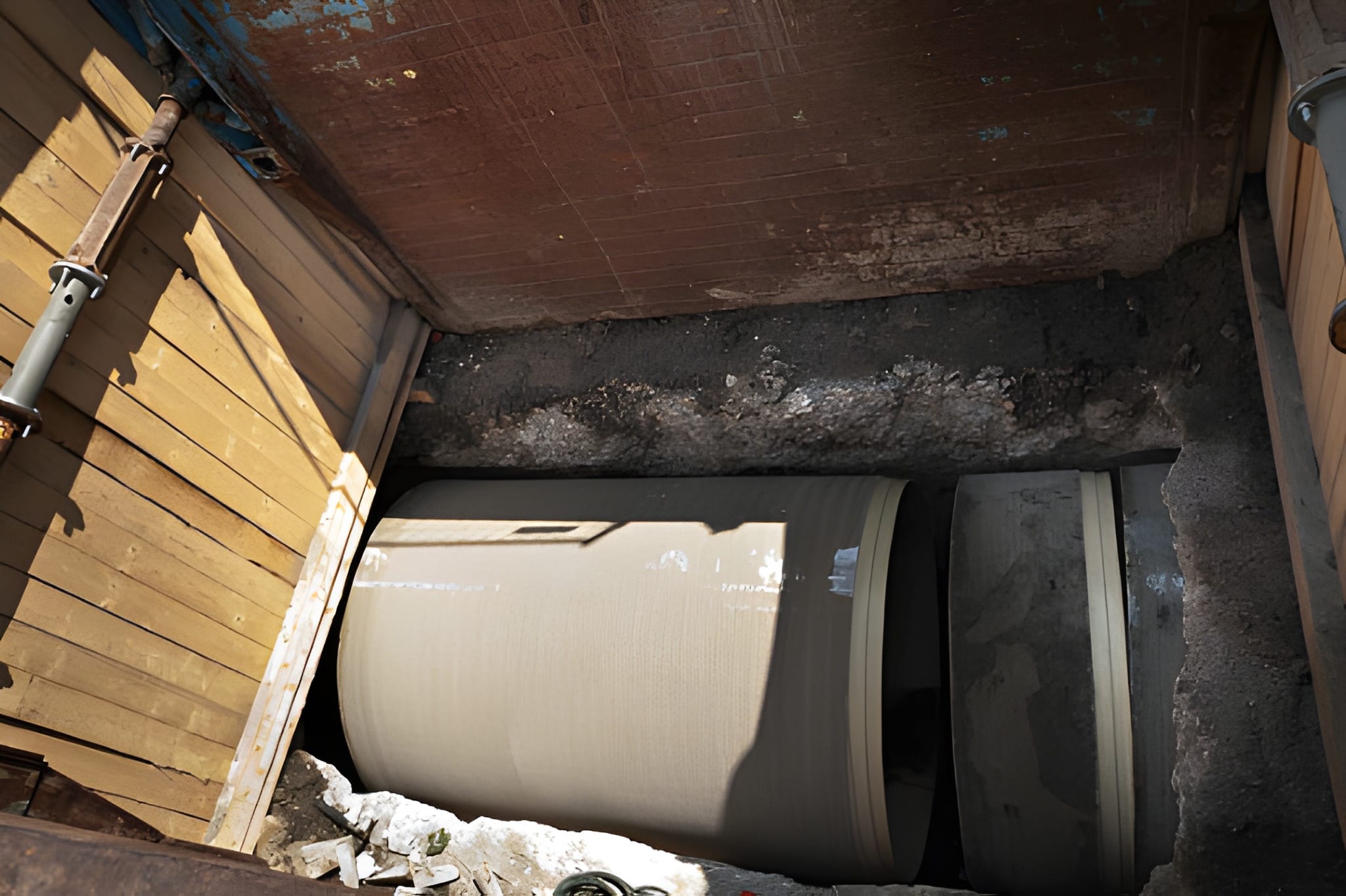
Pipe bursting replaces an existing pipe by fracturing the old pipe outward while simultaneously pulling a new pipe into place. This method is best when the existing pipe is severely collapsed, severely offset, or when upsizing the diameter is desirable.
Both methods avoid continuous trenching, preserve lawns, driveways, and patios, and typically require only small entry and exit pits.
When trenchless repair is appropriate — and when it is not
Appropriate when:
- The existing pipe alignment is generally intact and runs between accessible cleanouts or access pits.
- Damage consists of cracks, corrosion, root intrusion, or small-scale breaks.
- Property restoration costs for traditional excavation would be high.
Not appropriate when:
- The pipe has collapsed completely or there are multiple, closely spaced lateral connections that must be reconfigured.
- Severe bellies and grade failures require regrading the line to restore proper slope.
- Site conditions prevent safe insertion of equipment or access pits cannot be created.
Camarillo Plumbing evaluates each situation and recommends the most durable, cost-effective approach based on sewer condition and property constraints.
Typical timelines and cost considerations
- Timeline: Many trenchless sewer repairs can be completed in a single day for a typical lateral length (20 to 100 feet). Larger projects or jobs requiring permits and traffic control may take 1 to 3 days. Pipe bursting can take longer when upsizing long runs.
- Cost factors: Project cost depends on line length, pipe diameter, depth, access complexity, local permit requirements, material choices, and required restoration of entry/exit pits. While trenchless methods often reduce landscaping and restoration costs, a full assessment of the line and site is needed to estimate final costs accurately.
- Permits and inspections: Some neighborhoods and municipalities in the Westlake Village area require permits and inspections for sewer work; time for permitting should be included in planning.
Complementary services that improve outcomes
- Hydro-jetting to remove grease, scale, and root debris before lining to ensure proper adhesion and flow.
- Leak detection to locate hidden leaks impacting landscaping or structures.
- Sewer camera re-inspection after repair to verify liner placement and joint integrity.
- Lateral connection repair and reinstatement when customers need branch lines opened after lining.
- Preventive maintenance including periodic hydro-jetting and inspections to prolong the life of trenchless repairs.
Warranty and maintenance
- CIPP liners and materials commonly carry manufacturer warranties; workmanship warranties vary by installer. Typical warranties range from multiple years to decades depending on materials and job scope.
- Recommended maintenance includes scheduled inspections and hydro-jetting every 1 to 3 years for older systems or properties with tree root history to prevent recurring issues.
- Regular household practices — avoiding grease down drains, limiting harsh chemical drain cleaners, and monitoring tree root growth — extend pipe life.
Scheduling and emergency service details for Westlake Village properties
Camarillo Plumbing provides residential and commercial trenchless sewer repair services in the Westlake Village area, including evening and weekend scheduling where needed. Emergency response for sewer backups and active leaks is available 24/7 to protect landscaping, pools, and structures from ongoing damage. Rapid diagnostic services such as camera inspection and leak locating are prioritized to determine whether trenchless methods are a suitable and timely solution.
Frequently Asked Questions
Q: How long does a cured-in-place liner last?A: Cured-in-place liners typically last several decades; many manufacturers and installers offer warranties spanning multiple years based on materials and installation conditions.
Q: Will trenchless repair stop tree roots from returning?A: Trenchless lining seals cracks and joints that allow root intrusion, but root pressure can recur. Regular maintenance and strategic root treatments help prevent re-intrusion.
Q: Can trenchless methods change the pipe diameter?A: Pipe bursting can increase diameter because it replaces the old pipe with a new, larger pipe. CIPP generally retains the original internal diameter with a slight reduction due to liner thickness.
Q: How disruptive is trenchless compared with open trenching?A: Trenchless methods require only small entry and exit pits rather than long trenches, significantly reducing disruption to landscaping, driveways, and daily routines.
Q: Are there situations where traditional excavation is still required?A: Yes. Complete collapses, severe bellies, multiple lateral reconfigurations, or required grade corrections may still require traditional excavation to restore proper function and slope.
Q: How often should I have my sewer line inspected after a trenchless repair?A: An initial post-repair camera inspection is standard. After that, annual to tri-annual inspections are advisable for older systems or properties with tree roots to ensure long-term performance.
hear what our satisfied clients have to say