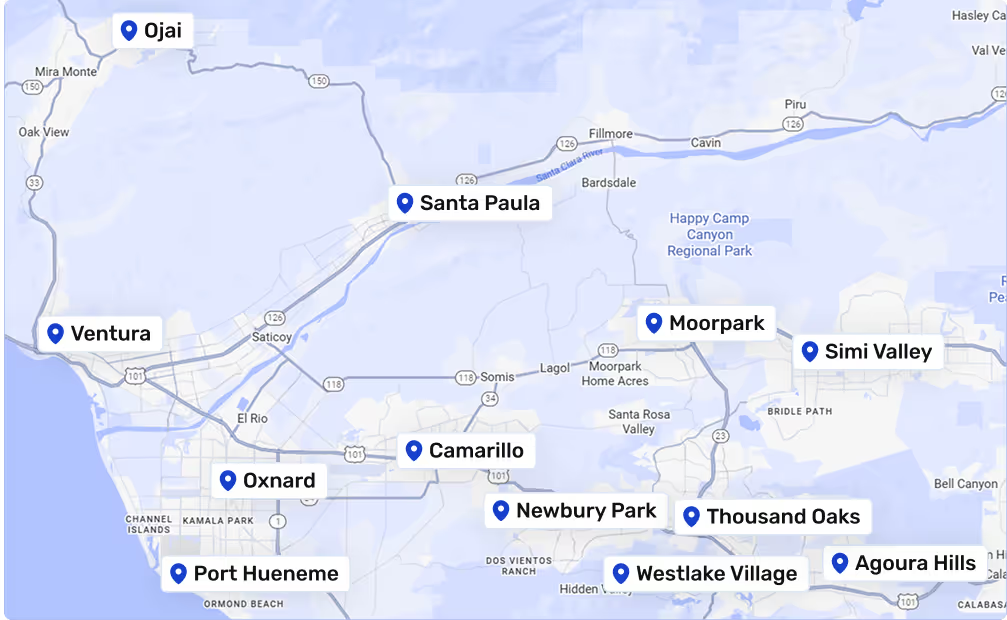


Trenchless Sewer Repair in Agoura Hills, CA
.avif)

Trenchless sewer repair is a minimally invasive alternative to full excavation that repairs or replaces underground sewer lines with little to no digging. For homeowners in Agoura Hills, CA, where established landscaping, hilly terrain, and mature trees are common, trenchless methods preserve yards and driveways while restoring reliable sewer service. Camarillo Plumbing provides experienced trenchless diagnostics and repairs tailored to the local conditions of Agoura Hills homes.
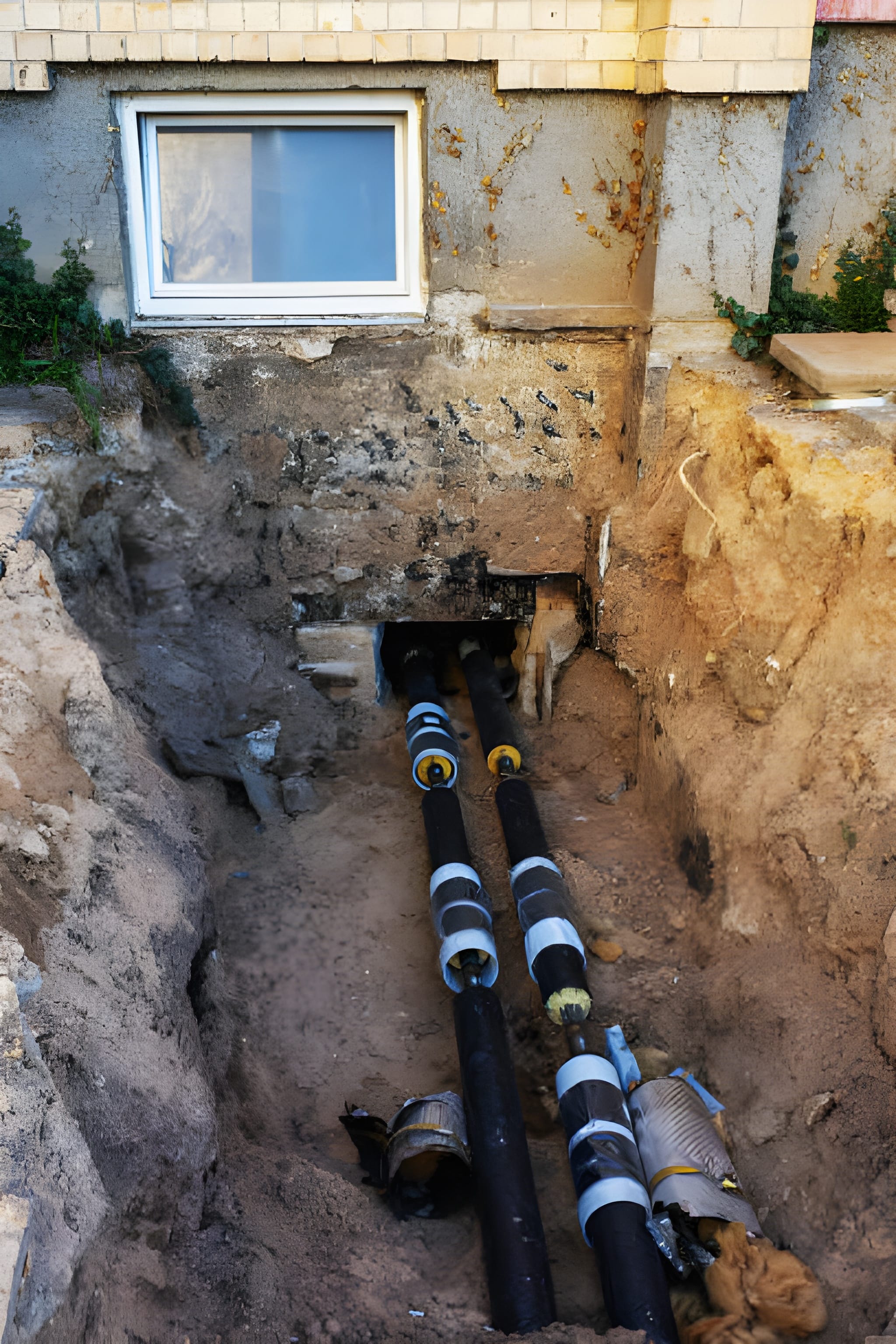
Common sewer problems in Agoura Hills homes
- Persistent backups or slow drains caused by root intrusion from oak and eucalyptus trees
- Corroded or deteriorated clay and cast iron pipes in older neighborhoods
- Offsets or joint separation from ground movement on slopes
- Cracked pipes due to age, tree roots, or seismic settling
- Localized collapses under driveways, patios, or landscaped areas
Understanding these common issues helps determine when trenchless repair is the best option and when more extensive work may be required.
What trenchless sewer repair is and how it works
Trenchless sewer repair uses non-invasive technology to fix damaged pipes without trenching across the yard. Key techniques include:
- Pipe lining / cured-in-place pipe (CIPP): A flexible resin-saturated liner is inserted into the existing pipe, expanded, and cured in place to form a seamless new pipe inside the old one. Ideal for long runs with continuous damage and pipes with intact structural alignment.
- Sectional repair: Damaged sections are repaired or replaced locally using access points with minimal excavation. Good for short, isolated failures such as localized cracks or root intrusion.
- Pipe bursting: The old pipe is fractured and simultaneously replaced by a new pipe pulled into place. Best when the existing line is beyond lining repair but access avoids major landscaping.
Each method restores flow and structural integrity without large trenches, preserving driveways, patios, and mature landscaping.
Typical trenchless repair process
- Initial camera inspection
- A digital sewer camera is run through the line to map damage, locate blockages, and determine pipe material and diameter.
- Diagnosis and recommendation
- Technicians evaluate whether lining, sectional repair, or pipe bursting is appropriate based on condition, access, and surrounding structures.
- Preparation and access
- Small access pits or existing cleanouts are used. Surface disruption is kept to a minimum.
- Installation
- For CIPP, the liner is positioned, inflated, and cured using steam or UV light. For pipe bursting, the new pipe is pulled through as the old pipe is broken apart. Sectional repairs involve targeted excavation of the affected segment.
- Pressure and flow testing
- Repaired lines are tested for watertight integrity and proper slope to ensure long-term performance.
- Final camera verification and site restoration
- A post-repair camera pass confirms results; small access points are backfilled and landscaping is restored.
Benefits over traditional excavation
- Minimal surface disruption to landscaping, driveways, and hardscapes
- Faster completion times in most cases, reducing inconvenience
- Lower risk of damaging irrigation, decks, fences, and mature plantings
- Reduced need for heavy equipment and large crews on site
- Environmentally friendlier due to less soil removal and restoration work
These advantages make trenchless repair especially valuable in Agoura Hills where many properties have extensive landscaping and limited flat yard area.
Timeline and cost expectations
- Typical timelines vary from a single day for simple sectional repairs or short CIPP liners to a few days for longer runs or pipe bursting projects that require access coordination.
- Costs depend on pipe length, condition, material, technique chosen, accessibility, and necessary permits. Project complexity in hilly terrain or under structures can affect both time and resources.
- Final budgets should reflect the diagnostic findings and repair method most suitable for the specific sewer condition.
Common use cases and limitations
Appropriate uses:
- Long runs with surface-sensitive landscaping or paved areas above the line
- Lines affected by moderate cracking, corrosion, or root intrusion where structure remains intact
- Replacing aging clay or cast iron pipes with minimal disturbance
Limitations:
- Fully collapsed or severely offset pipes may require open excavation to re-establish proper slope and alignment
- Extensive lateral connections or complex junctions under foundations can limit trenchless options
- Pipes with major bellied sections or severe misalignment may not be candidates for lining
A thorough camera inspection is the definitive step to determine feasibility.
Warranty and maintenance recommendations
- Many trenchless installations come with manufacturer warranties on materials and workmanship warranties from the installer; warranty details vary by method and provider.
- Routine maintenance prolongs the life of a trenchless repair: periodic sewer camera inspections, hydro jetting to remove grease and buildup, and proactive root management when trees are nearby.
- Avoid flushing grease, wipes, or heavy debris; install root barriers if large trees are close to the sewer route. In Agoura Hills, plan landscaping with root-safe species and placement away from main sewer lines.
Camarillo Plumbing has experience matching warranty options and maintenance plans to local conditions in Ventura and Los Angeles County.
Emergency and routine repair considerations
Watch for emergency signs that warrant immediate professional attention: repeated backups, sewage odors, gurgling drains, slow drainage across multiple fixtures, or visible sinkholes or depressions in the yard. These symptoms can indicate active failures that risk property damage and health hazards. Camarillo Plumbing provides trenchless diagnostics and repair services suited to Agoura Hills’ residential and commercial properties, including emergency response capability.
Frequently Asked Questions
Q: What is the difference between trenchless lining and pipe bursting?A: Lining installs a new pipe inside the existing one using a resin-saturated liner cured in place. Pipe bursting breaks the old pipe apart while simultaneously pulling a new pipe into the same alignment. Lining preserves the old pipe as a host; bursting replaces it entirely.
Q: Will trenchless repair damage my trees or landscaping?A: Trenchless is designed to minimize surface disturbance. Only small access pits are usually needed, preserving roots, lawns, and hardscapes in most cases.
Q: How long does a cured-in-place liner last?A: When properly installed, CIPP liners can last decades. Lifespan depends on material selection, installation quality, and ongoing maintenance.
Q: Can trenchless methods fix every sewer problem?A: Not always. Severe collapses, significant misalignment, or complicated lateral connections may require open excavation. A camera inspection provides a definitive assessment.
Q: How do I know if my home’s sewer is a trenchless candidate?A: A sewer camera inspection and evaluation of pipe condition, alignment, and accessibility determine candidacy. Local factors like pipe material and nearby structures are considered.
Q: Should trees be removed to protect the sewer line?A: Not necessarily. In many cases, root management and targeted root removal, combined with root barriers or species selection, protect the line without full tree removal. Each situation is assessed individually.
hear what our satisfied clients have to say