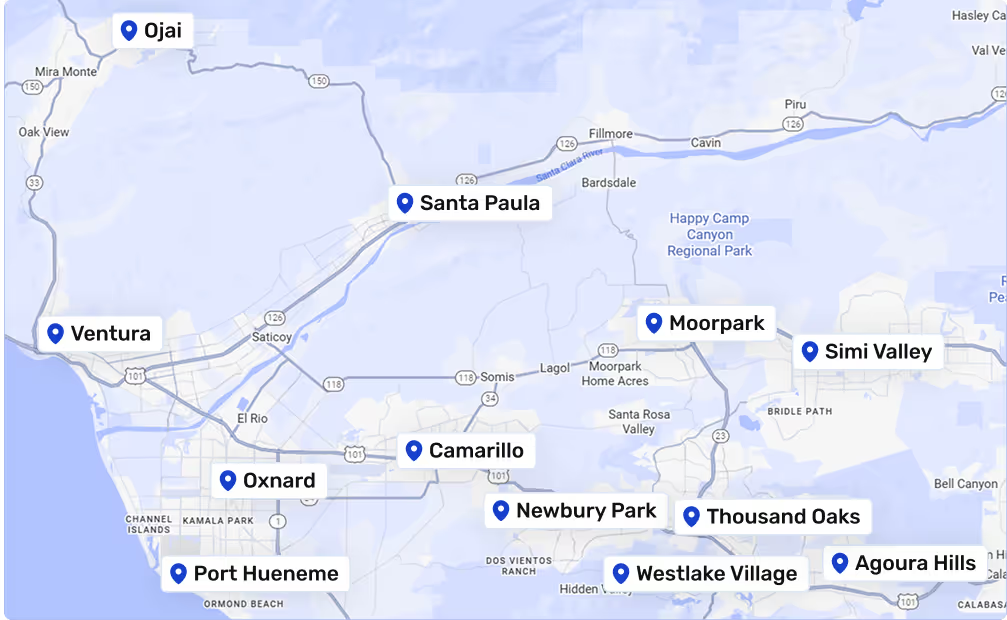


Pipe Bursting in Santa Paula, CA
.avif)

Pipe bursting is a trenchless sewer-line replacement method that replaces a failing underground pipe by fracturing the old pipe in place while pulling a new pipe into the same line. For Santa Paula homes and businesses, where older clay or cast iron laterals, mature landscaping, and narrow street access are common, pipe bursting often provides a less disruptive, faster alternative to full open-cut excavation. Camarillo Plumbing supplies experienced technicians and local knowledge to assess whether pipe bursting is the right solution for a specific property in Santa Paula.

Why pipe bursting matters in Santa Paula
Santa Paula properties often face sewer problems from:
- Aging clay, cast iron, or vitrified clay pipes installed decades ago
- Root intrusion from citrus, pepper, and ornamental trees common in residential yards
- Soil movement in the Santa Clara River Valley and compacted fill that causes pipe offsetting
- Limited access in historic downtown blocks and tight driveways where open trenches would damage hardscapes
Pipe bursting preserves landscaping, driveways, and mature trees while restoring a full-diameter new line, making it highly relevant for Santa Paula homeowners who want minimal surface disruption.
Common sewer problems that lead to replacement
- Repeated clogs and slow drains after localized repairs
- Collapsed or severely crushed pipe segments
- Extensive root intrusion along long runs
- Offset joints and patterns of active leakage
- Pipes with frequent patch repairs or structural failure identified on camera inspection
How pipe bursting works - step by step
- A sewer camera inspection determines pipe condition, line profile, lateral connections, and the presence of obstructions or collapsed sections. The inspection identifies whether bursting is feasible and pinpoints start and end points for access pits.
- Small entry and exit pits are excavated at the two ends of the replacement run. Pits are typically only a few feet across and designed to minimize impact on landscaping, patios, and driveways.
- A bursting machine is set between pits. A hydraulic or pneumatic bursting head is attached to the leading end of the new pipe. The old pipe is broken apart by the bursting head, and fragments are pushed into the surrounding soil.
- The machine pulls the bursting head and the new pipe through the existing bore. The new pipe is drawn into place as the old pipe is displaced outward, creating a continuous new line often made from high-density polyethylene (HDPE) or similar flexible materials.
- Service laterals are reconnected as needed. The new line is pressure-tested and camera-inspected to confirm alignment and integrity.
- Pits are backfilled, compacted, and surfaces restored to match original conditions as closely as possible.
Benefits compared with open-cut excavation
- Preserves lawns, mature trees, gardens, and hardscapes
- Shorter on-site time and less disruption to household routines
- Reduced need for heavy excavation equipment and large staging areas
- Typically lower overall surface restoration requirements
- Environmentally friendlier due to less soil displacement and material removal
Typical project timeline
- Initial inspection and estimate: one site visit including camera inspection
- Permitting and scheduling: timeline depends on local permit processing
- Onsite work for most residential runs: often completed in one to two days after mobilization
- Larger or more complex runs may require multiple days due to lateral reconnections and restoration
Santa Paula weather is mild, which generally permits year-round work. Hot weather may influence work hours and curing steps for any concrete repairs.
Suitability and material considerations
- Best for continuous runs without excessive bends or obstructions
- Works well with existing clay, cast iron, and vitrified clay pipelines
- New pipe materials commonly used: HDPE, fused polyethylene, and PVC for appropriate applications
- Not suitable when the existing line has severe offset or missing segments that prevent pulling a new pipe through, or where multiple tight bends and lateral geometries make bursting impractical
Permitting and access requirements in Santa Paula
- Local permits and sewer authority approvals are typically necessary for sewer-line replacement and lateral reconnections. Municipal inspection at tie-in points is commonly required.
- Staging area for equipment and access for trucks must be available. Narrow streets or limited parking in older neighborhoods may require additional coordination for traffic control or temporary parking permits.
- Utility locates and confirmation of buried irrigation or other utilities must be completed before work begins.
Cost factors and estimate considerations
Costs vary based on several factors rather than a single price. Key influences include:
- Length of run and depth of the existing pipe
- Type and condition of the existing pipe and number of lateral reconnections
- Accessibility for pits and equipment, and need for traffic or street permits
- Extent of surface restoration required for patios, driveways, or landscaping
- Local permit and inspection fees, and any necessary utility coordination
Professional estimates are based on a camera inspection, site visit, and local permitting needs.
Warranty, cleanup, and restoration
- Work typically includes line integrity testing and post-installation camera inspection to verify success.
- Proper installers provide workmanship warranties for reconnections and the installation process; material warranties depend on the pipe manufacturer.
- Cleanup includes backfilling pits, compacting soils, and restoring landscaping and hardscapes. In Santa Paula neighborhoods, restoration focuses on matching original surfaces and protecting irrigation systems and mature plants.
Before and after: representative case summaries
- Residential downtown lateral: Replaced 35-foot clay lateral with HDPE using pipe bursting. Result: restored full flow, no damage to brick walkway, pits restored to original elevations.
- Citrus grove service line: Collapsed vitrified clay main under irrigation row replaced with HDPE. Result: eliminated recurrent blowouts, reduced future maintenance, minimal crop disturbance.
- Suburban driveway run: Burst a heavily root-invaded run beneath a concrete driveway. Result: avoided full driveway demolition; only small access pit and targeted concrete patching were required.
Photos of camera inspections and restored surfaces typically illustrate immediate flow improvements and minimal surface impact.
FAQs
Q: Is pipe bursting noisy or disruptive?
A: Equipment generates noise during operation and requires excavation of two small pits, but overall disruption is far less than open-cut excavation and the work is usually completed quickly.
Q: How long will my sewer be out of service during bursting?
A: Interruptions vary with each project. Short residential runs may need only a day of restricted use around the work area; lateral reconnections may extend service disruptions by hours.
Q: Will my trees be damaged?
A: Pipe bursting avoids long trenches, so root systems and mature trees are much less likely to be damaged than with open-cut methods. Tree protection plans are used when work is near root zones.
Q: What warranties should I expect?
A: Expect workmanship warranties for installation and manufacturer warranties for the pipe. Verify warranty terms and what is covered for laterals and reconnections.
Q: What happens if camera inspection shows the line is not burstable?
A: If bursting is not feasible due to offsets or obstructions, alternatives include pipe lining, sectional repairs, or open-cut replacement depending on the situation.
Q: What should I prepare before an inspection and estimate?
A: Clear access to the sewer cleanout, yard areas near the house, and any areas where equipment may need to be staged. Provide any records of past repairs or maps of irrigation and utility locations if available.
Camarillo Plumbing applies local experience and trenchless expertise to evaluate each Santa Paula property and recommend the most durable, least disruptive sewer replacement solution.
hear what our satisfied clients have to say