
Sewer Line Replacement in Thousand Oaks, CA
.avif)

Sewer line replacement is a critical service for Thousand Oaks homes and businesses where older pipes, tree root intrusion, ground movement, or repeated backups threaten sanitation and property value. In Thousand Oaks, local conditions like abundant oak trees, aging clay or cast iron mains in older neighborhoods, and seasonal heavy rains can accelerate sewer failures. This guide explains how technicians diagnose sewer condition, compares trenchless methods to traditional excavation, walks through replacement and relining processes, and outlines permitting, timelines, and expected cleanup so you can make an informed decision for your property.
Common sewer problems in Thousand Oaks homes
- Tree root intrusion from mature oaks and other landscape trees causing cracks, offsets, and blockages
- Corroded or collapsed clay, cast iron, or older PVC pipes in homes built mid 20th century
- Frequent backups or slow drains indicating progressive blockage or pipe deformation
- Multiple repairs in the same location that signal the need for full-line replacement
- Damage from ground movement after heavy rains or seasonal swelling of soils
How technicians assess sewer line condition
- Pre-inspection and history review: technicians gather symptom history such as backups, gurgling fixtures, or recurring clogs.
- Sewer camera inspection: a high-resolution camera is fed through the line to capture continuous video of pipe condition, joints, root intrusion, cracks, and flow restrictions. The camera report usually includes footage, distance markers, and a written assessment.
- Hydro-jetting and verification: if roots or buildup are found, hydro-jetting may be used to clear deposits so the camera can verify the true structural condition.
- Recommendation: based on inspection, technicians recommend repair, trenchless relining, or full excavation replacement and outline pros and cons for the property.
Trenchless relining vs traditional excavation
- Trenchless relining (cured-in-place pipe lining or CIPP): a resin-saturated liner is inverted or pulled into the existing pipe, cured in place, and forms a new seamless pipe inside the old one. Pros: minimal yard disruption, preserves landscaping and driveways, faster completion, and effective against root intrusion and small offsets. Cons: requires the existing pipe to have continuous access points and is best when pipe alignment is largely intact.
- Pipe bursting: the old pipe is fractured while simultaneously pulling a new pipe into place. Pros: replaces failing pipe with a new pipe of equal or larger diameter, minimal trenching at entry and exit pits. Cons: may not be suitable near certain utilities or in tightly congested areas.
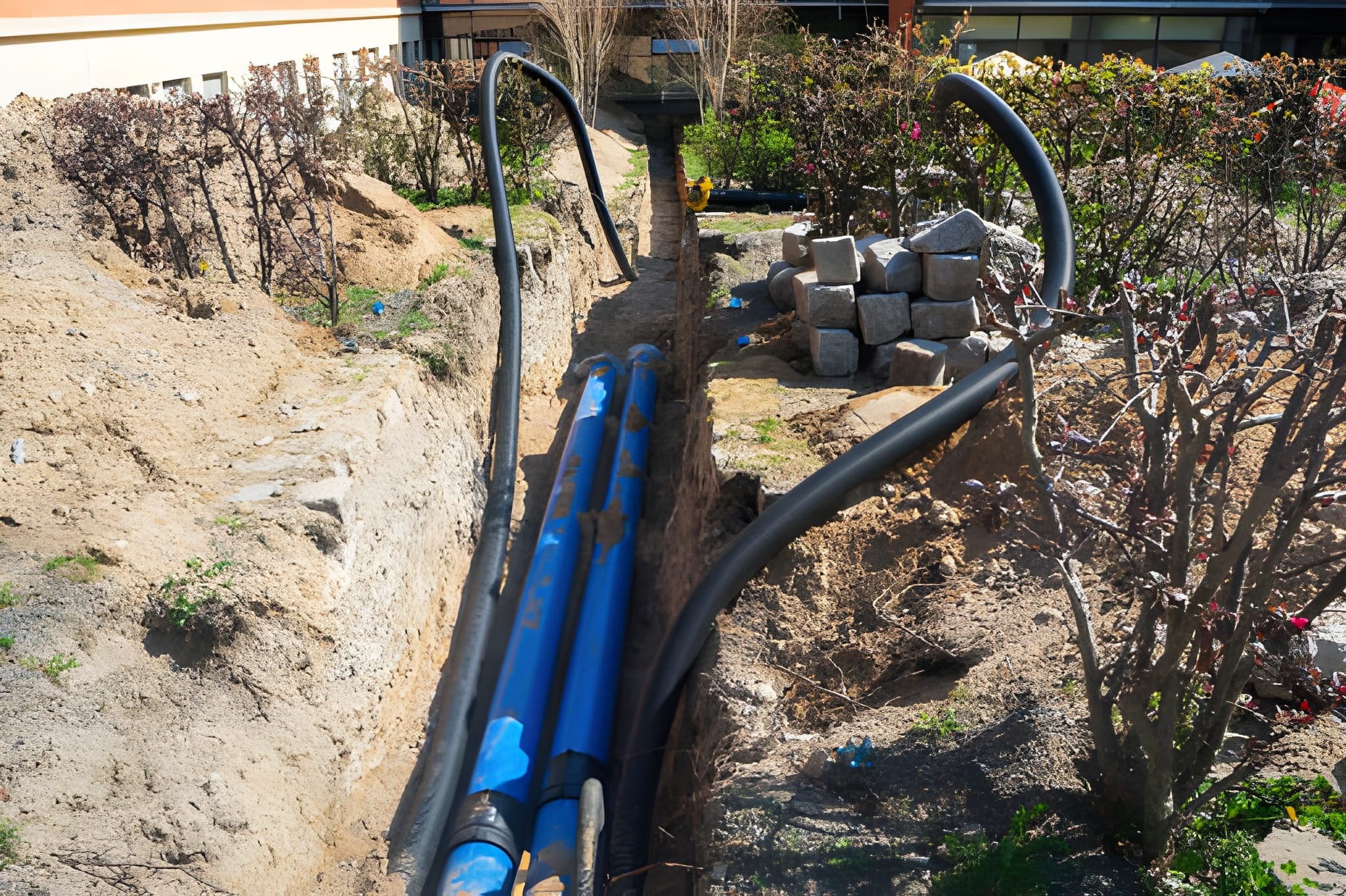
- Traditional open-cut excavation: full replacement by digging a trench along the pipeline route. Pros: best for severely collapsed lines, large diameter upgrades, or when trenchless access is impossible. Cons: significant yard and landscaping disruption, longer timelines, and potential need for paved surface replacement.
Step-by-step replacement and relining process
- Initial inspection and scope: camera inspection establishes the condition and length of affected line.
- Permitting and planning: local permits are obtained as required by the City of Thousand Oaks or county authorities. Site protection and utility locates are completed.
- Preparatory work: access pits are dug for trenchless methods or trenches are laid out for open-cut work. Nearby utilities are protected. Hydro-jetting is performed if needed to remove debris.
- Installation:
- Trenchless relining: liner insertion, inflation or curing with hot water, steam, or UV, then end seals and reinstatement of lateral connections.
- Pipe bursting: entry and exit pits opened, bursting head pulled through breaking the old pipe while new HDPE or PVC is pulled into place.
- Excavation: old pipe removed, bedding prepared, new pipe laid, joints tested, and backfill compacted.
- Final inspection and testing: camera re-inspection and pressure/leak tests verify the repair quality.
- Backfill and restoration: soil compaction, landscaping restoration, and replacement of hardscapes such as driveways or sidewalks if needed.
- Cleanup and documentation: job site cleaned and warranty paperwork provided.
Preparatory and complementary services
- Hydro-jetting: removes roots, grease, and mineral buildup to restore flow and allow accurate inspection.
- Local drain clearing: clears household clogs that can be symptomatic of larger sewer issues.
- Sewer camera inspection: essential diagnostic tool before and after work.
- Lateral reinstatement: precise cutting and sealing of branch connections restored after relining.
Factors affecting timeline and cost
- Pipe length and material
- Degree of damage or collapse
- Accessibility and landscape or concrete that must be removed
- Need for lateral reinstatements and number of connections
- Local permitting requirements and utility coordination
- Seasonal conditions such as wet soils or extreme heatTrenchless relining typically completes in a day or two for most residential runs, while excavation can take several days to a week or more depending on restoration needs. Permit review can add days to weeks depending on city workload.
Permits and warranties
Local permits are often required for sewer line replacements and vary by project scope. The City of Thousand Oaks or Ventura County may require inspections at key stages. Warranties typically include manufacturer warranties for liners or pipe materials and workmanship warranties from the installer. Liner warranties commonly range from 10 to 50 years depending on materials and manufacturers. Always request written warranty details and documentation of permit sign-offs.
Cleanup expectations and restoration
- Trenchless projects generally produce minimal surface disturbance with small access pits that are backfilled and topsoil replaced.
- Open-cut projects require landscape or hardscape restoration, soil compaction, and sometimes concrete or asphalt replacement. Expect several days of settling before final landscaping.
- Proper restoration includes compacted backfill, reseeding or replacement sod in Thousand Oaks climate-appropriate varieties, and repair of irrigation if affected.
Before and after examples
- Case scenario 1: Older home with recurring backups and root intrusion under a mature oak. Camera inspection found multiple root intrusions and hairline cracks. Trenchless relining restored structural integrity with minimal yard disruption and eliminated backups.
- Case scenario 2: Driveway collapse caused by a collapsed clay section beneath the slab. Inspection showed full pipe collapse requiring open-cut replacement. The line was replaced under the driveway, a new slab patch was poured, and soil compaction and grading restored the site.
Why timely replacement matters
Delaying replacement can lead to repeated backups, property damage, health hazards, and larger repairs later. In Thousand Oaks, preserving mature landscaping is often a priority; trenchless methods help protect trees and curb appeal while delivering long-term performance.
Frequently Asked Questions
Q: How long does a trenchless sewer relining take for a typical Thousand Oaks home?A: Most residential relines are completed in one to two days once inspections and permits are in place, though larger or more complex systems may take longer.
Q: Will root intrusion come back after relining?A: Properly installed liners with intact seals prevent roots from entering. However, roots can regrow into weak spots at lateral connections if not properly reinstated, so full reinstatement and routine maintenance are important.
Q: Do I need a permit for sewer replacement in Thousand Oaks?A: Permitting requirements vary. Many replacements or significant repairs require permits and inspections from the City of Thousand Oaks or county authorities.
Q: What warranties are typical for sewer relining?A: Liner manufacturers often provide long-term product warranties, while installers provide workmanship warranties. Warranty lengths vary by product and contractor.
Q: When is excavation necessary instead of trenchless?A: Excavation is typically necessary for collapsed pipes, severe offsets, obstructions that prevent liner insertion, or when upsizing diameter is required and trenchless options are not feasible.
hear what our satisfied clients have to say