

Sewer Camera Inspection in Woodland Hills, CA
.avif)

Sewer camera inspection in Woodland Hills, CA gives homeowners and businesses a clear, noninvasive way to diagnose underground pipe problems before committing to repairs. Modern video pipeline inspection technology lets technicians see exactly what is happening inside laterals and mainlines—whether recurring clogs, slow drains, suspected pipe damage, or unexplained sewage odors—so repair decisions are based on evidence rather than guesswork. For aging San Fernando Valley neighborhoods and newer developments alike, a camera inspection reduces risk, limits unnecessary excavation, and speeds up accurate solutions.
Why a sewer camera inspection is important in Woodland Hills
Woodland Hills properties often face specific sewer challenges: mature landscaping with invasive roots, dry-wet seasonal cycles that shift soils, and many mid-20th century homes with original clay or cast-iron lines. These factors increase the chance of root intrusion, joint separation, corrosion, and sagging. A video inspection identifies the exact cause and location of problems, helping prioritize trenchless repair options when possible and preventing repeat service visits.
Common use cases and warning signs
Camera inspections are recommended in these situations:
- Recurrent clogs in the same fixture or multiple fixtures
- Persistently slow drains that resist standard snaking
- Sewage odors inside or around the property
- After a major clog or backup to confirm clearance and pipe condition
- Before buying or selling a home to assess lateral condition
- After tree removal or major landscaping to check for root damage
- Suspected line damage after settling or minor seismic activity
Typical symptoms to watch for in Woodland Hills homes include recurring kitchen or floor drain backups, intermittent sewage smell after heavy use, and silt or sediment in low-flow fixtures following storms.
How the video pipeline inspection works
- Site evaluation and access: The technician locates the nearest cleanout or access point. For laterals, access may be through a basement, garage, yard cleanout, or the main sewer cleanout near the property line.
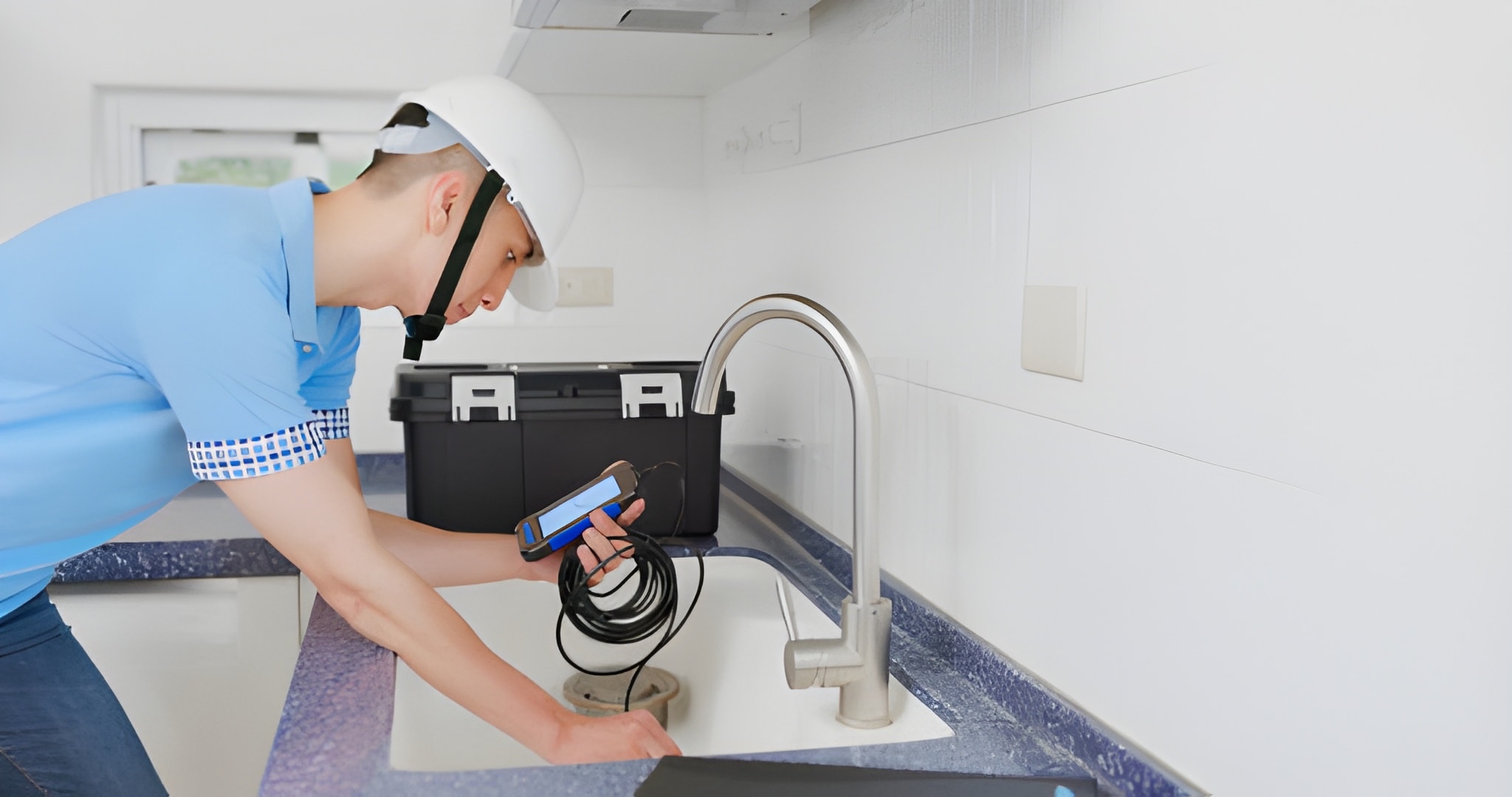
- Camera insertion: A waterproof, high-resolution camera mounted on a flexible push rod is inserted into the pipe. Cameras are sized to navigate common residential lines (2 to 6 inches).
- Live video and sonde tracking: The technician watches live footage on a monitor while a radio-frequency locator (sonde) tracks camera depth and position. This provides distance and directional data relative to property landmarks.
- Identification and logging: Blockages, cracks, root intrusion, offset joints, bellies (sags), and pipe material are documented. The operator annotates footage to record exact distance to defects from the cleanout or nearest reference point.
- Pullback and confirmation: The camera is withdrawn while noting the same conditions so footage shows both approach and retreat views for clarity.
The process is non-destructive and typically requires little more than an accessible cleanout and a technician on site.
Deliverables: photos, video, and written condition reports
A professional sewer camera inspection includes:
- Time-stamped video of the inspection in a downloadable format
- High-resolution still photos of critical defects or obstructions
- A written condition report summarizing pipe material, diameter, exact distance and orientation to problem areas, and severity ratings
- Recommendations for repairs that match the observed issues
These deliverables provide homeowners, property managers, and contractors with the documentation needed to select an appropriate repair method or to present findings to municipal authorities or real estate professionals.
How findings inform repair options
Inspection results guide the most effective, least invasive solution:
- Hydro-jetting: Best for grease, scale, or root debris that has not damaged the pipe structure. Camera footage confirms cleaning effectiveness and clears the way for preventive maintenance.
- Spot repair: Used when localized damage (a single cracked segment or small root intrusion) is identified. The report’s distance measurements pinpoint where excavation or localized replacement is needed.
- Trenchless repair (pipe lining or pipe bursting): Recommended when footage shows multiple defects along a run but the pipe alignment and surrounding soil conditions support trenchless methods. Trenchless solutions preserve landscaping and are often preferable in densely planted Woodland Hills yards.
- Full open-trench replacement: Required when the pipe is collapsed, heavily corroded, or severely offset. The report helps determine the most strategic excavation location to limit disruption.
Typical timeframes and what to expect
- On-site inspection time: Most residential inspections take between 30 minutes and 2 hours, depending on line length and complexity.
- Report delivery: Video and the written condition report are commonly provided the same day or within 24 hours for scheduling convenience.
- Follow-up repairs: Minor cleaning or spot repairs can often be scheduled quickly; larger trenchless or replacement projects require additional assessment and permitting and will vary by scope.
Seasonal demand and access issues (locked gates, buried cleanouts) can affect scheduling lead times. Emergency situations such as active backups may receive expedited response.
Preparation and safety for homeowners and businesses in Woodland Hills
- Clear access to the cleanout or sewer line access point; remove debris or obstacles from the yard or garage area.
- Identify and mark the sewer cleanout if possible; make sure gates are unlocked and parking is available near the access point.
- Avoid using strong chemical drain treatments before inspection; they can obscure the camera view or be hazardous for technicians.
- Secure pets and keep children away from the work area for safety.
- For businesses, designate a point of contact and inform staff of a brief window when fixtures should not be used to ensure uninterrupted inspection.
- Technicians follow standard safety and contamination-prevention protocols when dealing with sewer systems; confirm any site-specific concerns in advance.
Scheduling and logistics with Camarillo Plumbing
Camarillo Plumbing performs video pipeline inspections for residential and commercial properties in Woodland Hills and the surrounding San Fernando Valley. The company’s inspection process typically begins with a service intake to confirm the property type, access points, and reported symptoms. Technicians provide an estimated arrival window and the scope of what will be inspected, along with any pre-inspection instructions specific to the site. Inspection deliverables are shared with clients to support repair planning and permit documentation when required.
Frequently asked questions
Q: How deep into the sewer line can a camera inspection reach?A: Depth depends on rod length and line accessibility; standard push camera systems commonly reach 100 to 300 feet into a mainline, while lateral inspections are limited by the run from the cleanout to the main.
Q: Will a camera inspection fix my clog?A: No. A camera inspection diagnoses the cause and location. If the issue is debris or roots, the footage will determine whether hydro-jetting or root cutting can clear it, but cleaning is a separate service.
Q: Are camera inspections safe for older pipe materials like clay or cast iron?A: Yes. Video inspection is noninvasive and safe for all common pipe materials. It is especially useful for older systems because it avoids unnecessary excavation and shows structural condition.
Q: Do I need to be present for the inspection?A: Presence requirements vary. For residential inspections, the property owner or authorized representative is often asked to provide access and can be present to review findings, but it is not always mandatory.
Q: Can camera footage be used for insurance or real estate transactions?A: Yes. Recorded video and written condition reports are commonly accepted by insurers, municipal agencies, and real estate professionals as documented evidence of line condition.
hear what our satisfied clients have to say