

Sewer Camera Inspection in Simi Valley, CA
.avif)

Sewer camera inspection in Simi Valley, CA is an essential diagnostic service for homeowners and businesses that suspect a blockage, slow drains, recurring backups, or want to assess the condition of a sewer lateral before a remodel or sale. Camarillo Plumbing uses non-invasive video inspection to pinpoint problems underground without digging, delivering clear evidence of blockages, root intrusion, cracks, offsets, and pipe deterioration so the right repairs are chosen the first time.
Why a sewer camera inspection matters in Simi Valley
Simi Valley homes face specific sewer risks: older neighborhoods often have clay or cast-iron laterals that are vulnerable to root intrusion from mature oak and sycamore trees, seasonal ground movement after winter rains can create offsets, and coastal plain soils can accelerate wear. A camera inspection reveals hidden issues that routine drain clearing cannot fully diagnose, preventing repeat service calls and unexpected sewer failures.
Common sewer problems found by camera in Simi Valley
- Root intrusion and internal root masses obstructing flow
- Grease and scale build-up narrowing the pipe interior
- Cracks, fractures, and hairline leaks allowing soil infiltration
- Pipe offsets and collapsed sections from shifting soils or aging materials
- Bellies or sags where solids collect and cause chronic clogs
- Broken joints or displaced pipe segments after tree root pressure or seismic activity
Typical on-site process and access points
- Arrival and assessment: A technician evaluates visible access points and reviews your symptoms. Common entry locations include the exterior cleanout, a basement or garage cleanout, or a toilet if the cleanout is inaccessible.
- Preparation: Areas around the access point are cleared. If a toilet route is used, the tech protects the fixture and removes water as needed. Work areas are left clean.
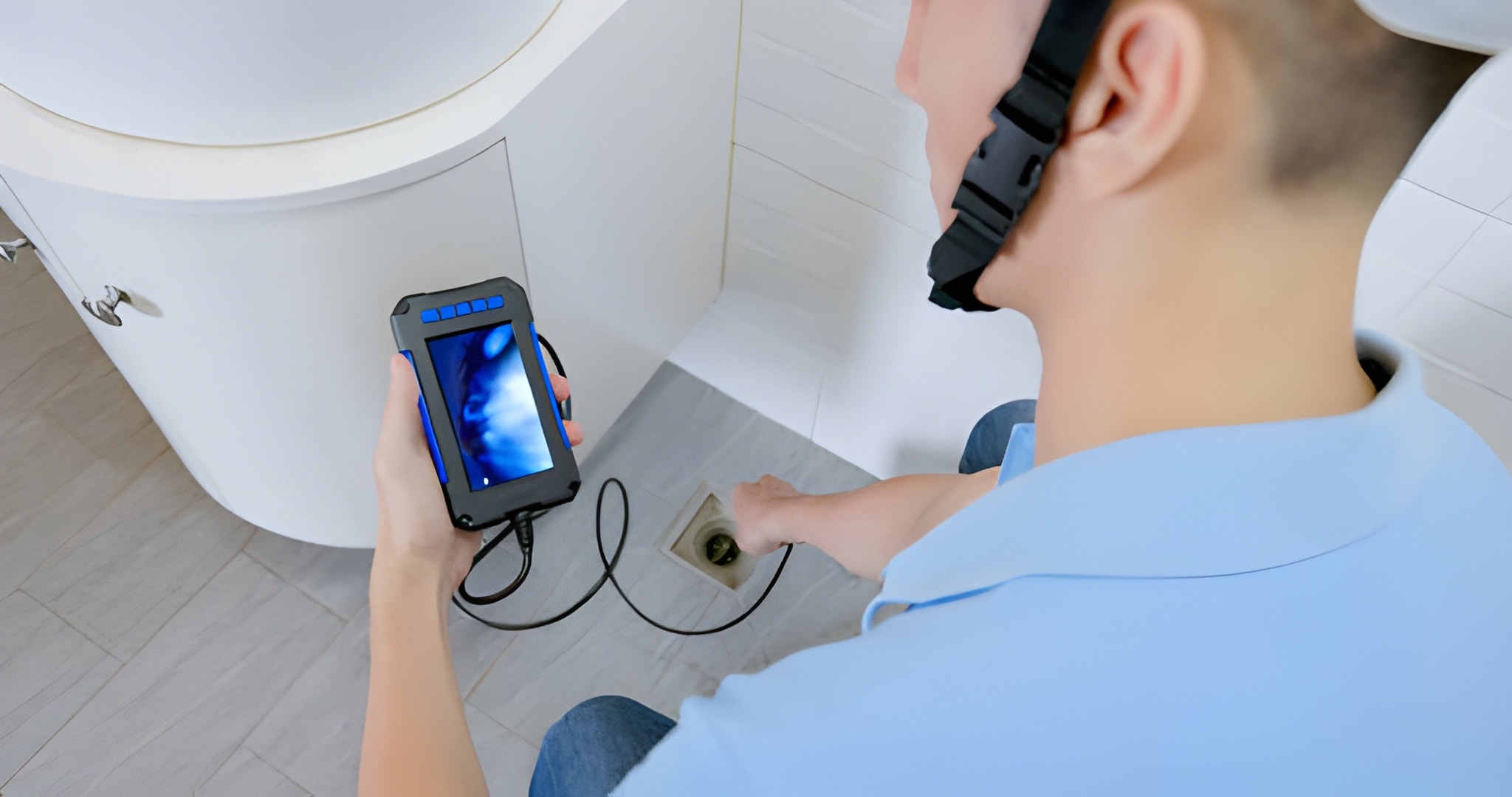
- Camera insertion: A flexible push camera with a reel of fiber rod is fed into the pipe. For larger mains a tractor-style crawler or higher-capacity rig may be used.
- Real-time inspection: Technicians monitor live video on a portable screen, noting the distance to defects using footage counters and locating signals. A sonde (radio transmitter) can be used to map the underground location of issues relative to the property and utilities.
- Documentation: Video, still images, and a time-stamped written diagnostic report are generated on-site or shortly after the inspection.
Cameras and technology used
- Push cameras with steerable heads for residential laterals
- Pan-and-tilt high-definition CCTV for detailed views of joints and root systems
- 360-degree and multi-sensor cameras for comprehensive condition assessments
- Sonde locators to pinpoint depth and horizontal location of defects for trench-free planning
- Distance counters and reporting software to timestamp and annotate defects for contractor and homeowner review
Deliverables you receive
- High-definition video of the entire inspected section with distance markers
- Still photos of key defects such as root intrusion, cracks, offsets, or bellies
- A written diagnostic report summarizing findings, defect severity, and recommended next steps with prioritized repairs or maintenance suggestions
- Location maps or depth readings when a sonde was used to locate a problem underground
How inspection findings drive repair recommendations
- Hydro-jetting: Recommended when the issue is grease, minor scale, or loose root masses obstructing flow but the pipe structure is sound.
- Spot repair or short-section replacement: Suggested when the defect is localized (a single broken joint or small collapsed section).
- Trenchless repair or lining: Chosen when the pipe has multiple defects but the existing line can be rehabilitated without full excavation. Lining restores structural integrity while minimizing landscape disruption.
- Full replacement: Required when pipes are severely crushed, root-riddled beyond repair, or serially failed along a long run. Recommendations are based on documented video evidence and location data.
What to expect during service
- Minimal disruption: Most inspections are non-invasive and completed with small access points. Typical residential inspections take under two hours depending on line length and complexity.
- Clear communication: Technicians will explain visible defects and provide the video and report to support any repair decisions.
- Safety and cleanliness: Protective measures are taken around access points, and the site is left tidy. If toilet access is used, fixtures are protected and reinstalled securely.
- Emergency scenarios: For active backups or sewage on the property, expedited inspection and emergency response options are available.
Scheduling and emergency availability in Simi Valley
Camarillo Plumbing offers routine scheduling for preventive inspections and expedited or emergency camera diagnostics for sewage backups and active leaks. Timely inspections are especially important after signs of repeated clogs, slow drainage in multiple fixtures, or when purchasing or renovating a property in Simi Valley neighborhoods with mature landscaping.
Maintenance advice and long-term benefits
- Regular inspections can identify small problems before they become full backups, protecting landscaping and foundation areas from sewage damage.
- Pairing camera inspections with preventive hydro-jetting reduces the frequency of blockages and extends pipe life.
- When trees are causing recurring root intrusion, consider targeted root management and rerouting vulnerable lines when feasible.
- For older pipes showing multiple defects, planning trenchless rehabilitation during a remodel can save long-term costs and preserve curb appeal.
Q: How long does a sewer camera inspection usually take?
A: Most residential lateral inspections take between 30 minutes and two hours depending on access and pipe length; complex or municipal main inspections can take longer.
Q: Will the inspection require digging?
A: No. Camera inspections are non-invasive. Digging is only required if the inspection reveals a defect that must be repaired and cannot be handled trenchlessly.
Q: Can you locate a blockage under a driveway or yard?
A: Yes. A sonde transmitter is often used during the camera run to map the underground location and depth of a blockage so repairs can be targeted.
Q: What kind of report will I get?
A: You will receive recorded video, still images of defects, footage distances, and a written diagnostic report outlining severity and repair options.
Q: Do camera inspections help prevent future problems?
A: Yes. Inspections identify early-stage issues like root intrusion and sags so you can choose preventive treatments like hydro-jetting or pipe lining before major failures occur.
Camarillo Plumbing provides experienced, evidence-based sewer camera inspections tailored to the specific conditions found in Simi Valley homes and businesses, helping property owners make informed repair decisions and avoid costly surprises.
hear what our satisfied clients have to say