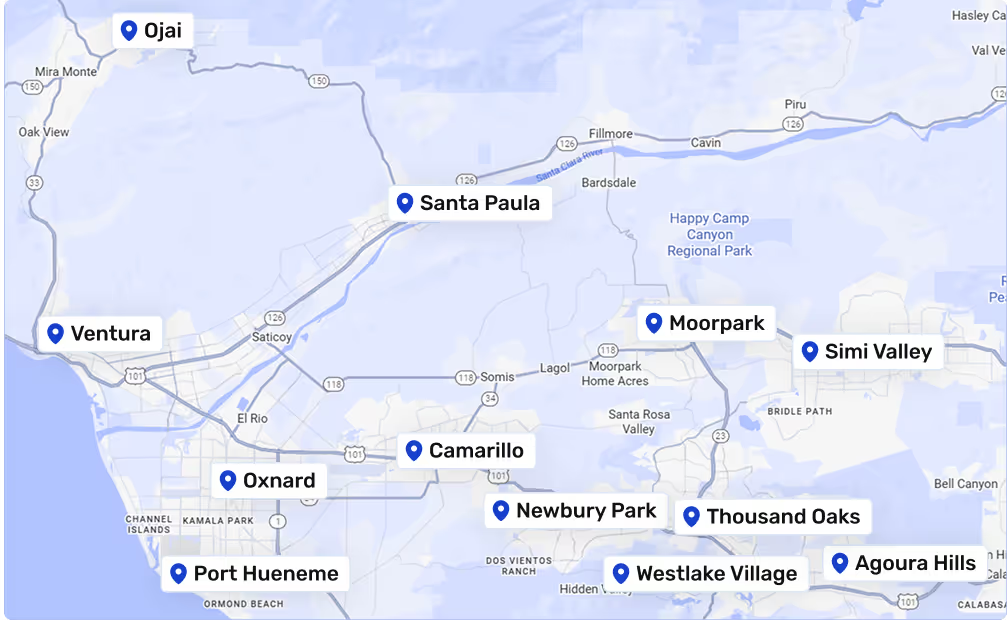


Sewer Camera Inspection in Port Hueneme, CA
.avif)

Sewer camera inspection in Port Hueneme, CA gives homeowners and businesses a fast, accurate way to diagnose underground sewer and storm lines without guesswork or unnecessary digging. Coastal soils, older neighborhood infrastructure, and aggressive root growth around Port Hueneme properties make periodic inspection an essential preventative measure. A professional inspection locates blockages, identifies pipe defects like cracks or offsets, and clarifies whether a line needs cleaning, repair, or trenchless replacement—helping you make informed decisions and avoid costly surprises.
When to schedule a sewer camera inspection
- Recurrent slow drains or multiple fixtures draining slowly at once
- Sewage odors in the yard, crawlspace, or near sewer cleanouts
- Backups or raw sewage in toilets, tubs, or floor drains
- New construction, property purchase, or after heavy ground movement from grading or storms
- After tree planting or when mature roots are near sewer routes
- Before trenchless repairs or hydro-jetting to confirm location, length, and pipe condition
Common sewer camera inspection issues in Port Hueneme
- Root intrusion: Fast-growing species used locally can invade joints and service lines, causing partial or complete blockages.
- Corrosion and rootlet pitting in older clay or cast-iron pipes exposed to coastal moisture and salt air.
- Offset joints and settled sections from shifting sandy soils or heavy vehicle loads near alleys and driveways.
- Blockages from grease, wipes, and debris—especially in commercial kitchens near the port area.
- Cracks, fractures, and collapsed sections from age or ground movement.
How the inspection process works
- Pre-inspection assessment
- Verify cleanout accessibility and discuss visible symptoms. In Port Hueneme properties, access is commonly at the yard, garage, or inside the building.
- Cleanout or camera entry
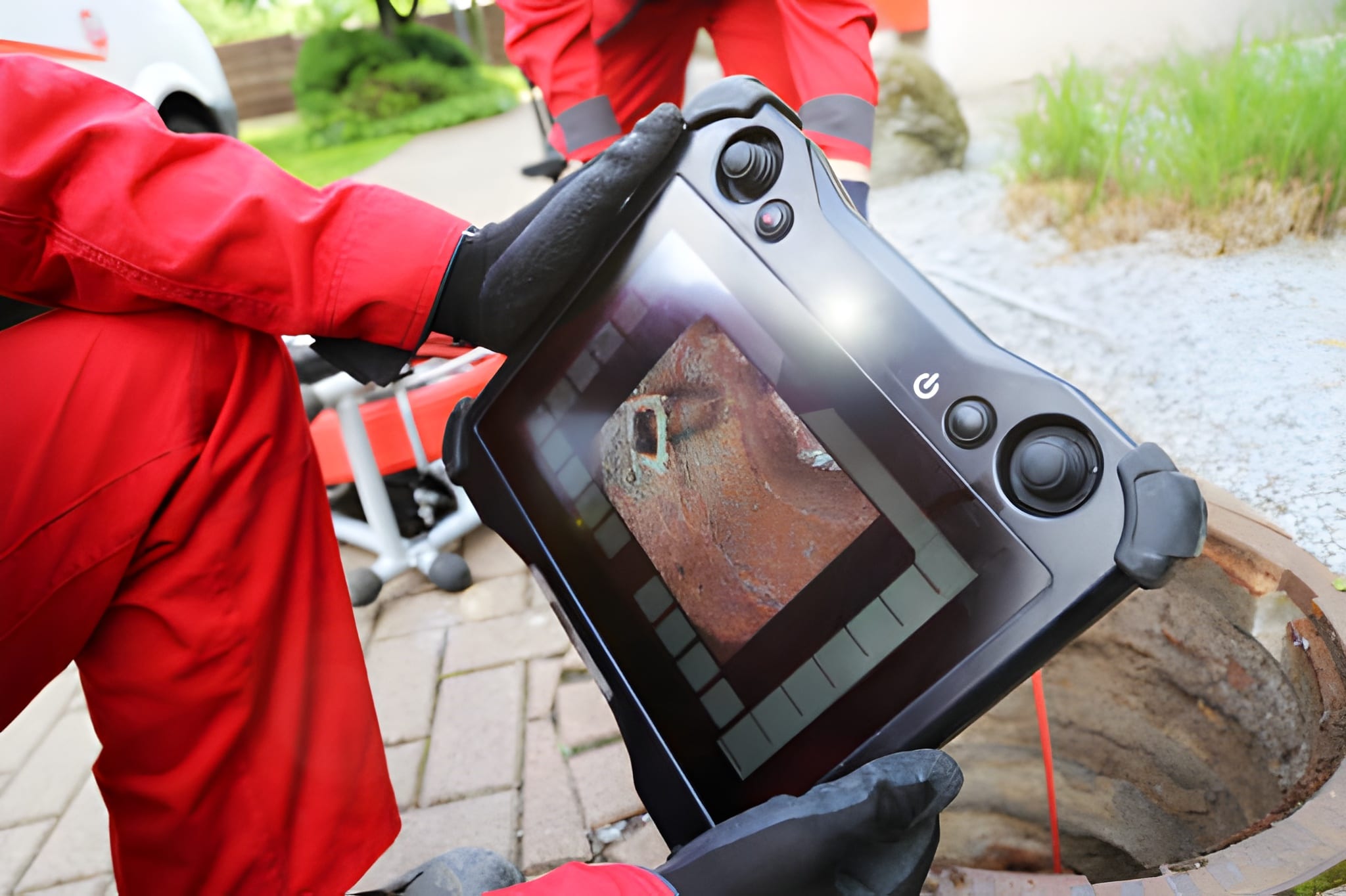
- Technicians insert a high-resolution, waterproof camera through the nearest cleanout or an access point. If no cleanout exists, a small access port may be used.
- Live video and recorded footage
- The camera transmits live video to a monitor so a technician can track blockages, damages, and flow issues in real time. Full recordings and still photos are saved for review and documentation.
- Line locating and mapping
- Using electronic transmitters and locators, the exact route and depth of the pipe are mapped. This is crucial in Port Hueneme where shallow coastal grade and buried utilities are common.
- Diagnostic findings and reporting
- Technicians annotate footage, capture key images, and generate a clear report with condition grading, distance-to-issue, recommended next steps, and estimated repair scopes.
What you receive in a professional report
- Time-stamped video and photo evidence showing the problem location and severity
- Pipe material, diameter, slope, and approximate depth
- Distance to issues from the entry point (measured in feet)
- Condition assessment (root intrusion, crack, offset, collapse, grease, foreign objects)
- Recommended corrective options: cleaning, local repair, trenchless lining, or full replacement
- Line map showing the sewer route relative to the property
Typical next steps after inspection
- Hydro-jetting: High-pressure water cleaning to remove roots, grease, and accumulated scale. Ideal for restoring flow when the pipe is structurally sound.
- Spot trenchless repairs (pipe bursting or cured-in-place lining): Used when inspection shows localized defects or small longitudinal cracks. Minimizes landscaping disruption - a common priority in Port Hueneme yards.
- Full trench or spot replacement: Necessary for collapsed or severely offset pipes, or when pipe diameter must be increased.
- Preventative programs: Scheduled inspections and cleanings to reduce recurrence from root regrowth or buildup.
Turnaround times and what to expect
- On-site inspection: 30 to 90 minutes for most residential lines, longer for commercial or complex systems.
- Initial findings: Many issues can be identified during the live inspection.
- Full report delivery: Often provided the same day or within 24 hours; more complex mapping or multi-line assessments may take 1 to 3 business days. Faster documentation helps Port Hueneme property owners move quickly to repairs and minimize disruption.
Pricing estimates and factors that affect cost
- General inspection range: Typical sewer camera inspections in Port Hueneme fall between $200 and $600 depending on access, pipe length, and whether line locating is included.
- Factors that increase cost: Long lateral distances, inaccessible cleanouts requiring additional access work, commercial system complexity, and repeat entries for multi-line mapping.
- When bundled: Inspections combined with hydro-jetting or immediate repairs will affect the total but often reduce overall time and cost compared to separate service calls.
Warranties and guarantees
- Inspection equipment and diagnostic services generally do not carry long-term warranties, but professional reports include documented findings for repair planning.
- Repair warranties differ by method: manufacturer warranties for pipe-lining materials commonly range from 10 to 25 years; contractor workmanship warranties commonly range from 1 to 5 years. Confirm specific warranty terms for any recommended repair method.
Benefits of choosing camera diagnostics first
- Prevents unnecessary excavation by precisely locating problems
- Provides evidence to support insurance or real-estate disclosures
- Clarifies whether a simple cleaning or a structural repair is required
- Reduces long-term costs through targeted, appropriate repairs
- Helps protect landscaping, driveways, and coastal property features in Port Hueneme
Maintenance tips for Port Hueneme properties
- Install or maintain accessible cleanouts for easier future inspections.
- Avoid flushing wipes, grease, and non-biodegradable items that cause blockages.
- Be mindful of planting locations for trees and large shrubs; root barriers can reduce intrusion risk.
- Schedule periodic camera inspections if your line is older, shows recurring issues, or runs under mature landscaping near the coast.
Frequently Asked Questions
Q: How long does a sewer camera inspection take?A: Most residential inspections take 30 to 90 minutes on-site. More complex commercial systems or multi-line mapping may take longer.
Q: Will the camera inspection damage my pipes?A: No. Modern sewer cameras are designed to be non-invasive and safe for common pipe materials, including PVC, cast iron, and clay.
Q: Can a camera inspection find the exact location of a break or blockage?A: Yes. Combined with a transmitter and locating tool, camera inspections can measure distance to defects and produce a mapped route to guide repairs.
Q: Is a cleanout required for a camera inspection?A: A cleanout provides easiest access, but technicians can use alternative entry methods if a cleanout is absent. Additional access work may affect the inspection time and cost.
Q: How soon will I get the inspection report and video?A: Most providers deliver annotated video and photo reports the same day or within 24 hours; more detailed mapping may take up to 1-3 business days.
Q: After the inspection, how do I know if I need hydro-jetting, trenchless lining, or replacement?A: The inspection report will identify the type and severity of the issue. Hydro-jetting is for non-structural blockages, trenchless lining for localized structural defects, and replacement for collapsed or severely damaged pipes.
Q: Do warranties cover future root intrusion?A: Warranties vary. Manufacturer warranties typically cover liner materials for a fixed period, while workmanship warranties cover installation. Root intrusion prevention is often addressed through maintenance plans rather than warranty coverage.
hear what our satisfied clients have to say