

Sewer Camera Inspection in Oxnard, CA
.avif)

A sewer camera inspection in Oxnard, CA is the fastest, most accurate way to diagnose underground sewer problems without unnecessary digging. For homeowners and businesses in Oxnard, visual inspection of sewer lines reveals the root cause of slow drains, recurring backups, and unexplained odors so repairs are targeted, cost-effective, and long lasting. Camarillo Plumbing uses high-resolution push cameras and crawlers to deliver clear video and written findings that inform the right repair — from hydro-jetting to trenchless sewer repair or full replacement.
Why Oxnard properties need sewer camera inspection
Oxnard’s coastal environment and local landscaping create common pressures on sewer systems. Salt air and high groundwater in low-lying areas accelerate corrosion in older cast iron pipes. Many older Oxnard homes still have clay or cast iron lines that are prone to cracks and offsets. Fast-growing trees used in local yards, including ficus and eucalyptus, often send roots into seams and joints. Seasonal rains can shift sandy soils and reveal offsets or collapsed sections. A camera inspection identifies these conditions early so problems are treated before a major backup or collapse.
Common sewer problems identified by camera inspection
- Blockages from grease, sanitary wipes, or accumulated scale
- Tree root intrusion penetrating joints and narrowing flow
- Cracks and fractures in clay, cast iron, or PVC pipes
- Offsets and joint separations from ground movement or settling
- Collapsed sections from corrosion, aging, or heavy surface loads
- Incorrect or broken connections from prior repairs or remodels
Step-by-step diagnostic process
Camarillo Plumbing follows a methodical inspection workflow so you see exactly what’s happening underground.
- Locate access points and cleanouts
- We begin at accessible cleanouts, interior drains, or sewer lids. If the property lacks a convenient cleanout, we discuss safe access options before starting.
- Camera insertion and routing
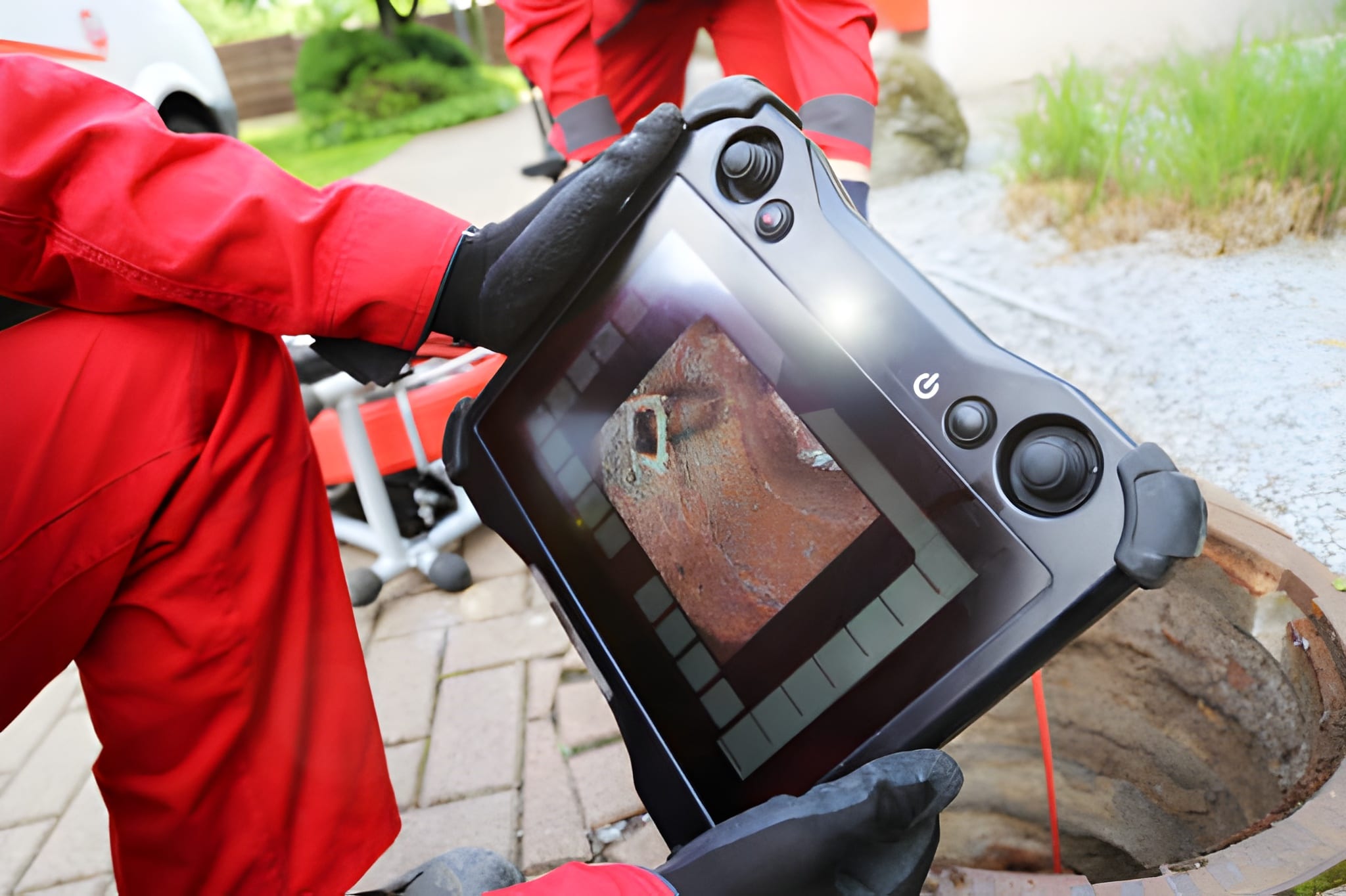
- A flexible push camera or motorized crawler is inserted into the line. The operator guides the camera through bends and laterals while monitoring distance and line orientation.
- Live video and photo documentation
- The camera transmits continuous high-definition video and still images to a monitor. The technician records key points such as the distance to faults, pipe material, and exact location of defects relative to the home or visible landmarks.
- Detailed inspection notes
- Technicians log footage timestamps, distance readings, and severity of issues. When necessary we locate the fault relative to the property using surface markings or locating equipment.
How findings are used to plan repairs
Camera inspection footage is the blueprint for repair selection and scope. Typical uses include:
- Pinpointing blockages for targeted hydro-jetting rather than wholesale excavation
- Determining if damaged pipe can be rehabilitated with trenchless sewer repair or lining
- Locating precise sections that require full sewer repair or replacement
- Identifying lateral connection problems that affect service to the home or business
Because the inspection shows the exact defect type and location, repair plans avoid guesswork and unnecessary disruption to landscaping or hardscapes.
Typical deliverables you receive
- High-definition video file of the entire inspection with timestamps
- Still images of identified defects and notable conditions
- A written inspection report summarizing findings, distance to each issue, pipe material and diameter, and recommended solutions
- Priority recommendations, including whether immediate action is needed or if monitoring is acceptable
These deliverables are formatted to support insurance claims, real estate transactions, or municipal permitting when required for repair work.
How camera inspections connect to repair services
Inspections determine which solution is appropriate:
- Hydro-jetting for grease, scale, or soft root intrusion that does not require pipe replacement
- Trenchless pipe lining or pipe bursting when the pipe structure is compromised but access for trenchless repair is feasible
- Traditional open trench repair when a collapsed segment, severe offset, or complex junction requires replacement
Camarillo Plumbing aligns inspection results directly with repair options so you know the pros and cons of each approach for your Oxnard property.
Expected timelines and pricing considerations
- Typical inspection time: 45 to 90 minutes depending on line length and access complexity.
- Fast-track or emergency inspections can be arranged when a backup is imminent.
- Pricing variables: pipe length and diameter, depth and access difficulty, need for locating equipment, and whether video reporting or further locates are required.
- Follow-up repairs are scheduled based on severity: minor issues may be addressed the same day, while trenchless or full replacements require planning and permits that add days to weeks to the timeline.
Scheduling, emergency availability, and preventive intervals
Camarillo Plumbing offers routine scheduling for preventive inspections and can prioritize emergency calls when you experience active backups or sewage in the yard. For Oxnard properties, recommended inspection intervals are:
- Every 2 to 3 years for older clay or cast iron lines, or properties with mature trees
- Annually for commercial properties, multi-unit buildings, or sites with recurring issues
- After significant landscaping, large tree removal, or seismic/ground movement events
Regular camera inspections reduce the chance of surprises and often lower long-term repair costs by catching problems early.
Benefits of timely sewer camera inspection
A professional camera inspection protects your property value and daily life by identifying precise problems before they escalate. It minimizes disruption by guiding noninvasive repairs when possible, supports transparent decision-making with video evidence, and integrates seamlessly into hydro-jetting and trenchless repair workflows favored in Oxnard for preserving landscaping and minimizing downtime.
Frequently Asked Questions
Q: How long does a sewer camera inspection usually take?A: Most residential inspections take 45 to 90 minutes. Time can increase for long laterals, difficult access, or extensive video documentation.
Q: Will the inspection create a mess or require digging?A: No. Camera inspections use existing cleanouts or interior access points and do not require digging. Surface locating tools may be used to mark problem locations for later repair.
Q: Can a camera inspection cause a blockage to move and clear?A: The camera itself does not clear blockages. In some cases, inspection identifies a blockage that can be removed immediately with root cutting tools or hydro-jetting.
Q: Do I get a copy of the video and written report?A: Yes. You receive the full video and a written report with distances and recommended actions to support repair decisions or permit applications.
Q: How do I know if I need trenchless repair versus full replacement?A: The camera inspection shows pipe material, severity, and location of defects. Trenchless lining is often suitable for cracks and partially compromised pipes, while collapsed segments or severe offsets usually require full replacement.
Q: How often should Oxnard homes schedule inspections?A: For Oxnard homes with older pipes or mature trees, every 2 to 3 years is a common preventive schedule. Annual inspections are recommended for commercial properties or properties with recurring issues.
hear what our satisfied clients have to say