

Sewer Camera Inspection in Oak Park, CA
.avif)

Sewer camera inspection in Oak Park, CA is the fastest, least invasive way to diagnose hidden problems in your sewer and drain lines. Whether you are a homeowner dealing with slow drains and recurring backups or a business managing a commercial line, a camera inspection pinpoints blockages, root intrusion, cracks or offsets, and the exact route of underground piping. Camarillo Plumbing performs video inspections that turn uncertainty into a clear repair plan, reducing unnecessary digging and ensuring the right solution for Oak Park properties.
Why Oak Park homes and businesses need a sewer camera inspection
- Mature landscaping and oak trees in Oak Park increase the risk of root intrusion into older clay or cast iron pipes.
- Mediterranean climate with dry summers and wetter winters causes soil movement that can shift or separate joints.
- Remodeling or property transfers often require verification of sewer condition before repairs or sales.
- Recurring clogs, sewer odor, slow drains, or multiple backups across fixtures are all signs that a camera inspection can diagnose precisely.
Common problems a camera inspection identifies
- Root intrusion entering through joints and cracks.
- Grease, scale, or flushable wipe buildup restricting flow.
- Cracked, collapsed, or offset pipes from ground movement or heavy loads.
- Misaligned laterals, broken segments, or bellied (sagging) pipes that trap debris.
- Foreign objects lodged in the line or improper connections.
- Line routing and depth for planning trenchless repairs or targeted excavation.
The inspection process — what to expect
- Entry and access points
- Technicians access the sewer via the cleanout, a toilet (when needed), or a manhole for main lines. For detached laterals or business lines a roof vent or exterior access may be used.
- Camera types and setup
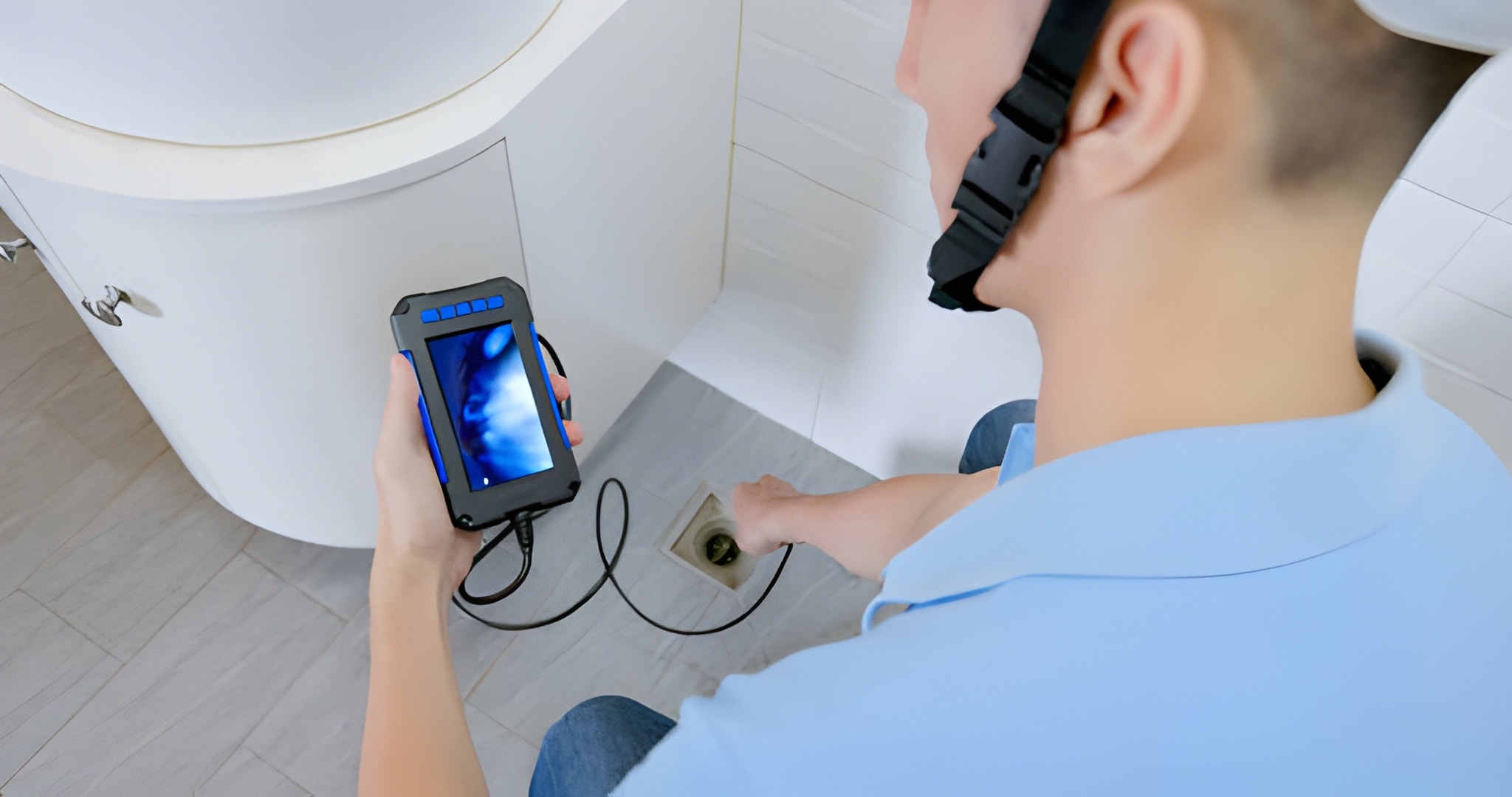
- Push rod cameras are used for lateral runs and residential lines. Crawler units and pan-and-tilt heads are used for larger mains or long runs. Sonde locators trace the camera above ground so the exact position and depth of the problem can be mapped.
- Live video and photo capture
- Inspections record continuous video and take time-stamped still photos of defects, root masses, cracks, and connections. High-definition imaging helps determine the severity of damage.
- Footage review and diagnosis
- A technician reviews the footage on-site to identify immediate safety or flow issues and to decide if clearing is possible that same visit.
- Written diagnostic report
- You receive a written report that includes video files or images, location markers, pipe material and diameter, estimated run length, and prioritized repair recommendations.
How camera inspection informs repairs
- Hydro-jetting vs mechanical snaking: Video shows whether grease or roots are the primary cause and whether high-pressure jetting will clear the line or only provide a short-term fix.
- Trenchless lining or bursting: Inspections reveal whether pipe condition and access points are suitable for cured-in-place pipe (CIPP) lining or pipe bursting, both of which avoid extensive excavation.
- Spot repair or targeted excavation: If a single collapsed section is identified, targeted excavation limits landscaping disruption.
- Preventive maintenance: Discovery of early-stage root intrusion or grease buildup enables scheduled cleaning before a costly collapse.
Typical turnaround times and pricing considerations
- Typical inspection time: Most residential lateral inspections take 30 to 90 minutes of onsite work. Commercial or longer mains can take several hours.
- Report delivery: A basic findings summary is often provided the same day. A full written diagnostic report with time-stamped images and recommendations is typically delivered within 24 to 48 hours.
- Pricing factors: Length of the run, line diameter, access difficulty, required camera type (push rod vs crawler), need for locators or permit coordination, and whether line clearing is required before the camera can pass. Seasonal demand and emergency calls can also affect scheduling. Pricing varies with complexity; the inspection itself is an investment that often saves money by preventing unnecessary excavation.
Examples of findings and recommended next steps
- Finding: Dense root mass invading a joint.
Recommendation: Hydro-jetting to clear the roots, followed by root chemical treatment and scheduling periodic jetting; evaluate for CIPP lining if roots recur. - Finding: Multiple hairline cracks and offset joints along a long run.
Recommendation: Trenchless pipe lining to restore structural integrity without tearing up landscaping. - Finding: One collapsed section with surrounding soil displacement.
Recommendation: Targeted excavation and spot replacement of the failed segment; map the remainder of the line for future planning. - Finding: Heavy grease and scale buildup in a commercial kitchen lateral.
Recommendation: Heavy-duty hydro-jetting, installation of grease management solutions, and a maintenance schedule tailored to business flow.
Preparation tips for Oak Park properties
- Clear access to the sewer cleanout and remove debris or plants near access points.
- Avoid using water or plumbing fixtures shortly before the technician arrives to reduce flow during inspection.
- Note recent backups, slow fixtures, or work done near the sewer line to help technicians target the inspection.
- Provide access to gates, yards, and any locked areas where the lateral runs.
- For businesses, schedule during lower-use hours if possible to reduce disruption to operations.
Frequently Asked Questions
Q: How long does a sewer camera inspection take?
A: Most residential inspections take 30 to 90 minutes onsite. Longer or commercial lines can take several hours depending on run length and access.
Q: Will the camera damage my pipes?
A: No. Inspection cameras are flexible and designed to travel through pipes without causing damage. Larger crawler units are used only where appropriate.
Q: Can a camera detect tree roots and small cracks?
A: Yes. Modern high-definition cameras can show root penetration, cracks, offsets, and joint separation, and images are time-stamped for location reference.
Q: Do I need to clear the line before a camera can pass?
A: Sometimes. If a line is fully blocked, hydro-jetting or snaking may be required first so the camera can traverse the pipe and provide a full assessment.
Q: How detailed is the inspection report?
A: Reports typically include video footage, still images, defect locations, pipe material and diameter, estimated run length, and prioritized repair recommendations.
Q: Is camera inspection necessary before trenchless repair?
A: Yes. A camera inspection verifies whether trenchless methods are suitable and helps size the project, identify access points, and confirm pipe condition.
Q: How often should I have my sewer line inspected in Oak Park?
A: Homes with mature trees or recurring issues should consider inspections every 1 to 3 years. Otherwise, inspect when you notice slow drains, odors, or backups.
Q: Can a camera locate where a broken pipe is beneath my yard?
A: Yes. Using a locator (sonde) attached to the camera, technicians can map the lateral path and mark the exact position and depth of defects for targeted repairs.
Camarillo Plumbing performs thorough sewer camera inspections tailored to Oak Park conditions so you get a clear diagnosis and a repair path that minimizes disruption to your property.
hear what our satisfied clients have to say