

Sewer Camera Inspection in Moorpark, CA
.avif)

A sewer camera inspection in Moorpark, CA is a fast, reliable way to see exactly what is happening inside your sewer and drain lines before deciding on repairs. For homeowners and businesses in Moorpark, early visual diagnosis prevents messy backups, reduces unnecessary excavation, and ensures the right solution is chosen the first time. Camarillo Plumbing uses high-definition video inspection and locating technology to diagnose blockages, root intrusion, pipe damage, and alignment problems with precision.
Why Moorpark homes and businesses need sewer camera inspection
Moorpark sits in a Mediterranean climate with seasonal winter rains and mature landscaping. Periodic heavy rains and aggressive root growth during spring can accelerate pipe issues in older plumbing systems. Many properties in the area also have older pipe materials that are more prone to cracks, offsets, and root entry. A camera inspection identifies problems early so repairs can be targeted and less disruptive.
Common problems a sewer camera inspection finds
- Blockages from hair, grease, soap scum, and compacted waste
- Root intrusion where tree roots enter small cracks and grow inside the line
- Collapsed, cracked, or bellied pipes from age, soil shifting, or heavy loads above ground
- Offsets and joint separation caused by settling or freeze-thaw cycles in some areas
- Scale buildup in older clay or cast iron pipes that reduces flow diameter
- Foreign objects and debris lodged in the line
- Broken laterals or connections between the house line and municipal main
Equipment and locating technology used
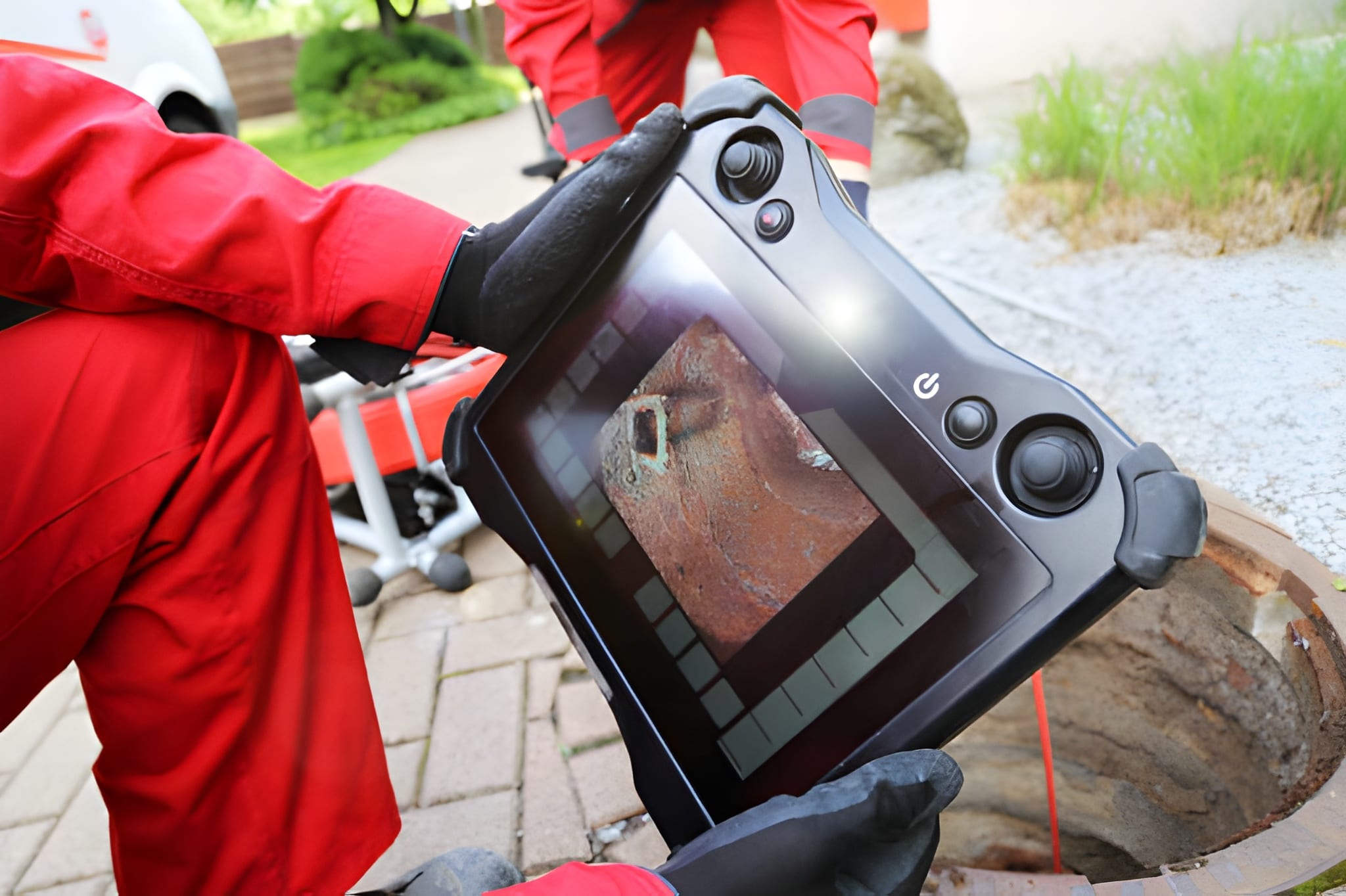
- High-definition push cameras with articulating heads for clear, color video of the pipe interior
- Tractor-style cameras for large-diameter or long sewer mains
- Sonde transmitter built into the camera head so the exact depth and location of defects can be located above ground with a locator device
- Reel systems that measure distance so technicians know how far down the line a problem sits
- Portable monitors and recording equipment to capture stills and video for reporting
What to expect during an inspection
- Pre-inspection overview: Camarillo Plumbing technicians confirm access points and review symptoms such as slow drains or backups. You may be asked to avoid water use for a short period.
- Setup: The technician sets up the monitoring station and connects the camera at an accessible cleanout, toilet, or manhole.
- Visual inspection: The camera is pushed through the pipe while the technician narrates observations. Video and still images are recorded for documentation.
- Locating: If a defect is found, the sonde is used to pinpoint depth and horizontal location relative to landmarks or property lines.
- Reporting: You receive a clear explanation of findings, recorded footage or stills, and repair options tied to what the camera revealed.
Typical inspection time for a single-lateral residential run is about 45 to 90 minutes. Longer or more complex systems take additional time.
How findings guide repair options
- Minor blockages and grease: Recommend drain clearing or targeted hydro jetting to remove buildup and restore flow.
- Root intrusion with intact pipe: Hydro jetting or mechanical root cutting followed by regular maintenance and possible root killer treatments. If roots severely damaged the pipe wall, lining or replacement may be advised.
- Cracks, offsets, or small collapses: Trenchless sewer repair options such as cured-in-place pipe lining (CIPP) or pipe bursting are often the least disruptive way to restore structural integrity without full excavation.
- Major collapse or access constraints: Traditional excavation and replacement may be necessary when trenchless options are not feasible due to severe damage, extremely offset lines, or municipal connection issues.
Accurate video evidence helps prioritize the least invasive, most cost-effective repair and prevents unnecessary digging.
Timelines and cost factors to consider
- Inspection itself: Usually completed in one visit, within 1 to 2 hours for typical residential lines.
- Minor repairs (drain clearing, hydro jetting): Often resolved the same day in a few hours.
- Trenchless repairs: Commonly completed in 1 to 2 days depending on line length and required prep.
- Traditional excavation: Can take multiple days to complete when permits, landscape restoration, or traffic control are required.
Factors that influence timelines and cost include pipe length and depth, pipe material, access difficulty, severity of damage, number of laterals affected, required permits, and whether additional services like traffic control or landscaping restoration are necessary.
Real inspection examples from Moorpark-area properties
- Example 1: Single-family home reported recurring backflow. Camera inspection revealed heavy root intrusion starting at 12 feet and reducing the internal diameter by about 40 percent. Recommendation: hydro jetting to clear roots and install enzymatic maintenance program; monitor with follow-up camera inspection in 12 months.
- Example 2: Commercial kitchen showing chronic grease backups. Camera footage showed thick grease coating and multiple accumulations in bends. Recommendation: professional hydro jetting and a grease management plan for the business.
- Example 3: Older ranch-style house with persistent slow drains. Camera found a collapsed clay section at 22 feet. Given access and alignment, trenchless pipe lining would not be feasible; excavation and targeted replacement of the damaged segment were recommended.
Camarillo Plumbing documents findings with video and stills so property owners have clear records for informed decisions.
Maintenance and prevention tips for Moorpark properties
- Avoid pouring grease or oil down kitchen drains and limit flushing of wipes or non-degradable items.
- Consider root barriers or avoid planting large, root-prone trees directly over sewer lines.
- Schedule routine camera inspections every 2 to 5 years for older systems or after recurring issues.
- Use enzymatic or bacterial maintenance products rather than caustic chemicals that can harm pipes and septic systems.
Q: What can a sewer camera inspection detect?
A: A sewer camera inspection detects blockages, root intrusion, cracks, collapses, offsets, scale buildup, foreign objects, and the condition of pipe joints and laterals.
Q: Will the camera inspection damage my pipes?
A: No. Inspections use flexible cameras designed to safely travel through pipe interiors without causing damage.
Q: How long does an inspection take?
A: Typical residential inspections take 45 to 90 minutes. Complex systems or long runs take longer.
Q: Do I need to be home during the inspection?
A: Someone over 18 usually needs to be present to provide access and review findings, but arrangements can vary by property.
Q: Is a camera inspection required before trenchless sewer repair?
A: A camera inspection is standard practice because it confirms the problem location and condition, which determines whether trenchless methods are feasible.
Q: Will homeowners insurance cover the inspection or repairs?
A: Coverage varies by policy and cause of damage. Inspections are typically an out-of-pocket diagnostic expense, while repairs may be covered if damage is sudden and accidental. Review your policy or consult your insurance provider for specifics.
hear what our satisfied clients have to say