
Tankless Water Heater in Fillmore, CA
.avif)

For many Fillmore homeowners, upgrading to a tankless water heater is a decision driven by comfort, efficiency, and long-term value. Tankless units deliver on-demand hot water, take up far less space than traditional tanks, and often last significantly longer. In Fillmore, CA, where water quality, seasonal temperature swings, and older homes can affect system performance, selecting the right tankless solution and ensuring professional installation are essential to realize the promised energy savings and reliability. Camarillo Plumbing provides expert guidance on sizing, installation, maintenance, and local considerations for tankless systems in Fillmore homes.
.jpeg)
Why choose a tankless water heater in Fillmore, CA
- Energy efficiency: Tankless units heat water only when needed, reducing standby heat loss common with tanks and lowering energy use in typical household patterns.
- On-demand hot water: Continuous hot water supply for showers, laundry, and dishwashing when sized properly for your household demand.
- Longer lifespan: Properly maintained tankless systems commonly last 15 to 20 years, exceeding the average life of conventional storage tanks.
- Space savings: Compact wall-mounted designs free up utility closet or garage space—valuable in older Fillmore homes with limited mechanical areas.
- Lower long-term operating costs: Although upfront costs can be higher, energy savings plus reduced replacement frequency often make tankless systems more economical over time.
Tankless types and local considerations
- Gas (natural gas or propane) vs electric: Gas-fired units typically provide higher flow rates for whole-house applications in Fillmore residences. Electric units work well for point-of-use installations or homes with lower hot water demand.
- Condensing vs non-condensing gas units: Condensing models offer higher efficiency by recovering heat from exhaust gases but may require different venting and condensate management.
- Point-of-use vs whole-house: Smaller tankless units installed near a single fixture reduce wait times and water waste. Whole-house systems require careful sizing to serve simultaneous uses.
- Venting and location: Venting options and clearances must account for local building codes and the unit’s placement. Outdoor-mounted units are common in mild climates but need freeze protection in cold snaps.
How to size a tankless water heater
Sizing correctly is the single most important factor for reliable performance.
- Estimate peak simultaneous demand: Add flow rates (gallons per minute, GPM) of fixtures you expect to use at the same time. Typical fixture flow rates:
- Shower: 1.5–2.5 GPM
- Kitchen faucet: 1.5–2.2 GPM
- Bathroom sink: 0.5–1.5 GPM
- Dishwasher: 1–2 GPM
- Determine required temperature rise: Subtract your incoming cold water temperature from desired hot water temperature (usually 110–120°F). In Fillmore, incoming groundwater in winter often ranges around 55–60°F, so winter temperature rise may be 50–65°F depending on your setpoint.
- Match GPM and temperature rise to manufacturer performance charts: Choose a unit that reliably delivers the combined GPM at the needed temperature rise. If your home has simultaneous showers plus laundry, select a higher-capacity unit or consider multiple units.
Professional installation and replacement process
A correct installation protects performance, warranty coverage, and safety.
- Site evaluation: Inspect current plumbing, gas/electrical service, venting options, and available mounting locations.
- Load calculation and unit selection: Perform accurate demand and temperature-rise calculations to recommend the best model(s).
- Permits and code compliance: Obtain required permits and ensure installation meets California and Ventura County codes.
- Gas line or electrical upgrades: Assess whether existing gas piping or electrical service requires upsizing for the new unit.
- Venting and condensate management: Install appropriate venting systems and condensate drains for condensing units.
- Testing and commissioning: Thoroughly test for proper combustion, flow rates, temperature control, and leak-free connections. Explain operation and maintenance basics to the homeowner.Typical timeline: A straightforward tank-to-tankless swap often takes one day. Projects requiring gas line upgrades, electrical work, structural modifications, or permits may extend to one to two days or more.
Common repairs, maintenance, and expected lifespan
- Routine maintenance: Annual descaling/flush is recommended in areas with hard water to prevent mineral buildup, which reduces efficiency and can damage the heat exchanger. Replace incoming water filters and check pressure-relief valves.
- Common repairs: Ignition failure, flow sensor issues, scale-related heat exchanger problems, and venting/combustion fault codes are typical service calls.
- Lifespan: With regular maintenance, tankless systems commonly reach 15–20 years. Proper water treatment and timely descaling extend life and protect warranties.
Warranty, rebates, and cost considerations
- Manufacturer warranties vary: Many heat exchangers carry longer warranties (often several years) while parts have shorter coverage. Confirm current terms for any model under consideration.
- Incentives and rebates: Fillmore homeowners may qualify for state or local energy-efficiency incentives and utility rebates for high-efficiency tankless models. Availability and eligibility change over time, so review current incentive programs before purchasing.
- Cost drivers: Unit type (condensing vs non-condensing), fuel source, required gas/electrical upgrades, venting complexity, and permit costs all affect installation price. Consider lifecycle savings from energy efficiency and longer service life when comparing to tank systems.
Tankless vs traditional tank water heaters — quick comparison
- Upfront cost: Tankless typically higher initial cost; tanks usually lower purchase and install price.
- Operating cost: Tankless often lower due to reduced standby losses.
- Hot water availability: Tankless provides continuous hot water when sized correctly; tanks can run out during peak use.
- Space and installation footprint: Tankless units are compact; tanks require storage space and may need drains and overflow arrangements.
- Maintenance: Tankless units require periodic descaling, especially in hard-water areas like parts of Ventura County; tanks require anode rod checks and sediment flushing.
Local service details and emergency options
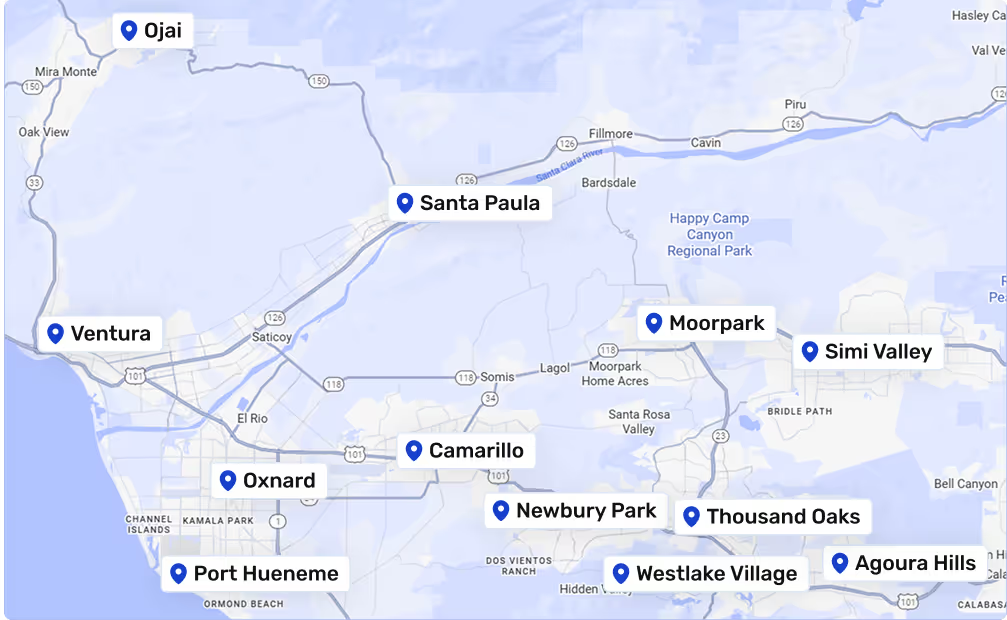
Camarillo Plumbing serves Ventura County and surrounding areas, including Fillmore. Typical arrival times for routine service are approximately 45 minutes from dispatch in much of the service area, with 24/7 emergency response available for urgent water heater failures or leaks. Response times in Fillmore may vary depending on traffic and distance, and complex replacement projects can require scheduled appointments for on-site evaluation.
Tips to prolong system life in Fillmore homes
- Install a whole-house water softener or a dedicated bypassable softening solution if your water supply has high mineral content.
- Flush the unit annually or more often if you have hard water.
- Keep outdoor units protected from debris and ensure clearance around louvers and vents.
- If your unit is outdoors, consider freeze-protection measures for rare cold snaps.
- Schedule annual inspections and service to catch small issues before they become costly.
FAQsQ: How do I know if my home in Fillmore needs a whole-house tankless system or point-of-use units?A: Determine peak simultaneous demand. For multiple showers or appliances running at once, a properly sized whole-house unit or multiple tankless units is recommended. Point-of-use units work well for isolated fixtures with low demand.
Q: Will a tankless water heater save me money in Fillmore?A: Over time, reduced energy consumption and longer service life can lead to lower operating and replacement costs versus conventional tanks. Savings depend on household usage patterns, fuel prices, and initial installation costs.
Q: How often should a tankless unit be descaled in Fillmore?A: In areas with moderate to hard water, annual descaling is typical. Homes with very hard water may need descaling every 6 months. Water testing helps set the right schedule.
Q: Can a tankless water heater be installed outdoors in Fillmore?A: Yes. Outdoor-rated units are common in mild climates, but they must be properly vented and protected against wind-driven rain, debris, and occasional freezing conditions.
Q: What happens during a tank-to-tankless replacement?A: A professional will evaluate the site, perform load calculations, check gas and electrical capacity, obtain permits, install the new unit with proper venting, and commission the system. Simple swaps may finish in one day; more complex upgrades take longer.
hear what our satisfied clients have to say