
Pipe Bursting in Camarillo, CA
.avif)

Pipe bursting is a trenchless pipe replacement method that lets us replace an underground sewer or water main without large trenches or prolonged excavation. For Camarillo homes and businesses dealing with aging clay, cast iron, or damaged plastic lines, pipe bursting offers a low-impact alternative to open-cut excavation. Camarillo Plumbing brings more than six decades of local experience to pipe bursting in Camarillo, CA, combining modern trenchless techniques with local knowledge of soils, landscaping concerns, and permitting requirements.
Why this matters in Camarillo
- Many properties in Camarillo feature mature landscaping, established irrigation, and decorative hardscape. Trenching can damage trees, lawns, driveways, and patios.
- Local soils include sandy coastal deposits, alluvial pockets, and clay layers that can complicate open-cut excavation and increase restoration costs.
- Seasonal rainfall and a moderate water table in some low-lying areas make deep open trenches more disruptive and slower to backfill and settle.
- Trenchless methods like pipe bursting reduce disturbance, lower restoration needs, and shorten project timelines, which is especially important for homeowners and businesses that cannot afford long disruptions.
What is pipe bursting and when it is preferred Pipe bursting is a trenchless replacement method in which a bursting head is pulled through the existing pipe. The head fractures or displaces the old pipe outward into the surrounding soil while simultaneously pulling a continuous new high density polyethylene pipe, or HDPE, into place. The process requires only small access pits at the start and end points instead of a continuous open trench.
Pipe bursting is preferred when:
- Existing pipe is crushed, collapsed, root-invaded, or has irreparable degradation.
- Landscaping, driveways, patios, or mature trees make trenching impractical or cost prohibitive.
- Properties need a faster turnaround and minimal interruption.
- A durable new pipe material is required for long-term reliability, such as HDPE with long expected service life.
Common applications in Camarillo
- Residential sewer main replacement from house to main.
- Lateral line replacement under driveways, patios, or landscaping.
- Commercial sewer and water main upgrades in tight urban lots.
- Water service replacement where minimal surface disruption is required.
- Replacing clay, cast iron, or older PVC runs that are failing or undersized.
Common pipe problems that lead to pipe bursting
- Frequent blockages and backups from tree root intrusion.
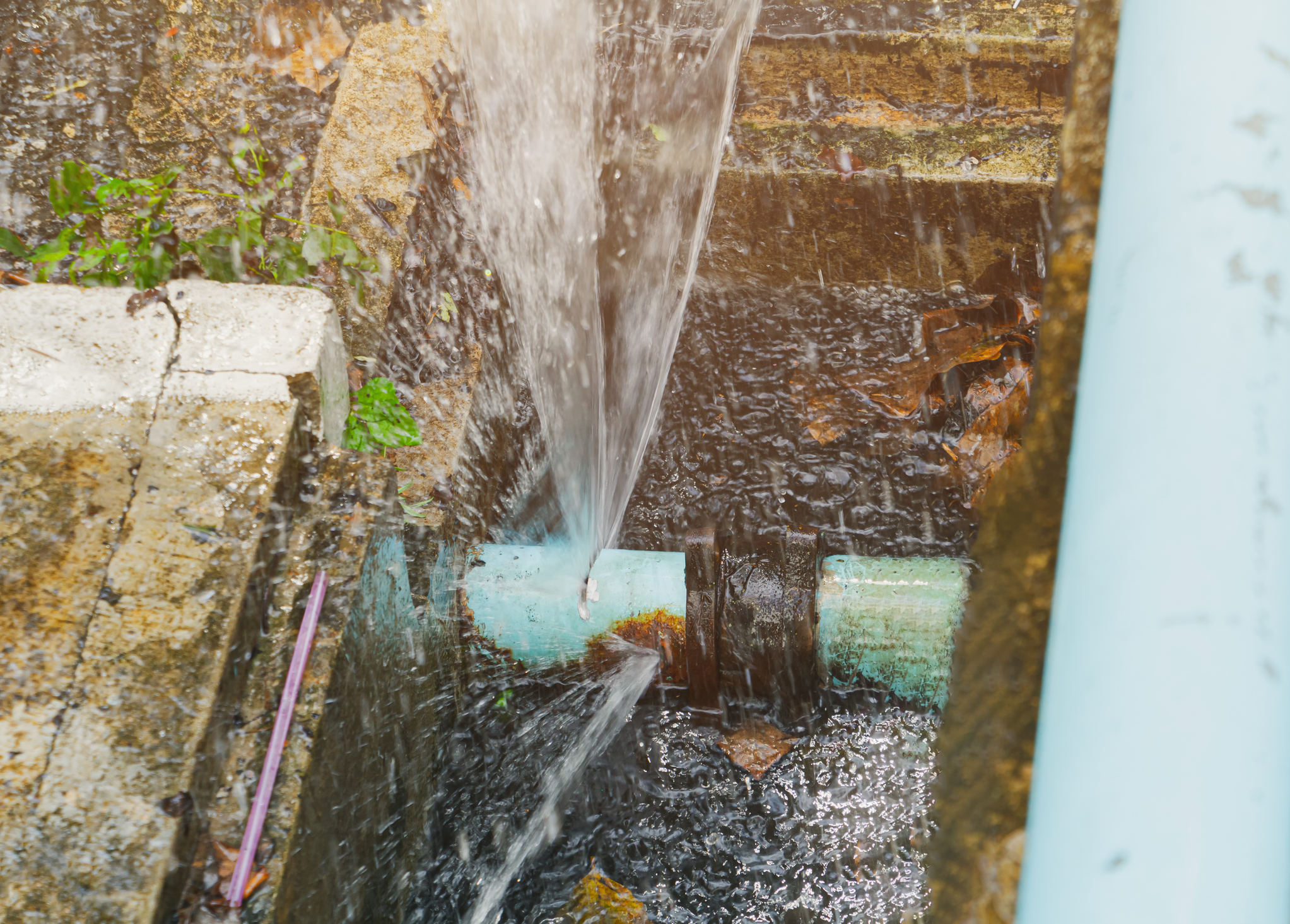
- Pipes collapsed from corrosion, ground movement, or old age.
- Repeated repairs to the same run indicating systemic failure.
- Inadequate capacity or undersized pipe causing recurring issues.
- Pipes with offset joints or extensive joint leakage.
Inspection and diagnosis: how we decide pipe bursting is the right solution A reliable replacement project starts with an accurate diagnosis. Camarillo Plumbing follows a clear evaluation process:
- Pre-inspection and site assessment: We evaluate surface conditions, landscaping, hardscaping, and nearby utilities. Knowing where irrigation lines, gas lines, electrical conduits, and other utilities run is essential.
- Sewer camera inspection: A camera run through the line confirms location and condition. The camera identifies breaks, holes, collapsed sections, root intrusion, offsets, and grease or sediment build-up that indicate replacement is preferable to repair.
- Utility locating and mapping: We locate other underground utilities to determine access pit locations and ensure safe bursting paths.
- Structural and accessibility review: We confirm that access pits can be placed at allowed locations (e.g., an alley, easement, or yard) and that bursting will not jeopardize foundations, retaining walls, or sensitive tree roots.
- Permitting check: We assess local permitting needs for the City of Camarillo or Ventura County and advise on approvals the job may require.
The pipe bursting process step by step The basic pipe bursting sequence is straightforward but requires experienced crews and the right equipment to protect property and underground assets.
Pre-inspection and planning
- Camera inspection and utility locates are completed and a project plan is created documenting pit locations, bursting length, and reconnection details.
- Permits and right of way approvals are verified and obtained as needed.
Minimal access pits
- Small excavations are dug at the insertion and receiving points. These pits are sized to reach the pipe and clear room for equipment. Typical pit dimensions are much smaller than continuous trenches and are placed in locations to minimize landscape and hardscape disruption.
Preparing the existing line
- The existing line is cleaned or jet-rodded to remove blockages and ensure the bursting head can pass.
- Any lateral connection points are noted and prepared for later reconnection.
Pulling the bursting head and new pipe
- A bursting head is pulled through the existing pipe. The head breaks or splits the old pipe outward into the surrounding soil. Simultaneously, a continuous HDPE pipe is pulled in behind the bursting head.
- The HDPE pipe is fused into a single continuous length on site, eliminating joints that can leak.
Reconnections
- Lateral reconnections or service taps are made from the new HDPE main to the house or building lines. If lateral stubs require replacement, small localized excavations are performed to access and connect.
Backfilling and site restoration
- Access pits are backfilled and compacted. Surface restoration is performed to match the original condition as closely as possible, including turf replacement, concrete patching, or landscape repair.
- Final camera inspection verifies the new line and connections.
Materials and lifespan
- HDPE pipe is the standard replacement material for pipe bursting because it is flexible, jointless when fused, and resistant to corrosion and root intrusion.
- HDPE resists chemical degradation, has excellent abrasion resistance, and accommodates slight ground movement without cracking.
- Typical HDPE service life is often 50 to 100 years under normal conditions. Actual lifespan depends on installation quality, soil chemistry, and loading conditions.
- For potable water lines, materials and installation must comply with local codes and approved specifications for water service. Camarillo Plumbing follows city and county code requirements for drinking water service installations.
Benefits of pipe bursting in Camarillo
- Minimal landscaping disruption: Small access pits preserve lawns, gardens, mature trees, and hardscapes. This matters in Camarillo neighborhoods where mature trees and established landscapes are common.
- Faster completion times: Many projects that would require days or weeks with open-cut excavation can be completed in a day or a few days, depending on pipe length and reconnections.
- Lower restoration costs: Less surface disruption reduces need for extensive repaving, new concrete, or replanting large areas.
- Reduced environmental impact: Less soil removal, reduced truck traffic, and minimized disturbance to local flora and fauna help lower the carbon footprint of the replacement.
- Improved hydraulic capacity and durability: New HDPE pipe often provides better flow characteristics and a longer-lasting solution than aged clay, cast iron, or jointed PVC.
- Safer for properties near foundations or retaining walls: Trenchless replacement eliminates long trenches adjacent to structures that can undermine soils and foundations.
When open-cut excavation may still be appropriate Pipe bursting is highly effective for many runs, but open-cut excavation may be better when:
- The pipe route runs directly under sensitive structural foundations where displacement is unsafe.
- Soil conditions or underground obstructions make bursting impractical.
- There are strict easement or access constraints preventing insertion and receiving pit placement.
- The project involves complex lateral networks requiring extensive re-routing.
Permitting, inspections, and warranties
- Permitting: Most pipe replacement projects will require permits from the City of Camarillo or Ventura County depending on the location. Permits often cover sewer and water replacement, street cuts, and any public right of way work. Camarillo Plumbing handles permit coordination and ensures installations meet local code requirements.
- Inspections: Local building or public works inspectors may require in-progress and final inspections. Final camera runs and pressure tests for water services may be part of sign-off procedures.
- Warranties: HDPE materials often carry manufacturer warranties on material defects. Installation warranties vary by contractor. Camarillo Plumbing documents workmanship and provides warranty details for labor and materials according to local standards and industry best practices.
Cost factors and timeline expectations Cost for pipe bursting varies with several factors:
- Pipe length and diameter: Longer runs and larger diameters increase material and labor.
- Number of lateral reconnections: Each lateral or service reconnection adds time and cost.
- Accessibility and pit placement: Difficult access or need for special traffic control raises cost.
- Surface restoration: While less than open-cut, restoration still contributes to final cost depending on whether turf, pavers, or concrete must be repaired.
- Permitting and traffic control: Work in the public right of way, street crossings, or near busy corridors can affect cost and scheduling.
- Soil and groundwater conditions: Sites with high groundwater or rocky soils may require additional measures.
Typical timelines
- Short residential lateral replacements: Often completed in a single day.
- Longer main replacements across yards or streets: Usually completed in one to several days.
- Complex jobs with multiple lateral reconnections, permits, and traffic control: May extend to several days to a week, accounting for inspections and restoration.
Examples of past projects and service area Camarillo Plumbing has conducted trenchless and pipe bursting projects across many parts of Camarillo and the surrounding Ventura County communities. Examples include:
- Residential driveway lateral replacement in Old Town Camarillo: A cracked clay lateral under a historic driveway was replaced using pipe bursting with minimal disruption to the driveway surface. Only two small pits were required and the driveway was patched to match existing concrete finishes.
- Multiunit apartment sewer main upgrade near the Ventura Freeway corridor: An aging cast iron main serving a small multiunit complex was replaced with HDPE using pipe bursting. The trenchless approach minimized disruption to tenants and avoided extensive landscaping removal, reducing tenant relocation needs.
- Water service renewal in a mature suburban lot: Replacing a corroded galvanized water service with HDPE via pipe bursting avoided cutting a long trench through the backyard and preserved mature citrus trees.
- Commercial site lateral replacement behind a shopping center: Pipe bursting replaced a failing run under a paved service area, keeping business disruption to a minimum with targeted access pits and quick restoration.
Service area notes
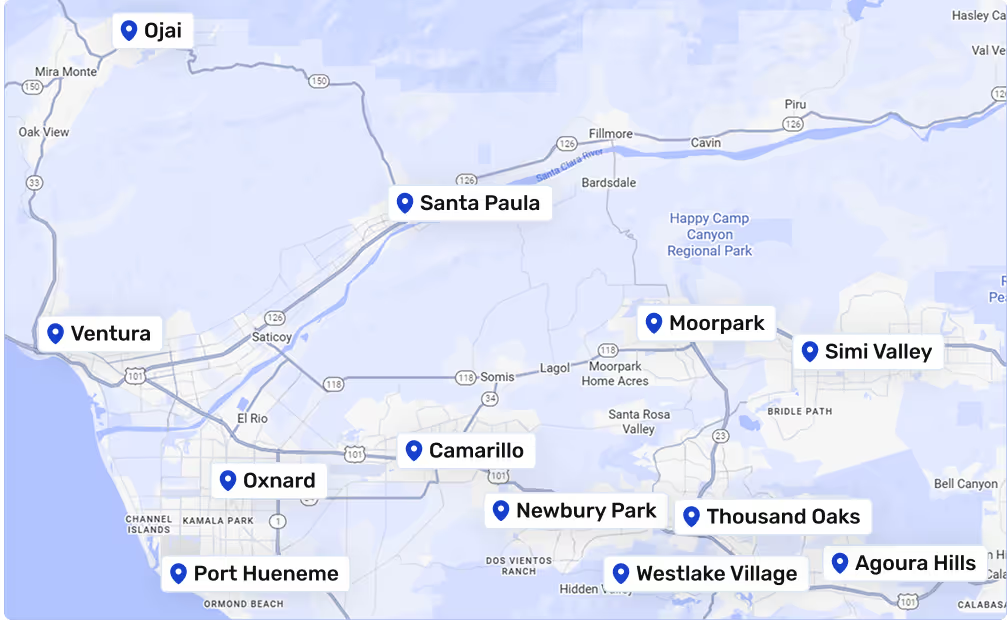
- Projects have been completed throughout Camarillo neighborhoods including areas surrounding Old Town Camarillo, Pleasant Valley, and newer residential developments. Camarillo Plumbing also serves nearby Ventura County communities where trenchless solutions are appropriate.
- The company understands local permitting processes and has experience coordinating with city inspectors and public works in Camarillo and neighboring jurisdictions.
Site preparation and homeowner expectations
- Access: Ensure access to insertion and receiving points is available. Crews will need room for small excavations and equipment staging.
- Utilities: Mark any private irrigation or utility lines if known. Camarillo Plumbing performs professional locates for public utilities and recommends marking private systems to avoid accidental damage.
- Landscaping protection: Fragile plantings or features should be flagged. While pipe bursting minimizes disturbance, crews will still need to work in yard areas near work pits.
- Pets and children: Keep pets and children away from work zones for safety while crews are operating heavy equipment.
Maintenance and long-term care of new HDPE lines
- HDPE pipe requires minimal maintenance. Its smooth interior reduces buildup and blockages, and fused joints eliminate many common leak points.
- Regular camera inspections every few years or when experiencing slow drains or other signs of trouble help catch issues with laterals or connections early.
- Avoid planting large trees directly over sewer lines to reduce risk of lateral root intrusion into laterals or future service lines.
- Avoid pouring grease or harsh chemicals which can eventually cause buildup at fixtures or laterals.
Risks and how we manage them
- Hitting unexpected obstructions: Pre-job camera work and utility locates reduce surprises. If an unexpected obstacle is encountered, crews may pivot to localized excavation or an alternate repair method.
- Soil displacement near sensitive structures: Engineers and experienced crews evaluate soil conditions and structural proximity to avoid undermining foundations.
- Lateral alignment and reconnections: Accurate mapping and on-site verification prevent misaligned reconnections. Where lateral access requires it, small localized excavations provide visual confirmation.
How pipe bursting compares to other trenchless methods
- Pipe bursting vs pipe lining: Pipe lining, or cured in place pipe lining, inserts a liner into the existing pipe creating a new pipe within the old one. Lining is ideal when the existing pipe is structurally intact but leaking at joints or suffering from minor cracks. Pipe bursting replaces the pipe entirely and is preferable when the old pipe is collapsed, severely degraded, or undersized.
- Pipe bursting vs sectional replacement: Traditional sectional replacement involves digging at intervals and replacing small sections. Pipe bursting provides a continuous new pipe installation with fewer surface disruptions and fewer joints.
FAQs
Q: What is pipe bursting and how does it work?
A: Pipe bursting is a trenchless replacement method where a bursting head is pulled through the old pipe to fracture or displace it outward while simultaneously pulling a new HDPE pipe behind the head. Only small access pits are required at the start and end points.
Q: Which pipe materials can be replaced with pipe bursting?
A: Pipe bursting can replace clay, cast iron, VCP, cast steel, and many types of PVC. The new pipe is typically HDPE due to its flexibility and durability.
Q: Will pipe bursting damage my landscaping or trees?
A: Pipe bursting greatly reduces surface impact compared with open-cut excavation because it only requires small access pits. However, any work near tree roots must be planned carefully. Mature trees directly over the line may still require additional protection or an alternate approach.
Q: How long does a typical pipe bursting job take?
A: Small residential lateral jobs can often be finished in a single day. Larger mains or projects with multiple reconnections, permits, and inspections may take several days to complete.
Q: What is the expected lifespan of HDPE pipe installed by pipe bursting?
A: HDPE pipe commonly has an expected service life of 50 to 100 years under normal conditions. Lifespan depends on installation quality, soil conditions, and loading.
Q: Do I need permits for pipe bursting in Camarillo?
A: Most sewer and water main replacements require permits from the City of Camarillo or Ventura County. Camarillo Plumbing evaluates permit needs and coordinates approvals as part of the project plan.
Q: Will my service be interrupted during the work?
A: Service interruption depends on the scope. For sewer replacements, temporary arrangements may be required, and for water service replacement, water may be shut off briefly during cutover. Camarillo Plumbing plans for safe, coordinated reconnections to minimize downtime.
Q: How do I know whether pipe bursting or lining is the better option?
A: A camera inspection and site assessment are needed to determine the best method. Pipe bursting is better for collapsed, crushed, or undersized pipes. Lining works well for pipes that are structurally sound but leaking at joints or with minor cracks.
Q: What restoration can I expect after pipe bursting?
A: Access pits are backfilled and compacted. Restoration includes concrete patching, turf replacement, or replanting. Because disturbance is limited, restoration is typically quicker and less extensive than with open-cut excavation.
Q: Does pipe bursting work under driveways and sidewalks?
A: Yes. One of the main advantages of pipe bursting is the ability to replace lines under hard surfaces with minimal cutting and patching, using small access pits at approved locations.
hear what our satisfied clients have to say