

Sewer Line Replacement in Westlake Village, CA
.avif)

Sewer line failure is disruptive, unsanitary, and often expensive when left too long. In Westlake Village homes, mature landscaping, uneven terrain, and older pipe materials make timely diagnosis and replacement especially important. Camarillo Plumbing handles the full replacement process from camera inspection and permit coordination to restoration and warranty support, helping homeowners understand options, disruption, and long-term maintenance so they can choose the right solution for their property.
Common sewer line problems in Westlake Village
- Root intrusion from large oaks, eucalyptus, and ornamental trees that are common in local yards
- Corroded or broken clay and cast iron pipes in older neighborhoods
- Pipe collapse or bellied sections caused by soil movement on slopes or after heavy rains
- Repeated clogs from buildup, grease, or flushed wipes that damage aged lines
- Offset joints or cracks from tree roots or ground settling near hillsides
How we diagnose the issue: sewer camera inspection and evaluation
A detailed inspection begins with a sewer camera run to map the line, locate blockages, identify cracks, roots, bellies, and measure pipe diameter and length. Video footage documents the condition so replacement options are based on observed defects rather than guesswork. Locating cleanouts, nearby utilities, the lateral connection at the street, and any slope or elevation changes is part of the diagnostic process. In some cases a combination of camera inspection and noninvasive locating tools is used to plan the most efficient access.
Trenchless options versus traditional excavation
- Pipe lining (Cured-in-Place Pipe, CIPP): A resin-saturated sleeve is inverted or pulled into the existing pipe and cured in place to form a new pipe within the old one. Best when the host pipe is mostly intact but has cracks, leaks, or root intrusion. Minimizes surface disruption.
- Pipe bursting: Old pipe is fractured while a new pipe is pulled into place. Works well when lateral alignment is straight and there is room at the ends for equipment. Allows upgrading to more durable materials like HDPE or PVC.
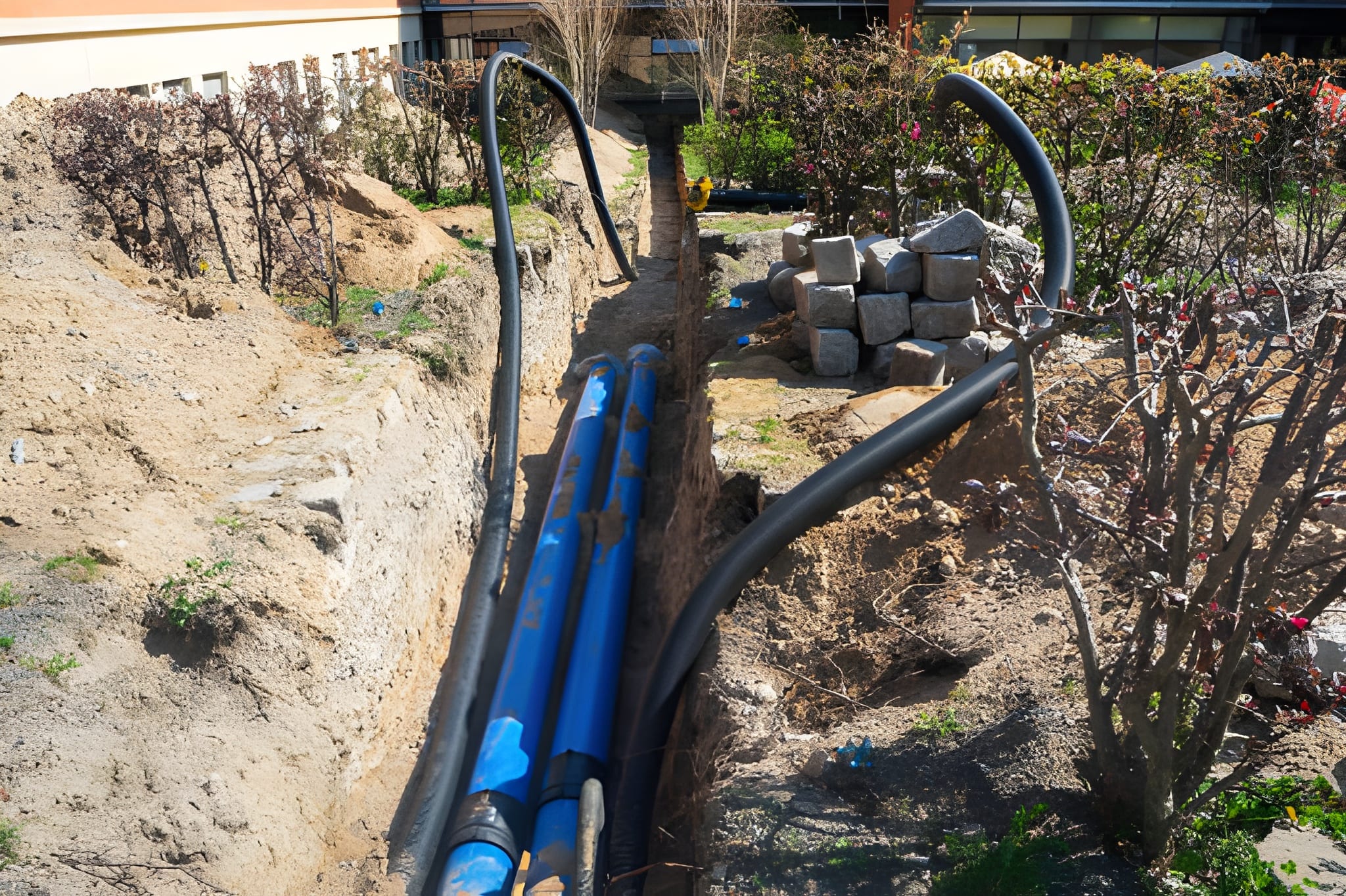
- Traditional excavation: Open trench replacement is used when pipe collapse, severe misalignment, multiple offsets, or utility conflicts make trenchless methods impractical. Also required where city or county standards or lateral configurations mandate full replacement.
Benefits and tradeoffs:
- Trenchless methods reduce lawn, landscaping, and driveway disruption and are often faster.
- Excavation allows full replacement of problematic alignments and is sometimes the only viable option for heavily damaged runs.
- The right choice depends on pipe condition, length, location of trees, access for equipment, and local permitting rules.
Expected timeline and site disruption
- Trenchless replacements often complete in one to a few days for typical residential laterals, with limited surface disturbance.
- Open trench replacements take longer depending on the run length and the amount of hardscape to remove and replace. Expect staged work for safety, inspections, and backfill settlement.
- Property access, driveways, slopes, and mature trees can extend timelines due to protective measures and restoration work.
Permitting and code compliance in Westlake Village
Replacement work requires permits and inspections from the local jurisdiction. Requirements vary by location and may include:
- Sewer lateral replacement permits and final inspections
- Connection inspections at the public main and verification of the cleanout location
- Compliance with local material and depth standards and any backflow prevention requirements
- Coordination with homeowners association rules for street access, driveway repairs, and tree protections
Camarillo Plumbing coordinates permit submittals and inspections so replacements meet current code and local agency standards.
Typical costs and financing options
Costs vary widely depending on run length, pipe material selection, method (trenchless vs excavation), access, tree protection or removal, and required restoration. Key cost drivers include depth of pipe, extent of hardscape removal, and utility coordination. Financing options are commonly available through contractor payment plans, third-party financing partners, or home improvement loans that let homeowners spread payments over time. Homeowners should request a detailed written estimate that separates lineal work, restoration, permit fees, and contingency items.
Restoration of landscaping and hardscapes
Restoration planning is part of the replacement estimate. Typical restoration steps:
- Replace topsoil and grade to original contours to prevent ponding
- Reinstall sod or seed and repair irrigation lines as needed
- Replace pavers, concrete, or asphalt to match existing finishes; color and texture matching may take extra time
- Manage tree root zones post-replacement with root barriers or targeted pruning to limit regrowth near new pipe
Restoration timelines depend on the scope of work and seasonal planting considerations for successful turf or shrub recovery in the local climate.
Materials and warranty information
Common replacement materials:
- PVC and SDR pipe for durability and resistance to root intrusion
- HDPE for flexible, fused joints in pipe bursting applications
- Epoxy resin systems used in pipe lining (CIPP)
Warranties typically cover both material manufacturer warranties and contractor workmanship warranties. Warranty lengths can vary by material and contractor; homeowners should obtain written warranty terms that specify coverage for leaks, defects, and restoration items.
Preventative maintenance recommendations
- Schedule a sewer camera inspection every 2 to 5 years, sooner if you have large trees or older pipe.
- Hydro jetting maintenance can clear grease and roots before they cause failure; frequency depends on household usage and tree exposure.
- Avoid flushing wipes, grease, and non-dissolvable items.
- Maintain irrigation practices to reduce excess moisture around the lateral that can accelerate pipe decay and attract roots.
In Westlake Village yards with mature trees, a balanced approach combining targeted root pruning, physical barriers, and regular inspections extends the life of a replacement.
Emergency versus planned replacement service flow
- Emergency scenarios include repeated backups from multiple fixtures, sewage odors in the yard, visible sinkholes, or saturated patches above the lateral. Immediate diagnostic steps focus on stopping further damage and isolating the failure.
- Planned replacements follow a full diagnostic inspection, permit coordination, and a scheduled work window that includes restoration planning and post-work inspections.
- Emergency repairs may use temporary measures to restore function until a full replacement can be completed under permit.
FAQs
Q: How do I know if trenchless replacement is possible for my Westlake Village home?
A: A full sewer camera inspection and site evaluation will show pipe condition, alignment, and access. Trenchless is often possible when the pipe is continuous and equipment access is available; severe collapse, offsets, or utility conflicts may require excavation.
Q: Will replacing my sewer line impact my mature trees?
A: Tree protection is part of the planning. Trenchless options minimize root disturbance, but some root pruning or barriers may be recommended. When excavation is necessary, arborist consultation and mitigation are often included in the restoration plan.
Q: How long after replacement will my lawn and landscaping look normal?
A: Basic turf and planting restoration can be visible within weeks to months depending on season and irrigation. Hardscapes like concrete or pavers may match immediately but color curing and final settling can take longer. Restoration timelines are included in the project plan.
Q: What information should I get in a written estimate?
A: A clear estimate lists the diagnostic findings, chosen method, scope of excavation or trenchless work, permit fees, detailed restoration plan, materials to be used, warranty terms, and anticipated timeline.
Q: How often should I schedule sewer camera inspections after a replacement?
A: For most Westlake Village homes with mature trees or older soil conditions, inspections every 2 to 3 years are typical; homes with fewer risks can extend intervals to 3 to 5 years.
hear what our satisfied clients have to say